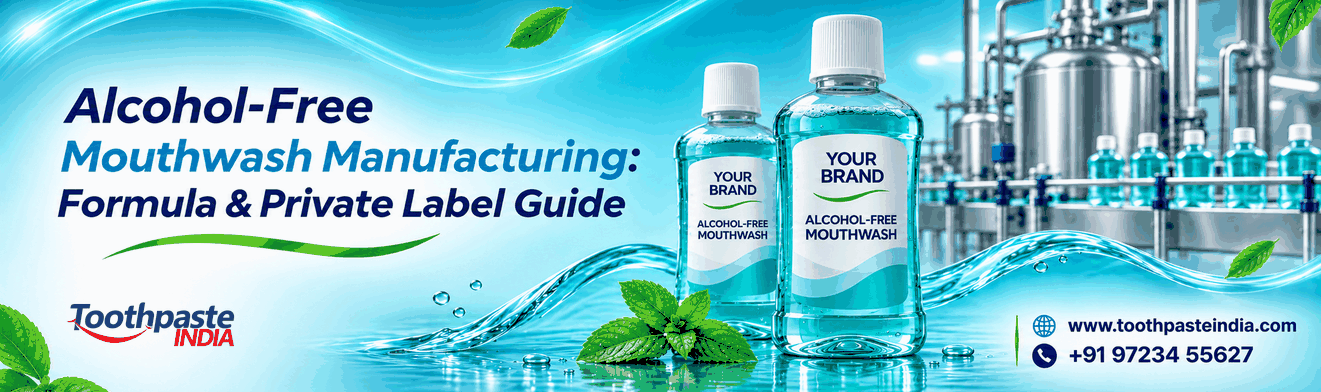

Alcohol-free mouthwash is an option for people who prefer an oral rinse without ethanol, particularly those experiencing dry mouth or discomfort with alcohol-containing rinses. Depending on its formulation, it can complement brushing and interdental cleaning by supporting fresh breath, cavity prevention or plaque control. Its suitability depends on the complete formula and the user’s needs.
For oral-care brands, this category offers several product directions, including everyday freshness, fluoride-based cavity protection and specialised dental-care formulations. Choosing the intended benefit first helps guide ingredient selection, flavour development, packaging and the evidence needed for product claims.
What Are the Benefits of Alcohol Free Mouthwash?
Alcohol-free mouthwash benefits vary by formulation. Avoiding ethanol may improve suitability for people with dry mouth, while selected antibacterial ingredients can support breath control. A fluoride-containing version can help prevent cavities. However, an alcohol-free label alone does not guarantee these benefits; they depend on the ingredients, finished-product performance and correct use.
A well-developed formula also offers a pleasant flavour and comfortable rinsing experience that may encourage consistent use. Manufacturers must balance these sensory qualities with stability, preservation and packaging compatibility. Mouthwash remains an additional oral-care step alongside brushing and cleaning between the teeth.
An Alcohol-Free Mouthwash Manufacturer develops oral rinses without ethanol, balancing ingredients, flavour, preservation and packaging. As an oral care manufacturer, Toothpaste India supports businesses with product development and manufacturing requirements, from the initial brief to sampling and production approval.
Our oral-care services include toothpaste and mouthwash development, with specifications tailored to each product category. Businesses evaluating GMP certified toothpaste manufacturing should also review the facility’s mouthwash capabilities, relevant certification scope and testing documentation.
Formula Options an Alcohol-Free Mouthwash Manufacturer Should Explain
Fresh Breath and Antibacterial Formulas
Alcohol free mouthwash for bad breath may contain cetylpyridinium chloride, commonly called CPC. A non alcohol antibacterial mouthwash needs evidence supporting its finished-product claims; refreshing flavour alone does not demonstrate antibacterial action.
Fluoride and Fluoride-Free Options
Fluoride mouthwash without alcohol can support cavity prevention. A fluoride free mouth wash serves a different brief, and an alcohol and fluoride free mouthwash should not inherit fluoride-based cavity-protection claims. These are separate formulation decisions.
Dry-Mouth and Dental-Care Options
Alcohol free mouthwash for dry mouth should prioritise mild flavour and comfort. Moisturising ingredients may provide temporary relief, but removing ethanol alone does not establish a dry-mouth benefit.
Alcohol free chlorhexidine mouthwash is a distinct dental-care project. A non alcoholic chlorhexidine mouthwash requires appropriate directions and market-specific classification review. Chlorhexidine is generally used for short-term treatment and can cause staining or taste changes.
How Is the Formula Built?
A development brief typically considers:
| Component | Development purpose |
|---|---|
| Purified water | Main liquid base |
| Humectants | Mouthfeel and moisture retention |
| Solubilisers | Disperse suitable flavours and oils |
| Selected actives | Support the intended benefit |
| Sweeteners and flavours | Improve taste without added sugar |
| Preservation and buffers | Support microbial protection and pH control |
For a mouthwash sugar free brief, specify permitted sweeteners and confirm claim requirements. Check flavour-carrier specifications: ethanol can enter through raw materials even when it is not added separately.
Removing ethanol may require changes to solubilisation and preservation. Simply deleting it from an existing recipe is not a validated manufacturing method.
Private-Label Manufacturing Process
1. Define the Product Brief
Specify the audience, country, benefit, exclusions, flavour, bottle size and sales channel. Baby-care brands should not assume alcohol-free means suitable for babies: mouthrinse is generally unsuitable for children under six unless directed by a dentist.
2. Approve Samples and Packaging
Evaluate taste, aftertaste, appearance and dispensing. Compare ready formulations with custom development, then approve the formula and packaging specification.
3. Complete Testing and Production Checks
Agree on stability, microbiological quality, preservative efficacy where applicable, active-content testing and bottle compatibility. ISO 16408:2025 addresses oral-rinse requirements, packaging and information; it excludes prescription-only rinses. ISO 11930 provides a preservation-evaluation framework for applicable cosmetic products. Neither replaces destination-market requirements.
Common mistakes include approving labels before classification review, copying competitors’ claims and treating antibacterial actives as proof of adequate preservation.
Buyer Checklist: Choosing Your Manufacturing Partner
Choose a partner with experience in liquid oral-care formulations. Review rinse-specific samples, filling capabilities, preservation testing and packaging compatibility before approving your project.
A private label mouthwash manufacturer can discuss formulation and branding options. When evaluating a third-party toothpaste manufacturer in India, confirm that its services also cover mouthwash development and production.
Buyers seeking an OEM toothpaste manufacturer in India or contract manufacturing toothpaste services should assess the team’s liquid-processing experience. A toothpaste supplier or toothpaste exporter should also provide documentation relevant to the proposed rinse and destination market.
A mouth freshener supplier or bulk mouth freshener supplier should clarify whether its capabilities cover rinses, sprays or other formats.
Before ordering, confirm MOQ per formula, packaging minimums, testing responsibilities, certificates of analysis, artwork ownership, lead times and landed cost.
Conclusion
Select an Alcohol-Free Mouthwash Manufacturer around your intended benefit, testing needs and market. Share your brief with Toothpaste India to discuss feasible formulation, packaging and production options.
Frequently Asked Questions
An Alcohol-Free Mouthwash Manufacturer supports formulation, sampling, production, filling and packaging. Confirm testing and documentation responsibilities before approving production.
Alcohol-free mouthwash can be antibacterial when formulated with suitable active ingredients. Its effectiveness depends on the complete formula and supporting product tests.
Yes, fluoride mouthwash without alcohol can support cavity prevention. Alcohol-free and fluoride-free are separate formulation choices.
Alcohol-free mouthwash needs adequate protection against microbial contamination. The preservation system and testing requirements depend on the formula, packaging and microbiological risk.
Follow the product’s directions and your dentist’s advice. Chlorhexidine is generally used short-term and may cause staining or taste changes.
MOQ depends on the formulation, bottle, closure and label requirements. Ask the manufacturer to confirm minimum quantities for each flavour and packaging variant.
An Alcohol-Free Mouthwash Manufacturer can assess custom ingredients, flavours and packaging. Final options depend on feasibility, stability testing and sample approval.
Sugar-free mouthwash is not automatically alcohol-free. Specify both requirements separately and check the finished product’s ingredient information.
Mouthwash cannot replace brushing and cleaning between the teeth. It provides an additional oral-care step based on the formula’s intended benefits.
Choose an Alcohol-Free Mouthwash Manufacturer with suitable testing, documentation, packaging and traceability capabilities. Confirm destination-market requirements, approved specifications and production timelines before ordering.