
Launching a toothpaste brand is exciting but risky. Many new businesses make toothpaste brand mistakes that lead to wasted investment, regulatory issues, or market failure. Understanding common toothpaste brand mistakes early can save significant time and money.
Toothpaste India, a leading toothpaste manufacturer in Ahmedabad, has supported numerous startups and seen recurring pitfalls that cause toothpaste brand failure reasons. This guide highlights the biggest mistakes and practical ways to avoid them.
Why Do So Many New Toothpaste Brands Fail?
Toothpaste brand failures often stem from underestimating the complexity of formulation, compliance, and market positioning in India’s competitive oral care sector. The market favors herbal and natural options, yet many brands ignore consumer needs or cut corners on quality. Avoiding these toothpaste startup mistakes dramatically improves success rates.
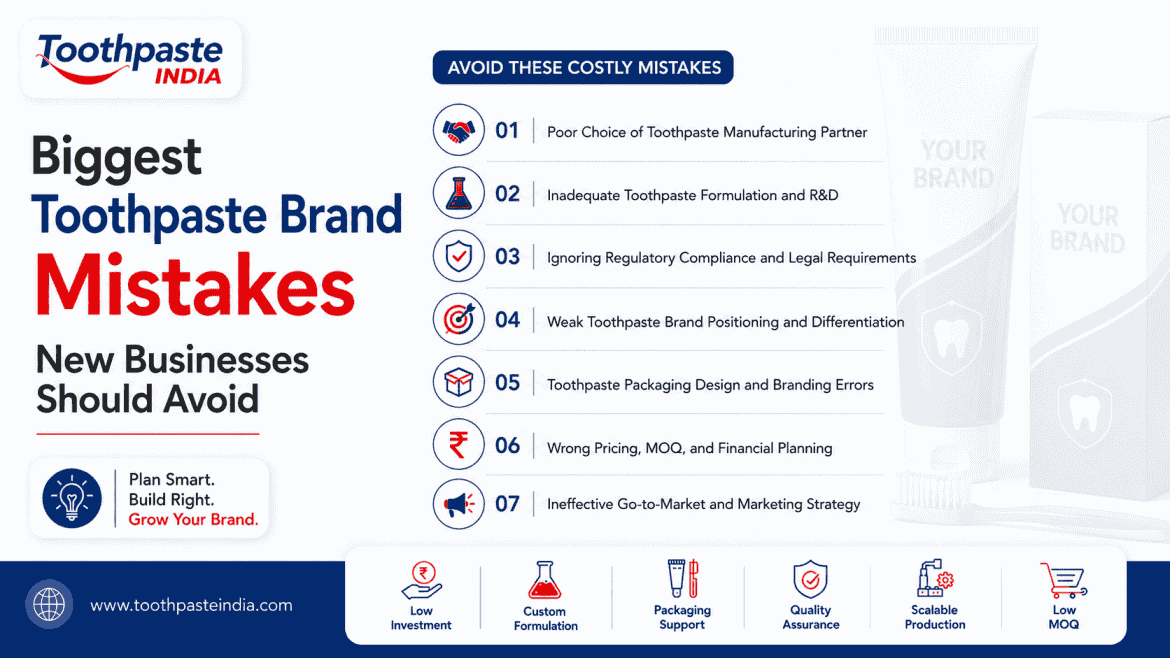
Mistake 1: Poor Choice of Toothpaste Manufacturing Partner
One of the top private label toothpaste mistakes is selecting a manufacturer based only on the lowest price. Cheap partners often lack proper GMP facilities, leading to inconsistent batches, stability issues, or delayed deliveries.
How to avoid: Conduct thorough due diligence. Verify GMP, ISO, and BIS compliance. Visit the facility if possible and request recent audit reports. A reliable GMP Certified Toothpaste Manufacturer and White Label Toothpaste Manufacturer provides transparent sampling, stability data, and scalable production.
Mistake 2: Inadequate Toothpaste Formulation and R&D
Toothpaste formulation mistakes are common, such as chasing trends (e.g., charcoal or extreme whitening) without proper stability testing. This results in separation, poor taste, or ineffective products.
Many brands also make toothpaste ingredient selection errors by using unapproved or unstable ingredients. In India, formulations must meet BIS IS 6356 standards for abrasiveness, pH, and safety.
Solution: Work with a manufacturer offering proper toothpaste R&D support. Test multiple prototypes for pH balance, viscosity, microbial stability, and packaging compatibility before scaling.
Mistake 3: Ignoring Regulatory Compliance and Legal Requirements
Toothpaste compliance mistakes can be devastating. Toothpaste falls under the Drugs and Cosmetics Act and requires adherence to BIS standards. Common errors include incorrect labeling, unapproved claims, or missing manufacturer details.
Toothpaste legal compliance India is non-negotiable. Non-compliance can lead to product seizures, fines, or bans. Fluoride levels, heavy metal limits, and accurate ingredient lists must be verified.
Always confirm current toothpaste regulatory compliance requirements and work with an experienced oral care manufacturer.
Mistake 4: Weak Toothpaste Brand Positioning and Differentiation
Toothpaste brand positioning mistakes occur when brands try to appeal to everyone instead of a specific segment. Generic “all-in-one” products fail to stand out against established players and herbal specialists.
Oral care brand positioning mistakes also include vague messaging or ignoring market segmentation (kids, sensitive teeth, whitening, natural/Ayurvedic).
How to avoid: Define a clear USP, target audience, and differentiation strategy. Whether focusing on SLS-free, herbal, or sensitivity relief, ensure your toothpaste brand strategy is focused and research-backed.
Mistake 5: Toothpaste Packaging Design and Branding Errors
Toothpaste packaging design mistakes significantly impact shelf performance. Issues include cluttered labels, poor readability, non-functional tubes, or generic designs that fail to communicate premium quality.
In India, packaging must comply with legal metrology rules and clearly display key information. Poor design leads to low perceived value and higher returns.
Invest in professional toothpaste branding that aligns with your identity and stands out in retail or e-commerce.
Mistake 6: Wrong Pricing, MOQ, and Financial Planning
Toothpaste business cost mistakes include underestimating minimum order quantity requirements or ignoring hidden costs like tooling, testing, and lead times. This causes cash flow problems and excess inventory.
Toothpaste profit margin mistakes arise from unrealistic pricing that doesn’t cover marketing and distribution.
Solution: Build a realistic business plan with your manufacturer. Start with manageable MOQs suitable for testing the market.
Mistake 7: Ineffective Go-to-Market and Marketing Strategy
Toothpaste D2C launch mistakes and toothpaste digital marketing mistakes include poor influencer selection, unrealistic acquisition costs, or neglecting offline distribution in India.
Many brands also make toothpaste retail distribution mistakes by not understanding regional preferences or channel requirements.
Develop a balanced strategy combining e-commerce, modern trade, and wholesale while aligning with consumer needs.
How Toothpaste India Helps You Avoid These Mistakes
Toothpaste India specializes in guiding new brands away from toothpaste brand launch mistakes. With in-house formulation expertise, GMP-certified facilities, and end-to-end support, they help startups make informed decisions on everything from custom formulations to compliant packaging.
Conclusion
Avoiding toothpaste brand mistakes requires careful planning, the right manufacturing partner, and a customer-focused approach. By learning from common oral care brand mistakes and working with experienced professionals, new businesses can launch successfully and build lasting brands in India’s growing oral care market.
Ready to launch your toothpaste brand the right way? Contact Toothpaste India today for expert consultation, sample development, and reliable private label toothpaste manufacturing services in Ahmedabad.
Frequently Asked Questions
Focus on strong formulation, regulatory compliance, clear positioning, and a reliable manufacturer. Test products thoroughly and validate demand before large-scale production.
Common reasons include poor manufacturer selection, non-compliance with BIS standards, weak differentiation, bad packaging, and unrealistic financial planning.
Evaluate GMP/ISO certifications, R&D capabilities, MOQ flexibility, quality testing processes, and past client references. Prioritize transparency and long-term partnership potential.
Look for custom formulation support, stability testing, regulatory expertise, flexible MOQ, and strong packaging capabilities. Site visits and sample approvals are essential.
Develop a clear USP, ensure regulatory compliance, create professional packaging, partner with an experienced manufacturer, and execute a balanced marketing and distribution strategy.
Relying on generic formulas, skipping due diligence on manufacturers, ignoring local regulations, and underestimating packaging importance are frequent errors.
Market research, USP definition, manufacturer selection, formulation approval, compliance checks, packaging design, pricing strategy, and go-to-market plan.
Choose a certified partner, conduct proper stability and compatibility testing, maintain clear communication on specifications, and plan realistic lead times.
GMP, ISO, and compliance with BIS IS 6356 standards are critical in India. Additional certifications like Halal or Vegan may be beneficial depending on target markets.
Factor in manufacturing cost, packaging, testing, marketing, distribution margins, and desired profit. Research competitor pricing in your chosen segment and validate with your target audience.