
Toothpaste formulation development is the process of designing, testing, and refining a toothpaste formula selecting ingredients, texture, flavour, and active benefits before it moves into bulk manufacturing. It typically involves ingredient selection, lab trials, sample rounds, and stability testing to confirm the formula is safe, effective, and production-ready.
For brand owners, this stage decides how your toothpaste will actually feel, taste, and perform once it reaches customers. Skipping or rushing it is one of the most common reasons new oral care brands run into quality issues after launch. That is why working with an experienced Custom Toothpaste Manufacturer is important before moving into large-scale production.
Why Toothpaste Formulation Development Matters
A formula that looks good on paper doesn’t always behave the same way in a tube. Formulation development exists to catch problems early separation, poor texture, weak flavour, or short shelf life before thousands of units are produced.
This stage matters most to D2C oral care brands, Ayurvedic and herbal brands, dental clinics building their own product line, and exporters who need a formula that holds up across different climates and shipping conditions.
How Does the Toothpaste Formulation Development Process Work?
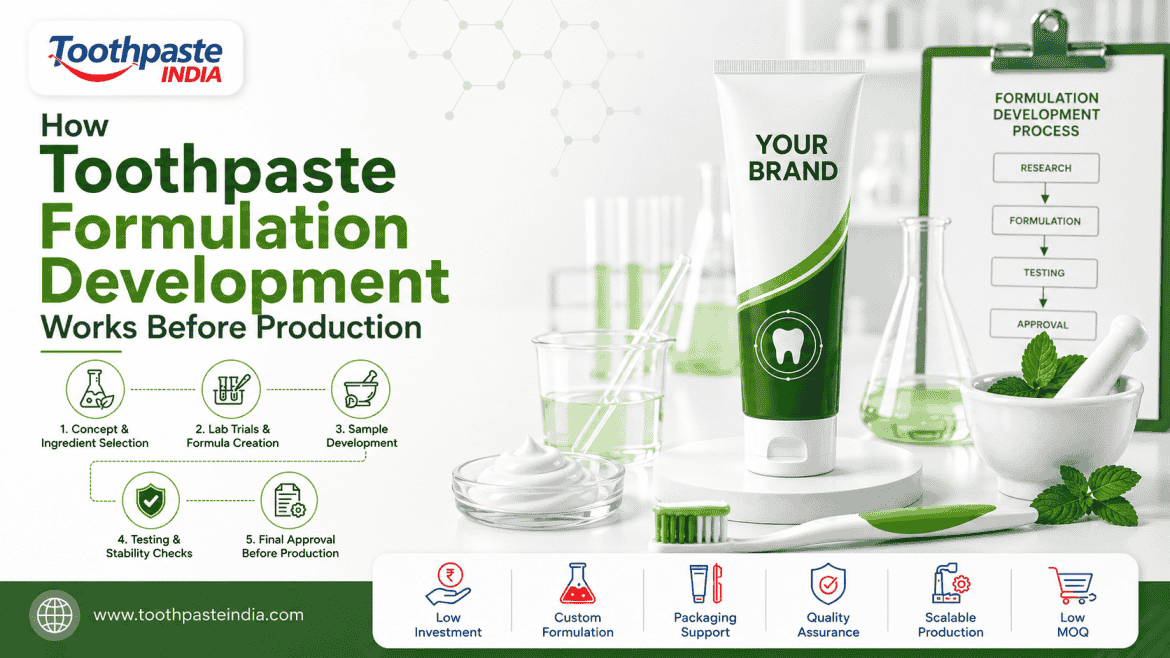
The process generally moves through five stages: concept and ingredient planning, lab trial formulation, sample development, stability and compatibility testing, and final approval before production.
1. Concept and Ingredient Selection
This starts with understanding the brand’s positioning herbal, whitening, sensitive care, kids, or SLS-free and selecting ingredients accordingly. Key categories include:
- Abrasives (like silica) for cleaning without damaging enamel
- Humectants (like glycerin or sorbitol) to retain moisture and texture
- Surfactants (SLS or SLS-free alternatives) for foaming action
- Active ingredients: fluoride, herbal extracts, nano-hydroxyapatite, or whitening agents depending on the product goal
At this stage, brands looking for Custom Toothpaste Formulation can define their ingredient preferences, claim direction, flavour profile, and product positioning clearly.
2. Lab Trial Formulation
The R&D team builds an initial small-batch formula in a controlled lab setting, checking texture, pH balance, and how ingredients interact with each other. This is where a formula gets its first real shape not just a list of ingredients on paper.
3. Toothpaste Sample Development
Once the lab trial looks stable, a physical sample is prepared for the brand to review. Brands typically evaluate taste, texture, foam level, and colour at this stage, and request adjustments before moving further.
Most manufacturers offer 2-3 rounds of sample refinement, since flavour and texture preferences are often adjusted after the first sample is tested.
4. Toothpaste Stability Testing
Stability testing checks whether the formula stays consistent over time and under different conditions heat, humidity, and extended storage. This usually includes accelerated aging tests, which simulate months of shelf time in a shorter lab period.
This step matters because a formula that looks fine on day one can separate, discolour, or lose effectiveness after a few months if it isn’t properly stability-tested a risk brands cannot afford after products are already on retail shelves.
5. Packaging Compatibility Testing
The final formula also needs to be tested against the actual tube or packaging material it will ship in, since some formulas react differently with plastic, laminate, or metal tube linings over time. This step confirms the formula and packaging are compatible for the product’s full shelf life.
Types of Toothpaste Formulations We Develop
Formulation development varies depending on the product category. Common types include:
- Herbal and Ayurvedic toothpaste formulation – plant-based actives, natural flavouring
- Charcoal toothpaste formulation – focused on mild abrasion and whitening appeal
- Whitening toothpaste formulation – balancing efficacy with enamel safety
- Sensitive toothpaste formulation – desensitizing agents for tooth sensitivity
- Kids toothpaste formulation – mild flavours, age-appropriate fluoride levels or fluoride-free options
- SLS-free and fluoride-free toothpaste formulation – for brands targeting clean-label positioning
- Vegan toothpaste formulation – free from animal-derived ingredients
- Gel toothpaste formulation – different texture and transparency requirements than paste
- Nano-hydroxyapatite toothpaste formulation – a newer fluoride-alternative active ingredient
- Sugar-free toothpaste formulation – relevant for medicated and kids’ ranges
As an experienced Oral Care Manufacturer in India, Toothpaste India supports different oral care product concepts for startups, D2C brands, exporters, and established companies.
How Long Does Toothpaste Formulation Development Take?
Formulation development timelines vary by complexity, but as a general industry pattern: simple flavour or texture adjustments to an existing base formula can move faster, while a fully custom formula built from scratch with multiple sample rounds and stability testing takes considerably longer. Brands should always confirm an exact timeline with their manufacturer based on the specific formula requested.
Brands should always confirm an exact timeline with their manufacturer based on the specific formula requested. This is especially important when working with an OEM Oral Care Manufacturer for custom product development and production planning.
How to Choose the Right Toothpaste Formulation Manufacturer
Not every manufacturer offers true custom formulation some only offer existing base formulas with minor adjustments. Here’s what to check:
Buyer Checklist:
- Do they offer in-house R&D, or outsource formulation?
- Can they share their sample development timeline upfront?
- Do they conduct stability and packaging compatibility testing?
- Can they support your specific category (herbal, SLS-free, kids, whitening)?
- Do they offer private label, OEM, and third-party/contract manufacturing options?
- What is their minimum order quantity for custom formulations?
- Can they provide documentation for compliance (FSSAI, BIS, as applicable)?
Private Label vs Custom Formulation
Private label toothpaste manufacturing typically means choosing from an existing base formula and customizing branding and packaging. Custom toothpaste formulation goes a step further building or significantly modifying the formula itself to match specific brand requirements. Brands with a very specific positioning (a unique herbal blend, a particular texture, or a niche active ingredient) usually need custom formulation rather than a standard private label base.
Common Mistakes Brands Make During Formulation Development
- Skipping stability testing to save time before launch
- Not testing the formula with the actual final packaging
- Approving a sample based on smell alone, without a full usage trial
- Choosing a manufacturer without in-house R&D capability
- Not clarifying MOQ and cost implications of custom formulation early on
Expert Tips Before You Start Formulation Development
- Share your brand positioning clearly (herbal, premium, budget, kids) before formulation begins it shapes every ingredient decision
- Ask for a physical sample, not just a lab report, before approving a formula
- Confirm stability testing is included, not offered as a separate paid add-on later
- If exporting, ask whether the formula has been tested for the destination market’s climate conditions
Conclusion
Toothpaste formulation development is the foundation of a successful oral care product it’s where taste, texture, safety, and shelf stability are decided long before a single tube reaches the shelf. Rushing this stage, or working with a manufacturer that skips proper testing, is one of the most common reasons new brands face quality issues after launch.
At Toothpaste India, our formulation development process covers ingredient selection, lab trials, sample rounds, and stability and packaging compatibility testing supporting private label, OEM, and custom toothpaste formulation for D2C brands, Ayurvedic and herbal brands, dental clinics, exporters, and wholesalers. Get in touch to discuss your formulation requirements.
Frequently Asked Questions
Toothpaste formulation development is the process of designing and testing a toothpaste formula ingredients, texture, and flavour through lab trials and stability testing before it moves into bulk production.
Timelines depend on formula complexity and how many sample rounds are needed. Brands should confirm exact timelines with their manufacturer based on their specific formulation request.
No, most manufacturers offer in-house R&D support to develop a formula from your brand brief. You can also bring your own formula if you already have one developed.
Stability testing checks whether a formula stays consistent under heat, humidity, and extended storage, helping avoid separation, discoloration, or reduced effectiveness after the product ships.
Private label typically uses an existing base formula with brand customization, while custom formulation involves building or significantly modifying the formula itself for a specific requirement.
Yes, fluoride-free and SLS-free formulations are common requests and can be developed based on your target audience and brand positioning.
MOQ varies by manufacturer and formula complexity. It’s important to confirm this early, since custom formulation MOQs are often different from standard private label MOQs.