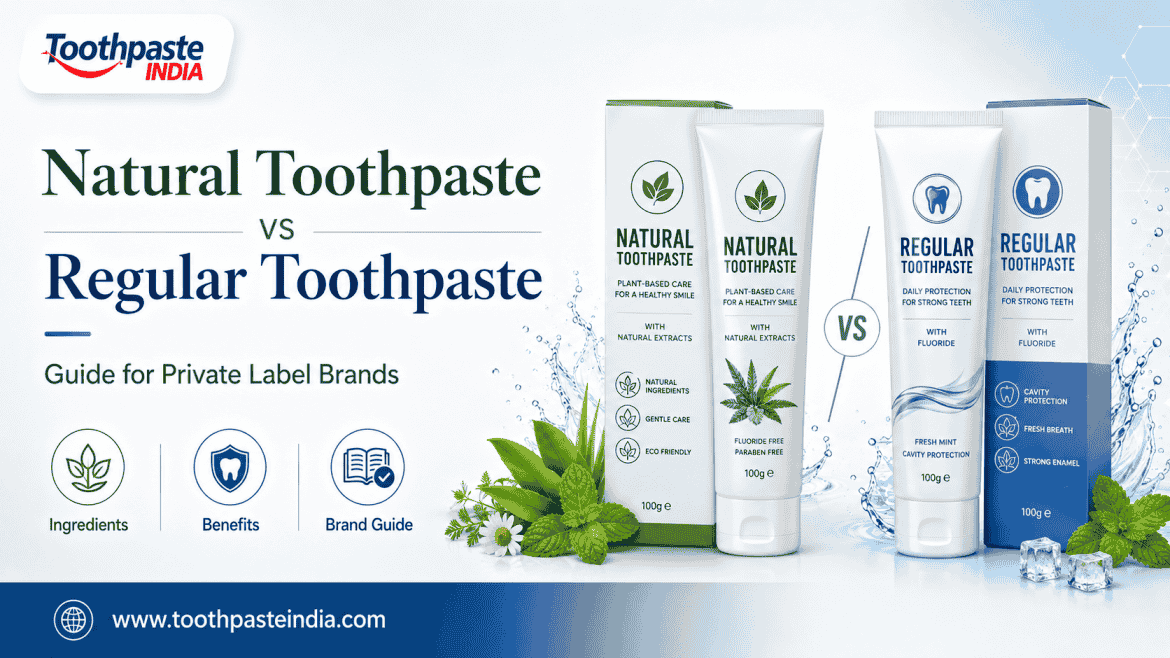

Natural toothpaste vs regular toothpaste is one of the most common questions for consumers and private label oral care brands. Natural toothpaste is preferred by buyers who want herbal, clean-label and fluoride-free options, while regular toothpaste is often selected for cavity protection, strong foaming, fresh breath and dentist-trusted daily use.
For brands, the real question is not only “which is better?” The better question is: which toothpaste formula is right for your target customer?
Some customers want neem, clove, mint, charcoal, aloe vera, miswak or coconut-based oral care. Others want fluoride toothpaste, whitening toothpaste, sensitive toothpaste or kids toothpaste with proven daily-use ingredients. This is why private label brands should choose the formula based on market positioning, claims, age group and regulatory guidelines.
What Is Natural Toothpaste?
Natural toothpaste is a toothpaste formula made with herbal, plant-based, mineral-based or clean-label ingredients. It usually focuses on ingredients like neem, clove, mint, charcoal, aloe vera, tea tree, miswak, coconut oil, calcium carbonate, silica, xylitol or essential oils.
Natural toothpaste is popular because many consumers want oral care products with fewer synthetic ingredients. Some buyers also prefer SLS-free toothpaste, fluoride-free toothpaste, vegan toothpaste or Ayurvedic toothpaste.
For private label brands, natural toothpaste gives strong marketing angles such as:
- Herbal oral care
- Clean-label toothpaste
- Fluoride-free toothpaste
- SLS-free toothpaste
- Ayurvedic toothpaste
- Charcoal toothpaste
- Neem toothpaste
- Vegan oral care
- Kids-friendly natural toothpaste
However, natural toothpaste does not automatically mean better. The formula still needs proper cleaning ability, taste, foam level, pH balance, stability and safe ingredient usage.
What Is Regular Toothpaste?
Regular toothpaste is a standard daily-use toothpaste made with common oral care ingredients such as fluoride, abrasives, humectants, surfactants, flavours, sweeteners and binders. Many regular toothpastes are designed for cavity protection, plaque cleaning, fresh breath, whitening or sensitivity support.
Fluoride is one of the most important ingredients in many regular toothpastes. The National Institute of Dental and Craniofacial Research explains that fluoride helps strengthen enamel and can help reverse early decay by replenishing lost minerals.
Natural Toothpaste vs Regular Toothpaste: Main Difference
The main difference between natural toothpaste and regular toothpaste is the ingredient approach. Natural toothpaste focuses on herbal, plant-based or clean-label positioning, while regular toothpaste focuses on conventional oral care ingredients such as fluoride, stronger foaming systems and mainstream cavity-protection formulas.
Natural toothpaste is usually chosen for:
- Herbal positioning
- Mild flavour profile
- Fluoride-free options
- SLS-free formulas
- Natural ingredient storytelling
- Ayurvedic or plant-based branding
Regular toothpaste is usually chosen for:
- Cavity protection positioning
- Fluoride-based formulas
- Stronger foam and freshness
- Sensitivity support
- Whitening claims
- Mass-market daily use
For a brand, both categories can work. The best choice depends on who you are selling to.
Is Natural Toothpaste Better Than Regular Toothpaste?
Natural toothpaste can be better for brands targeting herbal, clean-label, Ayurvedic or fluoride-free buyers. Regular toothpaste can be better for consumers who want fluoride-based cavity protection and a familiar brushing experience.
A natural toothpaste formula can still be effective if it is properly developed. It should have suitable abrasives for cleaning, a stable base, safe flavours, good mouthfeel and clear claims.
For private label brands, natural toothpaste is better for herbal, clean-label and fluoride-free positioning, while regular toothpaste is better for fluoride-based, mainstream daily oral care products.
Which Toothpaste Is Better for Daily Use?
For daily use, the better toothpaste is the one that matches the user’s oral health needs. A consumer with high cavity risk may prefer fluoride toothpaste. A consumer looking for herbal freshness may prefer neem, clove or mint toothpaste. A consumer with sensitivity may need a gentle formula with low abrasiveness.
Private label brands should avoid making one formula for everyone. Instead, they should build clear product lines, such as:
- Natural toothpaste for herbal oral care
- Fluoride toothpaste for daily cavity protection
- SLS-free toothpaste for mild brushing
- Sensitive toothpaste for gentle cleaning
- Whitening toothpaste for stain-focused users
- Kids toothpaste with safe flavour and age-appropriate positioning
This makes the brand more useful and more searchable.
Should Private Label Brands Launch Natural or Regular Toothpaste?
Private label brands should launch natural toothpaste if their audience prefers herbal, clean-label, Ayurvedic, vegan or fluoride-free products. They should launch regular toothpaste if their audience wants fluoride, cavity protection, strong freshness, whitening or mass-market daily oral care.
For many brands, the best strategy is to launch both types in phases.
Start with one strong hero product. For example:
- Neem toothpaste for gum care
- Charcoal toothpaste for stain care
- Fluoride toothpaste for daily protection
- SLS-free toothpaste for gentle brushing
- Kids toothpaste with mild flavour
- Sensitive toothpaste with gentle abrasives
After market response, expand into toothpaste gel, tooth powder or mouthwash.
Key Ingredients Used in Natural Toothpaste
Natural toothpaste can include herbal and mineral ingredients, depending on the formula and claim direction.
Common options include:
- Neem for herbal gum care positioning
- Clove for traditional oral care positioning
- Mint for freshness
- Charcoal for surface stain cleaning positioning
- Aloe vera for soothing product story
- Miswak for natural oral care appeal
- Calcium carbonate or silica for cleaning
- Xylitol for taste and oral care support
- Essential oils for flavour and freshness
Brands must be careful with claims. Words like “cures gum disease,” “repairs cavities” or “removes all stains” should not be used unless supported by proper testing and current regulatory guidelines.
Key Ingredients Used in Regular Toothpaste
Regular toothpaste usually includes ingredients that support daily brushing performance.
Common ingredients include:
- Fluoride for cavity protection positioning
- Silica or calcium carbonate for cleaning
- Sorbitol or glycerin for moisture
- SLS or mild surfactants for foam
- Binders for texture and stability
- Flavours for freshness
- Sweeteners for taste
- Potassium nitrate or similar actives for sensitivity-focused formulas, where suitable
For private label manufacturing, the ingredient system must be stable inside the tube. Taste, texture, pH, viscosity and separation control are very important.
Manufacturing Angle: What Brands Should Ask Before Choosing a Formula
Before launching natural or regular toothpaste, brands should ask the manufacturer practical questions.
Important questions include:
- Can you develop custom toothpaste formulation?
- Do you support natural, fluoride, SLS-free and herbal toothpaste?
- What is the MOQ for private label toothpaste manufacturing?
- Can you provide tube filling and carton packaging?
- Can you help with flavour, colour and texture matching?
- Do you support stability testing?
- What documents are provided with the batch?
- Can you guide safe label claims?
- Do you offer tooth powder or mouthwash manufacturing too?
A good toothpaste manufacturer should not only fill tubes. They should help you convert a product idea into a stable, market-ready toothpaste.
How Toothpaste India Helps Private Label Brands
Toothpaste India supports brands looking to develop natural toothpaste, regular toothpaste and custom oral care products. Brands can explore private label toothpaste manufacturing, third-party toothpaste manufacturing, OEM toothpaste manufacturing and custom toothpaste formulation.
The product range can include herbal toothpaste, charcoal toothpaste, fluoride toothpaste, non-fluoride toothpaste, SLS-free toothpaste, whitening toothpaste, sensitive toothpaste, kids toothpaste, toothpaste gel, tooth powder and mouthwash.
For startups and D2C brands, this support helps reduce trial-and-error. You can select the formula direction, approve samples, finalize packaging and move toward production with a clearer process.
Conclusion
Natural toothpaste is better for brands targeting herbal, clean-label, Ayurvedic and fluoride-free consumers. Regular toothpaste is better for brands targeting cavity protection, fluoride-based daily use, strong freshness and mainstream oral care buyers.
For private label brands, the best option is not to copy the market. The best option is to build a formula that matches your customer, price point, claims and packaging strategy.
Frequently Asked Questions
Natural toothpaste is better for consumers who prefer herbal, clean-label or fluoride-free oral care. Regular toothpaste is better for users who want fluoride-based cavity protection and mainstream daily brushing. The right choice depends on oral health needs, ingredients, claims and dentist advice.
Yes, natural toothpaste can clean teeth properly if it contains suitable cleaning agents like silica, calcium carbonate or other safe abrasives. The formula must also have good texture, flavour, pH balance and stability. Natural does not automatically mean effective unless the formula is well developed.
Regular toothpaste is not automatically safer, and natural toothpaste is not automatically safer either. Safety depends on ingredient quality, dosage, abrasiveness, pH, age suitability and manufacturing standards. Consumers with dental problems should consult a dentist before switching products.
Natural toothpaste can be made with or without fluoride. Fluoride natural toothpaste is useful for brands that want natural positioning with cavity protection support. Fluoride-free toothpaste is useful for herbal, Ayurvedic, vegan or clean-label buyers who prefer non-fluoride oral care.
The main difference is ingredient positioning. Natural toothpaste focuses on herbal, plant-based or clean-label ingredients, while regular toothpaste usually uses conventional ingredients such as fluoride, surfactants, humectants, abrasives and flavours for daily oral care performance.
Yes, private label brands can launch natural toothpaste with ingredients like neem, clove, mint, charcoal, aloe vera, miswak or xylitol. A toothpaste manufacturer can help with custom formulation, flavour selection, tube filling, packaging and claim review.
For sensitive teeth, a gentle toothpaste with low abrasiveness and suitable sensitivity-support ingredients may be better. Mayo Clinic advises using fluoride toothpaste and avoiding abrasive toothpaste for sensitivity care. Consumers should consult a dentist if sensitivity continues.
Yes, Toothpaste India can support private label brands with natural toothpaste, regular toothpaste, fluoride toothpaste, fluoride-free toothpaste, SLS-free toothpaste, herbal toothpaste, charcoal toothpaste, sensitive toothpaste and custom toothpaste formulation based on brand requirements.