
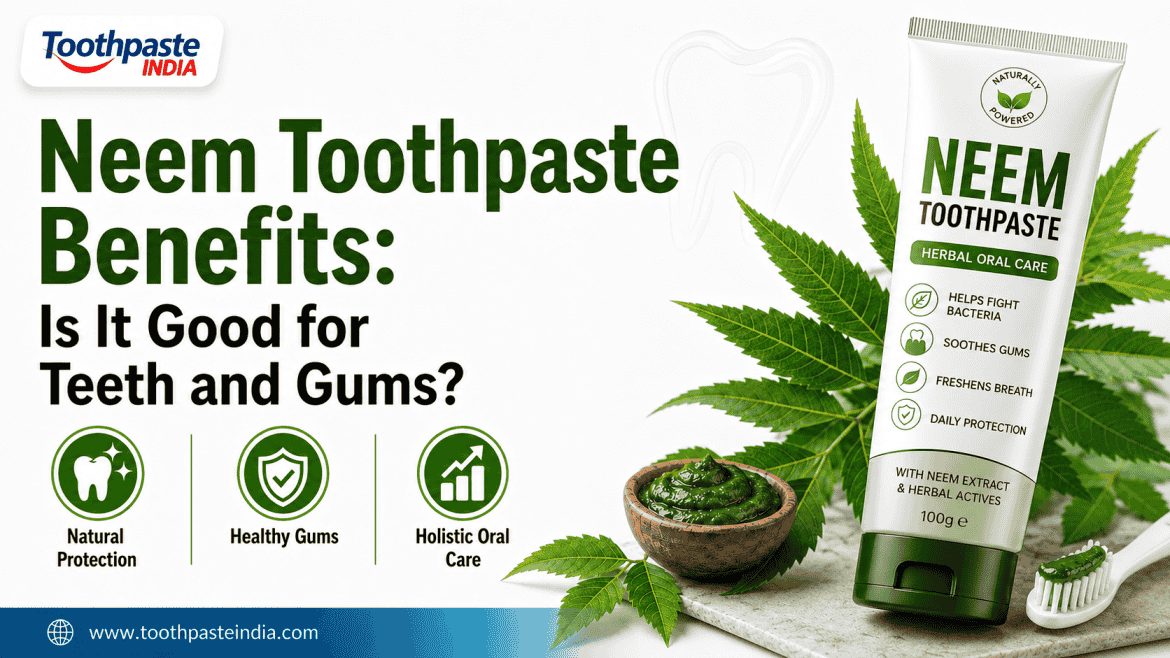

Neem toothpaste benefits include reduced plaque buildup, healthier gums, fresher breath, and support for sensitive teeth, thanks to neem’s natural antibacterial and anti-inflammatory compounds. It’s often combined with clove, mint, or fluoride-free formulas for a gentler, herbal daily oral care routine though it isn’t a substitute for professional dental treatment of existing gum disease or cavities.
Neem Toothpaste Benefits: Is It Good for Teeth and Gums?
Neem has been used in Indian oral care for centuries, long before “herbal” became a marketing word. Twigs from the neem tree (Azadirachta indica) were traditionally chewed as a natural toothbrush across South Asia, and that same plant is now the star ingredient in a fast-growing category of natural neem toothpaste. But do the neem toothpaste benefits people talk about actually hold up, or is it mostly tradition dressed up in a new tube?
This guide breaks down what neem does in a toothpaste formulation, who it genuinely helps, and what to look for on the ingredient label whether you’re a consumer choosing a tube or a brand owner sourcing one.
What Is Neem Toothpaste?
Neem toothpaste is an oral care product formulated with neem leaf extract, neem oil, or neem bark powder as an active ingredient, combined with a standard toothpaste base (abrasives, humectants, foaming agents, and flavoring). It is typically positioned as a herbal or ayurvedic toothpaste, often paired with complementary ingredients like clove, mint, tulsi, or babool for added freshness and gum support.
Is Neem Good for Teeth and Gums?
Yes, neem contains compounds such as nimbidin and nimbin that have shown antibacterial and anti-inflammatory activity in dental research, which is why it has traditionally been associated with plaque control and gum health. That said, its role is supportive: neem toothpaste works best as part of a consistent brushing routine, not as a stand-alone treatment for existing gum disease.
1. Neem Toothpaste Benefits for Gums
Healthy gums start with controlling the bacteria that trigger inflammation. Neem’s natural antibacterial properties help reduce the bacterial load that leads to redness, swelling, and bleeding gums, making it a common ingredient choice in toothpaste formulated for gum care and gum problems. Regular brushers often report less gum sensitivity and reduced bleeding gums when a neem-based paste is used consistently over several weeks though results vary and existing gum disease still needs a dentist’s evaluation.
2. Plaque and Tartar Control
Plaque forms when bacteria in the mouth combine with food particles and saliva. Neem toothpaste for plaque works by disrupting this bacterial film before it hardens into tartar, which is one reason neem tooth and gum powder has remained popular in traditional Indian households for generations.
3. Fresher Breath, Naturally
Neem toothpaste for bad breath is effective largely because it targets the bacteria responsible for odor, rather than simply masking it with strong flavoring. Formulations that pair neem with mint or clove add an extra layer of freshness on top of neem’s underlying antibacterial action.
4. Support for Sensitive Teeth
Neem oil toothpaste is frequently formulated without harsh abrasives, which makes it a gentler option for people managing sensitive teeth. It’s worth noting that neem itself doesn’t “cure” sensitivity for that, look for a formulation that also lists a desensitizing agent such as potassium nitrate alongside the neem extract.
5. A Gentler, Chemical-Conscious Choice
Many neem toothpaste ingredients lists skip sodium lauryl sulfate (SLS), artificial dyes, and sometimes fluoride altogether, appealing to consumers looking for an SLS-free neem toothpaste or fluoride-free neem toothpaste. Vegan neem toothpaste formulations, free of animal-derived glycerin or other additives, have also grown in demand as clean-label preferences increase across urban India.
What to Look for in a Quality Neem Toothpaste
If you’re evaluating a neem herbal toothpaste as a consumer or as a brand sourcing one to sell a few label details matter:
- Neem concentration and source: Look for a clearly stated neem extract or neem oil percentage rather than a vague “neem-infused” claim.
- Complementary actives: Clove (eugenol) and mint (menthol) are commonly added for additional freshness and mild antibacterial support.
- Abrasive level (RDA): A lower RDA value is gentler on enamel and gums, especially relevant for sensitive-teeth formulations.
- Certifications: FSSAI compliance is mandatory for any toothpaste sold in India; GMP-certified manufacturing and, where claimed, vegan or cruelty-free certification add further assurance.
For Brand Owners: Manufacturing Neem Toothpaste in India
For D2C oral care brands, distributors, and exporters, neem toothpaste is one of the fastest-growing sub-categories within herbal and ayurvedic oral care in India, driven by consumer demand for natural formulations with visible traditional roots. At Toothpaste India, formulation work for neem-based products focuses on getting the balance right between neem concentration, mouthfeel, and shelf stability a natural oil like neem needs to be emulsified and preserved correctly, or the paste can separate or lose potency over its shelf life.
Brands typically approach this in one of three ways:
- Private label neem toothpaste manufacturer partnerships using an existing neem formulation and customizing packaging and branding.
- Third party toothpaste manufacturer arrangements full outsourced production based on a brand’s specifications.
- OEM neem toothpaste manufacturer development building a fully custom formulation from scratch, including choice of actives, flavor profile, and packaging format.
Each route has different lead times, minimum order quantities, and regulatory documentation requirements (FSSAI product approval, ingredient safety data, and label compliance), so it’s worth clarifying these upfront with a manufacturer before committing to a formulation.
Conclusion
Neem toothpaste benefits are real, backed by both traditional use and a growing body of research on neem’s antibacterial and anti-inflammatory properties particularly for gum health, plaque control, and fresher breath. It works best as part of a consistent oral care routine, ideally alongside fluoride or another proven anti-cavity agent, rather than as a stand-alone cure for existing dental problems.
If you’re a brand owner or distributor looking to launch a neem, herbal, or ayurvedic toothpaste in India, Toothpaste India offers private label, third-party, and OEM manufacturing support from formulation to FSSAI-compliant production. Get in touch to discuss your neem toothpaste manufacturing requirements.
Frequently Asked Questions
Yes, neem toothpaste is generally safe for daily use as part of a normal twice-a-day brushing routine, provided it’s manufactured and labeled in line with FSSAI requirements.
Neem’s antibacterial and anti-inflammatory properties may help reduce the bacterial irritation linked to bleeding gums, but persistent bleeding should be checked by a dentist to rule out underlying gum disease.
Not necessarily. Neem supports gum health and freshness, but fluoride remains the most clinically established ingredient for cavity prevention, so many neem formulations include both.
Neem-based formulations are often gentler and lower in abrasives, which can suit sensitive teeth, especially when combined with a desensitizing agent like potassium nitrate.
On its own, neem has a bitter, slightly earthy taste, which is why most commercial formulations blend it with mint, clove, or other flavoring agents for a more pleasant brushing experience.
Not all neem toothpastes are vegan by default. check the label for animal-derived ingredients like certain glycerin sources, or look for a specific vegan certification.
Commercial neem toothpaste manufacturing involves sourcing standardized neem extract or oil, formulating it into a stable paste base with correct pH and preservation, and manufacturing under GMP-certified conditions with FSSAI compliance.