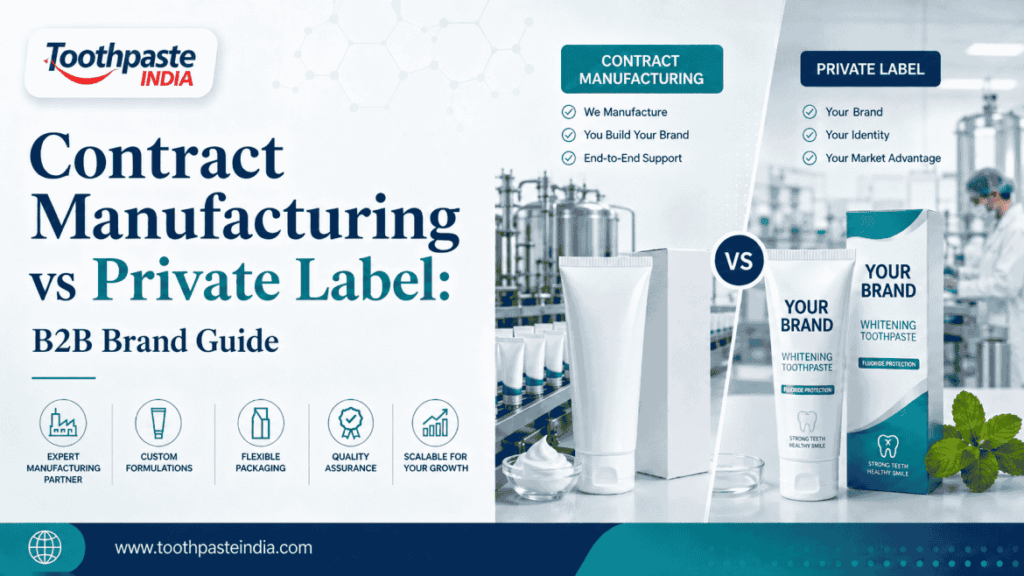
The terms white label vs private label are often used interchangeably, but they can represent different approaches to developing and selling branded products. White label products are typically based on existing formulations that multiple businesses may brand and sell, while private label arrangements can offer greater scope for customisation and brand-specific requirements. Understanding white label vs private label can help businesses choose a model that aligns with their product vision.
For toothpaste businesses, the distinction may become important when deciding how much control to have over custom toothpaste formulation, ingredients, flavours, packaging, and product presentation. A private label toothpaste manufacturer can work with brands that want to create a more tailored product experience, while white label options may suit businesses seeking a quicker route to market with established product concepts.
The best choice depends on the brand’s budget, desired level of differentiation, launch timeline, and long-term product strategy. Businesses should also evaluate minimum order quantities, packaging flexibility, quality standards, and opportunities for future product development. A clear understanding of these factors can help brands select the right private label toothpaste manufacturer and build an oral care portfolio that supports their commercial objectives.