
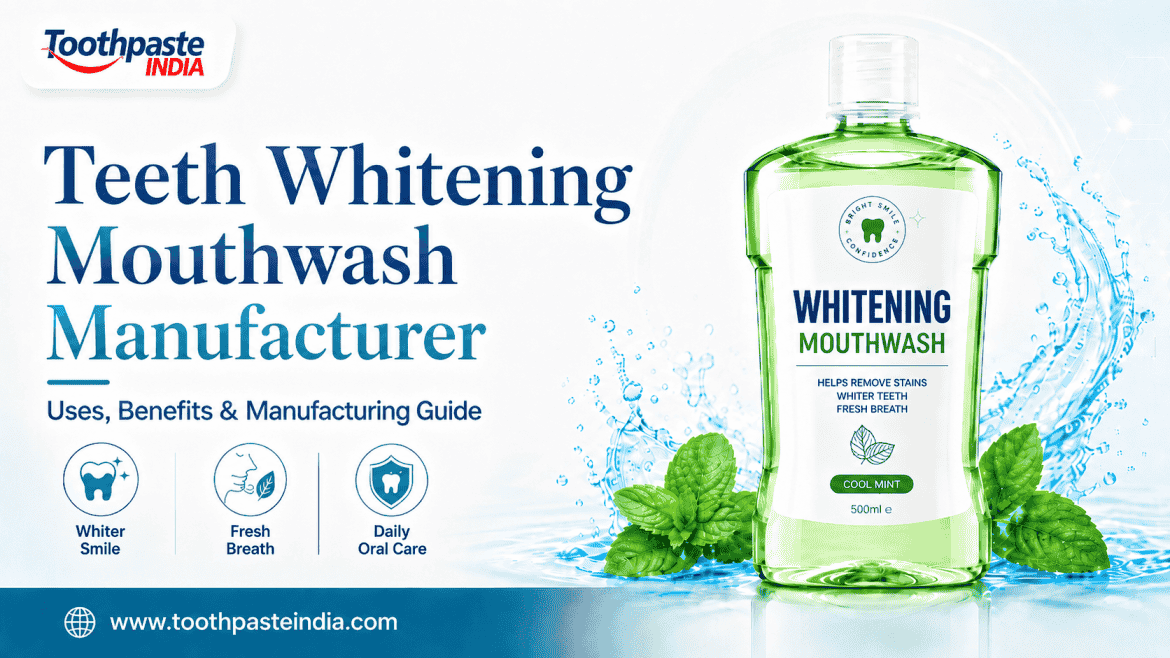

A bright smile is something many people want, but daily habits like drinking tea, coffee, colored beverages, and smoking can make teeth look dull or yellow over time. This is where teeth whitening mouthwash has become a popular part of modern oral care routines. It is easy to use, feels refreshing, and can be added after brushing for extra mouth freshness and stain-care support.
Unlike regular mouthwash that mainly focuses on fresh breath, a whitening mouthwash is designed with whitening-focused positioning. It may help support a cleaner mouthfeel, fresher breath, and better daily oral hygiene. However, it should not be seen as an instant whitening treatment. It works best when used as part of a consistent oral care routine along with brushing, flossing, and regular dental care.
What Is Teeth Whitening Mouthwash?
Teeth whitening mouthwash is an oral rinse made for people who want freshness along with stain-care support. It is usually used after brushing to rinse the mouth, freshen breath, and support overall oral hygiene. Many people choose it because it is simple, quick, and convenient for daily use.
A good whitening rinse is often positioned for users who want to maintain a cleaner smile and reduce the appearance of surface dullness over time. It does not replace brushing or dental cleaning, but it can support a complete oral care routine when used properly.
Why Do People Use Whitening Mouthwash?
People use whitening mouthwash for different reasons. Some want fresher breath, some want support for yellow teeth, and some want a product that makes their mouth feel cleaner after meals. It is especially popular among people who regularly drink coffee, tea, soft drinks, or other stain-causing beverages.
Many users also prefer whitening mouthwash because it is easy to include in a daily routine. After brushing, they can simply rinse for the recommended time and feel fresh. This makes it a practical option for people who want whitening-focused care without adding a complicated step.
Teeth Whitening Mouthwash vs Whitening Toothpaste
Whitening toothpaste and whitening mouthwash both have different roles in oral care. Whitening toothpaste is used with a toothbrush and helps clean the tooth surface during brushing. It may support surface stain removal depending on the formula and brushing habits.
Whitening mouthwash, on the other hand, works as a rinse. It reaches different areas of the mouth and helps support freshness and cleaner mouthfeel. For best results, many people use both together as part of the same routine: brushing with toothpaste first, then rinsing with mouthwash.
Common Types of Whitening Mouth Rinse
There are different types of whitening mouth rinse available in the market. Some are focused on fresh breath, while others are designed for yellow teeth, stain-care support, or sensitive teeth. Brands may also offer alcohol-free whitening mouthwash for users who prefer a gentler mouthfeel.
Some common product concepts include fluoride mouthwash whitening, natural whitening mouthwash, whitening fresh breath oral rinse, and whitening mouthwash for sensitive teeth. The right option depends on the user’s oral care needs, taste preference, and sensitivity level.
Ingredients Used in Whitening Mouthwash
Whitening mouthwash formulas may include freshness agents, flavoring ingredients, fluoride, and whitening-focused ingredients depending on the product concept. Some brands also explore hydrogen peroxide mouthwash whitening or peroxide rinse for teeth concepts.
When using ingredients like hydrogen peroxide, formulation must be handled carefully. The concentration, usage direction, label claim, and regulatory guidance should be properly followed. For consumer safety, brands should avoid strong claims like “instant whitening” or “permanent whitening” unless they have proper evidence and approval.
Is Whitening Mouthwash Good for Yellow Teeth?
Whitening mouthwash may be useful for people who want to support their stain-care routine and maintain fresher breath. It can be a good add-on product for users concerned about yellow teeth caused by tea, coffee, smoking, or daily food habits.
At the same time, users should understand that deep stains or dental discoloration may need professional dental advice. Whitening mouthwash can support daily oral care, but it should not be presented as a guaranteed solution for all types of discoloration.
Who Should Use Teeth Whitening Mouthwash?
Teeth whitening mouthwash can be suitable for people who want fresh breath, cleaner mouthfeel, and whitening-focused daily care. It may be useful for coffee drinkers, tea drinkers, working professionals, travelers, and people who want a quick rinse after brushing.
People with sensitive teeth, gum discomfort, dental treatment, or ongoing oral concerns should choose formulas carefully. In such cases, a gentle formula or dentist guidance may be a better option.
Private Label Teeth Whitening Mouthwash Manufacturing
For oral care brands, teeth whitening mouthwash is a strong product category. Customers are already searching for whitening mouthwash, whitening mouth rinse, mouthwash for yellow teeth, and fresh breath mouthwash. This gives brands an opportunity to launch a product that is useful, modern, and easy to market.
Brands that want to launch their own product can work with a private label teeth whitening mouthwash manufacturer for formulation, flavor selection, bottle design, labeling, packaging, and bulk production. A manufacturing partner can also help develop variants such as alcohol-free whitening mouthwash, whitening mouthwash with fluoride, natural whitening mouthwash, or whitening mouthwash for sensitive teeth. As a trusted teeth whitening mouthwash manufacturer, Toothpaste India can also help develop variants such as alcohol-free whitening mouthwash, whitening mouthwash with fluoride, natural whitening mouthwash, or whitening mouthwash for sensitive teeth.
Final Thoughts
Teeth whitening mouthwash can be a useful addition to a daily oral care routine for people who want fresher breath, a cleaner mouthfeel, and whitening-focused care. It is simple to use and can complement regular brushing and flossing.
For brands, this category offers strong potential because customers are actively looking for easy oral care products that support freshness and smile confidence. With the right formulation, packaging, safe claims, and manufacturing support, teeth whitening mouthwash can become a valuable product in any oral care range.
Frequently Asked Questions
Teeth whitening mouthwash is an oral rinse formulated to support stain-care, freshen breath, and maintain overall oral hygiene. It works by using active cleansing agents to lift surface stains caused by tea, coffee, and food, while simultaneously reaching hard-to-access areas in the mouth to deliver fresh breath and a clean feel.
Yes, whitening mouthwash is a helpful addition to a daily routine for individuals looking to address surface yellowing and maintain a brighter smile. It helps prevent new stains from forming and minimizes surface discoloration from lifestyle habits like smoking or drinking coffee, though deep dental stains may still require professional dental treatment.
The main difference lies in application and reach: whitening toothpaste uses mild abrasives and brushing action to clean the tooth surface, while whitening mouthwash is a liquid rinse that flows between teeth to freshen breath and wash away loose debris. For optimal results, dental professionals recommend using both products together as part of a comprehensive daily oral hygiene routine.
Many whitening mouthwash formulations contain low concentrations of hydrogen peroxide or other safe peroxide agents to break down surface stains. However, because hydrogen peroxide can cause sensitivity if formulated incorrectly, brands must carefully manage ingredient concentrations, usage directions, and safety labeling under local regulatory guidelines.
Typically, visible results from a whitening mouthwash can be seen within two to four weeks of consistent, twice-daily use. Because mouthwash is a rinse, its whitening effects are gradual and work best when supported by daily brushing with a whitening toothpaste and regular dental cleanings.
Yes, most teeth whitening mouthwashes are designed for daily use as part of your morning and evening oral care routine. However, users should always follow the packaging’s usage instructions, and those with sensitive teeth or gums may want to opt for gentler, peroxide-free, or natural formulations.
Yes, alcohol-free whitening mouthwashes are widely available and are ideal for users who prefer a gentler rinse without the burning sensation or mouth dryness associated with alcohol. Alcohol-free formulas clean and refresh the oral cavity while preserving the natural moisture of the mouth, which is beneficial for long-term oral hygiene.
Individuals with tooth sensitivity can use whitening mouthwash, but they should look for specialized formulas that are peroxide-free, alcohol-free, or contain soothing natural ingredients. If mild sensitivity or gum discomfort occurs, it is recommended to reduce usage or consult a dentist.
Oral care brands can launch a custom whitening mouthwash by partnering with a third-party private label manufacturer to manage R&D, flavor customization, packaging design, and bulk production. Partnering with a manufacturer allows D2C brands, startups, and wholesalers to introduce high-quality, compliant whitening rinses without building their own production plants.
Choosing a GMP-certified manufacturer in India ensures that the mouthwash is produced under strict quality control, international safety standards, and batch consistency. Leading manufacturers like HCP Wellness provide cost-effective OEM and contract manufacturing services, helping global brands formulate high-performing, export-ready oral care products.