
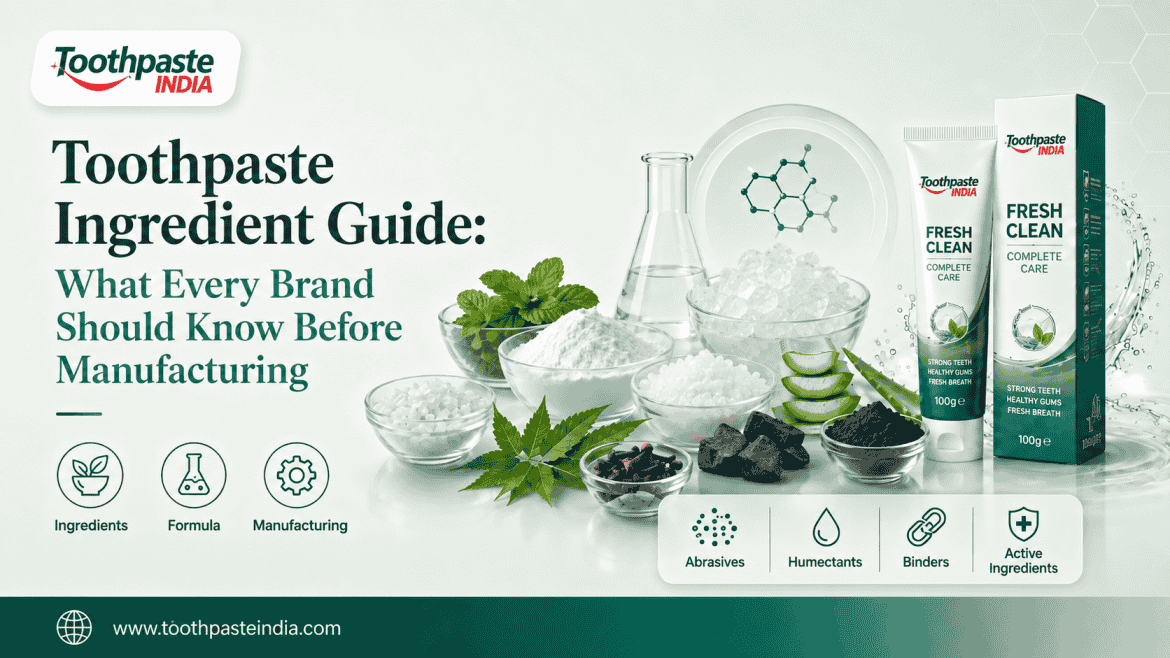

A Toothpaste Ingredient is not selected only for taste or appearance. Every ingredient has a function: cleaning, thickening, foaming, preserving, flavouring, sweetening, whitening support, sensitivity care or cavity protection.
For toothpaste brand owners, D2C startups, distributors, pharma companies and exporters, understanding toothpaste ingredients helps you choose the right formula before manufacturing. It also helps you avoid wrong claims, poor taste, unstable texture and packaging issues.
Toothpaste India, an Ahmedabad-based toothpaste manufacturer, supports brands with private label toothpaste manufacturing, custom toothpaste formulation and third party toothpaste manufacturing for different oral care concepts.
What Is a Toothpaste Ingredient?
A Toothpaste Ingredient is a raw material used in a toothpaste formula to create the product’s texture, taste, cleaning action, stability and oral care function.
A typical toothpaste ingredient list may include toothpaste base ingredients, abrasives, humectants, binders, foaming agents, flavouring agents, sweeteners, preservatives and toothpaste active ingredients. The final formula depends on the product type, such as herbal toothpaste, fluoride toothpaste, fluoride free toothpaste, kids toothpaste, sensitive toothpaste or whitening toothpaste.
For a brand, ingredient selection should match the target customer. A kids toothpaste needs mild taste and child-friendly positioning. A whitening toothpaste needs stain-removal support. A sensitive toothpaste needs a different formula approach than a basic herbal toothpaste.
Why Do Toothpaste Ingredients Matter Before Manufacturing?
Toothpaste ingredients matter because they directly affect product performance, customer experience, stability and compliance.
In our manufacturing discussions with new brands, one common mistake is choosing ingredients only because they sound trendy. A strong toothpaste formula should balance cleaning power, taste, foam, texture, safety, shelf stability and packaging compatibility.
For example, a toothpaste with too much abrasive effect may feel strong, but it may not suit daily-use positioning. A herbal toothpaste with too many extracts may look attractive on the label but can create taste, colour or stability challenges. A fluoride toothpaste needs careful formulation and compliance review.
In India, toothpaste products are generally handled under the cosmetic regulatory framework when positioned as cosmetic oral care products, and manufacturers should verify applicable requirements under the Cosmetics Rules, 2020 and relevant standards before launch. CDSCO lists the Cosmetics Rules, 2020 as part of India’s cosmetics regulatory framework. BIS also has a toothpaste specification standard, IS 6356, which covers toothpaste quality and specification-related parameters.
What Are the Main Toothpaste Ingredients and Their Functions?
Toothpaste ingredients and their functions can be understood in simple groups.
Toothpaste Abrasives
Toothpaste abrasives help clean teeth by removing surface debris and stains. Common abrasive systems may include hydrated silica, calcium carbonate or similar polishing materials, depending on the formula.
The abrasive system must be balanced. It should clean effectively without making the product feel harsh. For whitening toothpaste ingredients, abrasives are especially important because they influence stain-removal performance and mouthfeel.
Toothpaste Humectants
Toothpaste humectants help keep the paste moist and prevent it from drying inside the tube.
Common humectant examples include sorbitol and glycerin. These ingredients also affect smoothness, sweetness perception and texture. A formula without a proper humectant balance may become dry, hard or difficult to squeeze.
Toothpaste Binders
Toothpaste binders help give toothpaste its structure and stability.
Binders and thickeners help maintain a smooth, uniform texture so that liquid and solid ingredients do not separate. They also influence how the toothpaste comes out of the tube and how it spreads on the brush.
Toothpaste Foaming Agents
Toothpaste foaming agents create foam during brushing.
Sodium lauryl sulfate is a commonly used foaming agent, but many brands now ask for SLS free toothpaste ingredients for mild or natural positioning. SLS-free formulas may use alternative surfactant systems depending on the product concept.
Foam level should match the target customer. Some users expect high foam, while natural toothpaste buyers may accept low foam if the brand explains the benefit clearly.
Toothpaste Flavouring Agents
Toothpaste flavouring agents create the taste and freshness experience.
Mint is the most common direction, but brands may also explore clove, fennel, bubblegum, fruit, herbal or mild flavours. Flavour is one of the biggest repeat-purchase factors because customers judge toothpaste strongly by taste and after-feel.
Toothpaste Preservatives
Toothpaste preservatives help protect the product from microbial risk and maintain safety during shelf life.
The preservative system depends on water content, formula type, packaging and regulatory suitability. Brands should not remove preservatives only for marketing unless the formula is properly tested and stable.
Which Toothpaste Active Ingredients Can Brands Consider?
Toothpaste active ingredients are ingredients added for a specific oral care purpose.
A fluoride toothpaste may use fluoride compounds for cavity protection positioning. A sensitive toothpaste may use ingredients chosen for sensitivity care positioning. A fresh breath toothpaste may include zinc salts or flavour systems depending on formulation goals. Herbal toothpaste ingredients may include neem, clove, mint, aloe vera, charcoal, turmeric or other botanical extracts.
Brands should be careful with claims. Cosmetic oral care products should avoid drug-like or disease-treatment claims unless the product is legally classified, tested and approved under the correct regulatory route. CDSCO is India’s national regulatory authority for drugs and cosmetics, and its role includes quality and regulatory oversight under the Drugs and Cosmetics framework.
How Should Brands Choose Natural and Herbal Toothpaste Ingredients?
Natural toothpaste ingredients should be chosen for function, taste, stability and customer appeal.
Popular herbal toothpaste ingredients include neem, clove, mint, aloe vera, turmeric and charcoal. These ingredients are familiar to Indian consumers and work well for ayurvedic, herbal or natural toothpaste positioning.
However, “natural” does not automatically mean better. A natural toothpaste still needs proper texture, microbial safety, taste, stability and label review. If the formula is too bitter, too dark, too grainy or unstable, customers may not buy it again.
For startups, a practical approach is to start with one clear concept, such as neem toothpaste, charcoal toothpaste, kids toothpaste, whitening toothpaste or fluoride free toothpaste, instead of mixing too many ingredient stories into one product.
What Should Brands Know About Fluoride and Fluoride Free Toothpaste Ingredients?
Fluoride toothpaste ingredients are used when the product is positioned for cavity protection support.
Fluoride free toothpaste ingredients are used when a brand wants natural, herbal, kids-focused or fluoride-free positioning. These formulas may use xylitol, herbal extracts, calcium-based systems, mild abrasives or fresh breath ingredients depending on the concept.
The decision should not be made only for trend value. Brands should consider target audience, claims, market expectations, regulatory review and dentist/customer perception before choosing fluoride or fluoride free positioning.
How Do Ingredients Affect Toothpaste Packaging?
Toothpaste packaging must match the formula.
A strong formula can still fail if packaging compatibility is poor. Some toothpaste formula ingredients may need better barrier protection, proper tube material, correct cap selection and good sealing quality.
Before production, a private label toothpaste manufacturer should check whether the selected tube supports the formula’s viscosity, filling weight, stability, storage and squeezing experience. Packaging also affects how customers perceive the formula. For example, a premium sensitive toothpaste needs a cleaner, clinical look, while herbal toothpaste may need green and natural design cues.
How Does the Toothpaste Manufacturing Process Use Ingredients?
The toothpaste manufacturing process starts with formula planning and ingredient selection.
A simplified process looks like this:
- Define the product concept and target customer
- Select toothpaste manufacturing ingredients
- Create or choose the toothpaste formulation
- Prepare lab or pilot samples
- Check taste, texture, foam and stability
- Finalize packaging and label content
- Move to batch manufacturing
- Fill, seal, pack and dispatch the finished product
A toothpaste formulation manufacturer helps connect the formula, process and packaging so the product works in real manufacturing conditions, not only on paper.
What Ingredient Mistakes Should New Toothpaste Brands Avoid?
New brands should avoid choosing toothpaste ingredients only because they look attractive in marketing.
Common mistakes include adding too many actives, copying competitor formulas, making strong claims without review, ignoring taste, ignoring foam preference, choosing poor flavour balance and not testing packaging compatibility.
Another mistake is selecting a formula without considering the sales channel. A D2C toothpaste may need strong visual appeal and clear ingredient storytelling. A distributor-focused toothpaste may need cost efficiency and broad acceptance. A dental clinic brand may need a more professional and trust-led formula style.
How Can a Private Label Toothpaste Manufacturer Help?
A private label toothpaste manufacturer helps brands select formula options, ingredients, packaging, samples and production plans.
For startups, this support is useful because ingredient decisions affect cost, MOQ, taste, claims, packaging and repeat supply. An experienced third party toothpaste manufacturer can help choose between ready formula, custom toothpaste formulation and semi-custom development.
Toothpaste India works with brands looking for private label toothpaste ingredients, oral care product concepts and manufacturing support from Ahmedabad, Gujarat. Before finalizing any formula, brands should verify ingredient suitability, claim language, packaging compatibility and current regulatory guidelines.
Conclusion
A Toothpaste Ingredient is more than a raw material. It decides how your toothpaste cleans, tastes, foams, feels, stays stable and supports your brand promise.
For a successful launch, choose toothpaste ingredients based on customer need, formula function, packaging compatibility, compliance and long-term brand positioning. If you are planning to launch private label toothpaste, herbal toothpaste, fluoride free toothpaste, kids toothpaste, sensitive toothpaste or whitening toothpaste, Toothpaste India can help with ingredient guidance, custom toothpaste formulation and manufacturing support.
Frequently Asked Questions
Toothpaste usually contains abrasives, humectants, binders, foaming agents, flavouring agents, sweeteners, preservatives and active ingredients. Each toothpaste ingredient has a function, such as cleaning teeth, creating foam, improving taste, maintaining texture or supporting cavity, sensitivity or fresh breath positioning.
The most important Toothpaste Ingredient depends on the product purpose. For cavity protection, fluoride may be important. For sensitivity, a sensitivity-care active may matter. For herbal toothpaste, neem, clove, mint or aloe vera may support the brand concept.
Toothpaste manufacturing ingredients may include hydrated silica, calcium carbonate, sorbitol, glycerin, cellulose gum, foaming agents, flavour, sweetener, preservatives, fluoride, xylitol, herbal extracts or other active ingredients depending on the toothpaste formula.
Toothpaste active ingredients are added for a specific oral care purpose, such as cavity protection, sensitivity care, whitening support, plaque control, fresh breath or gum care. The active ingredient should match the product claim, target customer and regulatory positioning.
Natural toothpaste ingredients may include neem, clove, mint, aloe vera, turmeric, charcoal, xylitol, calcium carbonate, herbal extracts and plant-based flavours. A natural formula still needs proper stability, safety, texture, taste and packaging compatibility.
Fluoride toothpaste ingredients include fluoride compounds for cavity protection positioning. Fluoride free toothpaste ingredients use other systems such as herbal extracts, xylitol, calcium-based ingredients or fresh breath ingredients depending on the product concept and target audience.
SLS free toothpaste ingredients are not automatically better, but they may suit brands targeting mild, natural or sensitive-mouth positioning. SLS is a common foaming agent, while SLS-free formulas use alternative foaming systems with a different brushing feel.
Whitening toothpaste ingredients may include polishing abrasives, stain-removal systems, flavouring agents and sometimes peroxide-based systems depending on the product concept and regulatory suitability. Brands should avoid exaggerated whitening claims without proper support and review.
Startups should check ingredient function, taste, foam level, texture, stability, safety, claim suitability, packaging compatibility, MOQ, cost and regulatory requirements. A private label toothpaste manufacturer can help match ingredients with product positioning and production needs.