
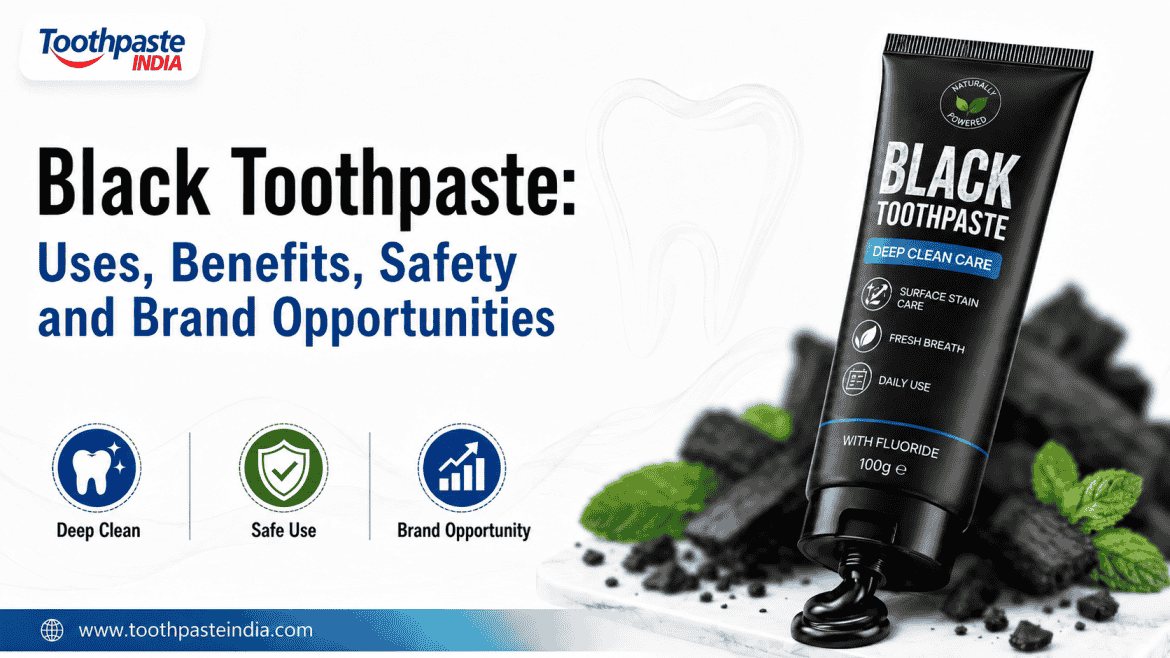

Black toothpaste typically refers to toothpaste formulas containing activated charcoal or other dark minerals. It’s promoted as a natural way to remove stains and freshen breath. In reality, black toothpaste can lift surface stains and adsorb odors, but it won’t bleach tooth enamel like peroxide whitening. This article explains what black toothpaste is, how it works, its benefits and risks, and how brands can leverage this trend.
What is Black Toothpaste?
Black toothpaste is usually charcoal-based toothpaste or formulas with dark pigments (like bamboo charcoal, black mineral powders, or herbal “black seed”). The activated charcoal in these toothpastes is made by heating carbon-rich sources (coconut shells, bamboo, wood) to create a highly porous, black powder. These pores let charcoal bind to surface particles and impurities.
Some products may also use ingredients like black seed (Nigella sativa) or botanical extracts, giving a dark color. The result is a toothpaste that appears jet-black or dark gray. Beyond novelty, black toothpaste appeals to natural/”clean-label” trends. Many consumers believe it can “detox” their mouth naturally. (In reality, its whitening action is limited to surface stains only.)
How Black Toothpaste Works (Whitening Mechanism)
Activated charcoal’s adsorption: The key action of black charcoal toothpaste is adsorption (binding) of surface stains. When you brush with a charcoal toothpaste, the tiny charcoal particles grab onto stain molecules (from coffee, tea, tobacco) on the enamel. Then, brushing and rinsing wash those bound particles away, leaving a cleaner surface. Unlike peroxide whitening, charcoal does not chemically alter the teeth it simply removes what’s on the surface.
Abrasive polishing: Many charcoal toothpastes also include mild abrasives (like baking soda or fine calcium carbonate) to polish teeth. A fine black powder plus gentle scrubbing helps buff away plaque and debris. Importantly, reputable formulas use ultra-fine charcoal so it doesn’t scratch enamel.
Natural freshness: In addition to stain removal, black toothpaste formulas often contain oils (peppermint, clove, coconut) and herbal extracts. The porous charcoal may trap odor-causing molecules, which can help freshen breath. Many users report a “clean mouthfeel” after brushing with charcoal toothpaste. However, remember that charcoal only adsorbs compounds on the surface it does not actually chemically whiten enamel below the surface.
Benefits and Uses of Black Toothpaste
Surface Whitening: Charcoal toothpaste can lighten extrinsic stains (coffee, tea, smoking) by adsorbing the stain molecules. After a few weeks of regular use, some users notice a brighter appearance.
Fresh Breath: The charcoal’s porous structure can trap bad-breath compounds. Users often find it fresher and minty (when mint oils are added). Dr. Burhenne notes charcoal toothpaste “may also support better breath and a balanced oral microbiome” if formulated with ingredients like coconut oil.
Natural Appeal: Black charcoal toothpaste fits the popular “natural” and “eco-friendly” niche. It usually contains plant-based minerals (coconut shell, bamboo), and may be fluoride-free or vegan, meeting demands of herbal or Ayurvedic brands.
Standout Packaging: The striking black-and-white contrast in packaging or the black stripe can make a product eye-catching. For online and D2C brands, this visual impact differentiates the product on shelves or social media (DataIntelo notes social media demand as a growth driver).
Complementary Use: Many fans use charcoal toothpaste occasionally for example, a few times a week after a professional cleaning. It can be positioned as a supplement to regular fluoride toothpaste, to maintain whiteness between cleanings.
Safety and Potential Risks
While black toothpaste has appealing benefits, dental experts caution on safety and limitations:
Abrasiveness: Most charcoal toothpastes are quite abrasive compared to regular pastes. Healthline warns “charcoal toothpaste is too abrasive for everyday use”. Overuse can erode enamel, making teeth thinner and more yellow (since dentin is naturally yellow). This enamel loss also increases sensitivity to hot/cold.
No Fluoride: Many charcoal pastes skip fluoride (to keep ingredients “natural”). Unfortunately, fluoride is key to strengthening enamel and preventing cavities. Healthline notes most charcoal brands lack fluoride, which means prolonged use could risk decay. In fact, some studies link charcoal toothpaste use to more cavities due to this gap.
Staining of Restorations: Charcoal particles are porous. They can get caught in cracks, old fillings, crowns or bridges. Penn Dental Medicine reports charcoal can “accumulate in cracks and crevices” and even leave gray lines at the edges of veneers/crowns. This can make the teeth/repairs look discolored.
Unknown long-term effects: Activated charcoal itself is generally inert, but its use in toothpaste is not fully studied. Some charcoal toothpastes contain additives like crystalline silica (another abrasive).
Choosing and Using Black Toothpaste
Ingredients to look for: A good black toothpaste formula balances efficacy with safety. Key ingredients include:
- Ultra-fine activated charcoal (from coconut shell or bamboo) for adsorbing stains.
- Fluoride or remineralizers: If possible, find one with fluoride or nano-hydroxyapatite to help remineralize enamel.
- Gentle abrasives: Baking soda or calcium carbonate at controlled levels, to polish without scratching.
- Soothing agents: Aloe vera, coconut oil or xylitol can mitigate sensitivity and improve feel.
- Natural flavors/oils: Peppermint, tea-tree or clove oil for fresh breath and germ-fighting properties.
Ingredients to avoid: Harsh silica or metal oxides, or high levels of SLS/Triclosan. Also steer clear of any heavy metals or excessive synthetic dyes. Always check RDA (Relative Dentin Abrasivity) if available; choose formulas with RDA in a safe range.
Using it properly: Use a soft-bristled toothbrush and brush gently in circular motions. Limit brushing to 1–2 minutes with charcoal paste (like any toothpaste). Rinse thoroughly. Don’t swallow any toothpaste. For sensitive users, start with short exposures (e.g. use 2–3 times a week) and see how your teeth feel. Alternate with a regular fluoride toothpaste for daily protection.
Packaging: Some black toothpastes come in black tubes or have a black stripe in the paste (e.g. a black-and-white swirl). This is purely visual and doesn’t affect function. (Contrary to viral myths, a black stripe is not a “poison marker”; it’s just design.)
Black Toothpaste vs. Other Whitening Options
Compared to regular whitening toothpaste (with peroxide or blue covarine), black charcoal toothpaste only acts on surface stains. Healthline and Penn sources agree peroxide whitening is far stronger and affects intrinsic enamel color. Charcoal paste can be a maintenance brush but not a substitute for true whitening treatments.
Alternatives like whitening strips, gels or in-office bleaching chemically whiten teeth below the enamel black toothpaste does not. Other natural products (baking soda paste, charcoal powders) work similarly by abrasion/adsorption.
Who Should Use Black Toothpaste?
Black toothpaste is mainly for adults looking for a natural stain-remover. Ideal users might include:
- Coffee, tea, tobacco users: to help lighten surface stains.
- D2C/E-co brand buyers: seeking trendy oral care.
- Travelers or hotel guests: small black-tube versions often used as luxe toiletries.
Who should avoid or be cautious:
- Children (especially under 12): risk of swallowing it and it’s too abrasive for developing teeth.
- People with severely sensitive teeth or thin enamel.
- Anyone with active decay or gum disease (should see a dentist first).
- Those expecting dramatic whitening they will be disappointed.
For issues like black spots or staining from chromogenic bacteria, regular hygiene and targeted toothpaste (anti-bacterial or professional cleanings) are better solutions than charcoal. Charcoal won’t cure intrinsic discoloration.
Manufacturing & Labeling Options for Brands
Brands looking to launch a black toothpaste line have many options:
Private Label / White Label: If you want a quick launch, choose an existing charcoal toothpaste formula from a supplier and apply your branding. For example, Toothpaste India is a private label charcoal toothpaste manufacturer, offering ready formulas including bamboo charcoal paste. This lets you skip R&D and start selling under your own name.
OEM / Contract Manufacturing: For more control, work with a manufacturer to customize ingredients (flavor, abrasives, RDA) and packaging. A GMP-certified OEM (Original Equipment Manufacturer) like Toothpaste India has the facility and expertise to develop custom black toothpaste. They handle mixing, tube filling, quality testing, etc.
Third-Party Manufacturer: A third party toothpaste manufacturer produces the formula at scale based on your brand requirements, packaging needs, and quality standards. This model is ideal for startups that want low MOQ, faster launch support, and professional production without owning a factory. Toothpaste India’s startup program, for instance, supports small initial orders and scalable manufacturing.
Certifications & Compliance: Always choose a GMP-certified charcoal toothpaste manufacturer. Good Manufacturing Practices ensure the factory follows hygiene, testing and quality standards (for example, ISO, FSSAI or FDA compliance). Brands should verify that any manufacturer has these certifications.
Customization: A flexible manufacturer lets you tweak the formula. You might add fluoride for anti-cavity, include herbal extracts, choose a vegan base, or create a fluoride-free version. You can also pick tube style, labels, and even design unique packaging (e.g. pastel vs. bold black packaging).
Technical Support: Leading toothpaste makers provide R&D support. They can advise on safe RDA levels, stable formulations (avoiding separation of charcoal), and ingredient sourcing. As Toothpaste India notes, they even handle special requests like charcoal tooth powder or charcoal dental gel.
Conclusion
Black toothpaste (charcoal toothpaste) is more than a fad it’s a fast-growing segment driven by consumer interest in natural whitening. It can remove surface stains and freshen breath, but it does not chemically whiten enamel and carries risks if overused (mainly enamel abrasion and missing fluoride). Brands can capitalize on its novelty and “clean image,” but must formulate wisely (fine charcoal, protective ingredients) and market honestly. Partnering with an experienced GMP-certified manufacturer ensures product safety and quality. Overall, with the right formula and packaging, black toothpaste offers an exciting opportunity for oral care brands combining visible results with a trendy, Instagram-friendly look.
Frequently Asked Questions
Black toothpaste is an oral care product formulated using activated charcoal, dark minerals, or botanical extracts like black seed (Nigella sativa). Activated charcoal is produced by heating natural carbon sources such as coconut shells, bamboo, or wood to create a highly porous black powder that binds to surface impurities and plaque on teeth.
Yes, but only surface stains. Black toothpaste lifts extrinsic (surface) stains caused by coffee, tea, wine, and tobacco through adsorption and mild abrasive polishing. Unlike professional chemical whitening treatments, black toothpaste does not contain bleaching agents like hydrogen peroxide, meaning it cannot change the natural intrinsic color of your enamel.
Charcoal-based toothpaste works primarily through adsorption a process where microscopic porous charcoal particles attract and bind to surface stain molecules, plaque, and odor-causing compounds. When you brush and rinse, these bound particles are washed away, leaving the tooth surface cleaner and brighter.
Black toothpaste is generally safe if it uses ultra-fine, low-abrasive activated charcoal. However, overusing highly abrasive formulas can wear down tooth enamel over time. Dentists often recommend using charcoal toothpaste 2 to 3 times a week or choosing a formula specifically tested for low enamel abrasiveness (Relative Dentin Abrasivity / RDA).
If the formula contains coarse or highly abrasive charcoal, it can wear away the outer enamel over time, exposing the yellow dentin layer beneath. To protect your enamel, choose reputable black toothpastes formulated with finely ground charcoal and mild polishing agents like calcium carbonate or baking soda.
Many commercial black toothpastes are marketed as natural or clean-label products and are fluoride-free. However, private label manufacturers can formulate black toothpastes either with fluoride (to protect against cavities) or without fluoride (for consumers seeking natural alternatives).
The primary benefits of black toothpaste include:
- Removal of surface stains: Cleans extrinsic discoloration from coffee, tea, and food.
- Fresher breath: Traps bad-breath compounds and often includes essential oils like peppermint or clove.
- Natural clean-mouth feel: Removes surface debris and plaque without aggressive chemical bleaching.
- Clean-label appeal: Often made with plant-based, eco-friendly ingredients.
- Black Toothpaste: Uses porous activated charcoal to physically adsorb surface stains and odors. It is often fluoride-free and marketed as a natural whitening solution.
- White Toothpaste: Typically uses traditional mild abrasives (like silica) for cleaning, and frequently contains fluoride for cavity prevention and enamel remineralization.
Charcoal particles can sometimes settle around dental restorations (such as crowns, veneers, or caps) or under receding gums, creating temporary dark outlines. Thorough rinsing after brushing helps prevent charcoal residue from lingering in gaps or along the gumline.
Yes. Oral care brands can partner with third-party contract manufacturers (such as Toothpaste India) to develop customized black toothpaste formulas. Contract manufacturers offer private labeling, custom formulations (adding fluoride, herbal extracts, or custom flavors), regulatory compliance, and eco-friendly packaging options for emerging and established brands.