
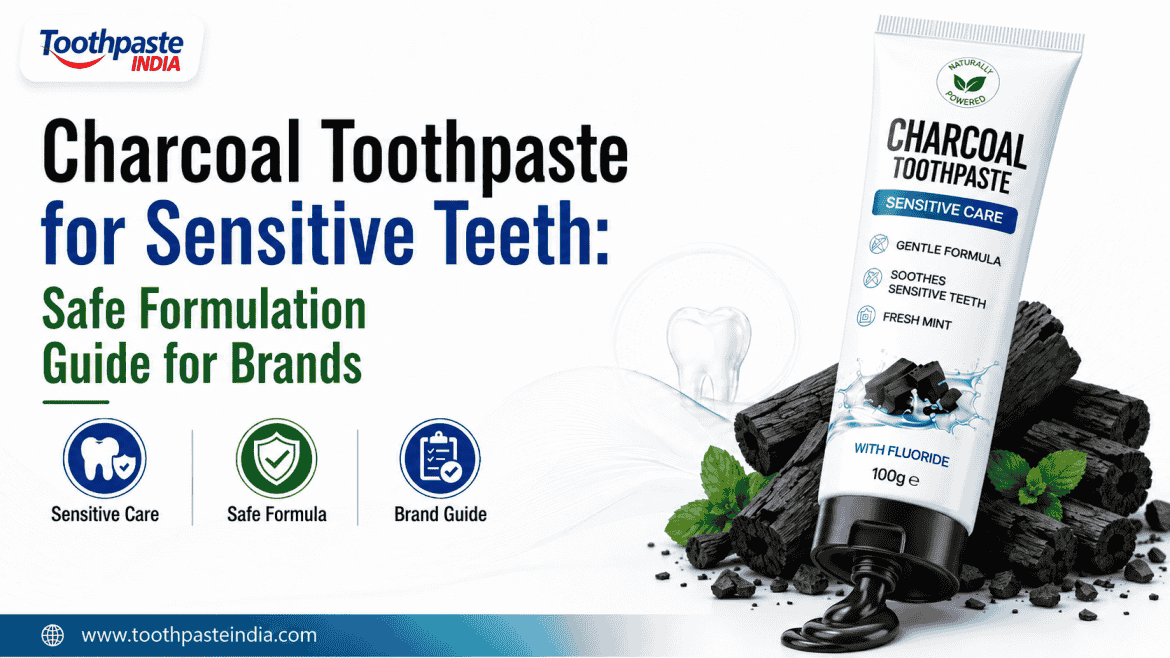

Charcoal toothpaste for sensitive teeth can be formulated safely with the right approach, offering mild whitening while minimizing enamel wear. Many popular versions are too abrasive and may worsen sensitivity, but balanced recipes using fine activated charcoal, desensitizing agents, and remineralizers work well for modern oral care lines.
This matters for D2C brands, Ayurvedic manufacturers, and exporters because consumers want natural whitening without discomfort. Toothpaste India helps brands create effective, gentle charcoal toothpaste products that meet market demand and safety standards.
In this guide, you’ll discover what makes a charcoal formula suitable for sensitive teeth, how it whitens, essential ingredients, common pitfalls, and practical tips for development with the right charcoal toothpaste manufacturer.
What Is Charcoal Toothpaste and How Does It Work for Sensitive Teeth?
Activated charcoal toothpaste uses fine powder from sources like coconut shells or bamboo. It adsorbs surface stains from coffee, tea, or smoking through its porous structure.
For sensitive teeth, the key is controlling abrasiveness. Charcoal toothpaste for sensitive teeth provides gentle polishing but can expose dentin if overused, leading to pain from hot/cold triggers.
Charcoal Toothpaste Benefits for Teeth
- Surface Whitening: Lifts extrinsic stains without peroxide for a natural look.
- Detox and Freshness: Adsorbs odors and impurities for cleaner-feeling mouth.
- Natural Appeal: Fits herbal, vegan, and fluoride-free trends popular in India and export markets.
- Mild Abrasion Potential: When properly milled, it removes plaque gently.
Brands report good consumer response to “charcoal whitening toothpaste herbal” lines when paired with soothing ingredients and developed by an experienced private label charcoal toothpaste manufacturer.
Does Charcoal Toothpaste Cause Sensitive Teeth or Make Them Worse?
The main concern is abrasion. Many charcoal toothpastes have RDA values from 24 to over 160—higher ones risk enamel wear, exposing dentin tubules and increasing sensitivity.
Other issues include lack of fluoride in some formulas (raising cavity risk), potential gum irritation, and particles lodging in cracks. Long-term daily use without balancing agents can yellow teeth by thinning enamel.
Sensitive Charcoal Toothpaste Tip: Limit to occasional use or choose/test low-RDA versions. Not ideal right after professional whitening if enamel is temporarily compromised.
Safe Formulation Guide: Creating Charcoal Sensitive Toothpaste
For brands, focus on low abrasivity while maintaining efficacy.
Key Ingredients for Gentle Formulas:
- Activated Charcoal: Ultra-fine particle size (food/pharma grade).
- Desensitizers: Potassium nitrate or strontium chloride to block nerve signals.
- Remineralizers: Nano-hydroxyapatite or calcium compounds to strengthen enamel and reduce sensitivity.
- Mild Abrasives/Base: Combine with baking soda or calcium carbonate at controlled levels. Avoid high-silica.
- Herbal Additions: Neem, clove, or tulsi for Ayurvedic appeal and antimicrobial benefits.
- Humectants & Binders: Glycerin, sorbitol, xanthan gum for smooth texture.
- Fluoride Option: Sodium monofluorophosphate for cavity protection in non-herbal lines.
Manufacturing Considerations: Ensure GMP/ISO compliance. Toothpaste India offers custom formulation, stability testing, and private labeling for D2C, pharma, and export needs as a trusted private label charcoal toothpaste manufacturer.
Charcoal Toothpaste After Teeth Whitening: Use sparingly pair with remineralizing agents to soothe.
Best Charcoal Toothpaste for Sensitive Teeth: What to Look For
- Low RDA (verified).
- Desensitizing + remineralizing actives.
- No harsh SLS if targeting sensitive users.
- Natural flavors and vegan options.
- Clinical or consumer testing data.
Compare to alternatives like herbal tooth powders (charcoal tooth powder) which may feel less abrasive in powder form but need careful brushing technique.
Common Mistakes to Avoid in Formulation
- Overloading charcoal without particle size control.
- Skipping abrasivity testing.
- Ignoring pH balance (aim neutral for enamel safety).
- No desensitizers in “sensitive” claims.
- Poor stability leading to separation or taste issues.
Who Should Use or Manufacture Charcoal Toothpaste for Sensitive Teeth?
Ideal for consumers seeking natural whitening who have mild sensitivity. Great for brands targeting millennials, eco-conscious buyers, or Ayurvedic markets.
Manufacturers, startups, dental clinics, and exporters benefit from customizable lines. Toothpaste India supports small batches to full production for wholesalers and hotels.
Expert Tips and Buyer Checklist for Brands
Tips:
- Start with small pilot batches and user trials focused on sensitivity feedback.
- Combine charcoal with hydroxyapatite for superior remineralization.
- Market as “gentle daily whitener” with usage instructions (e.g., 2-3x weekly max for charcoal-heavy formulas).
- Get ADA-equivalent certifications or independent lab reports.
Work with a private label charcoal toothpaste manufacturer that understands RDA, stability, flavor, and packaging.
Buyer/Manufacturer Checklist:
- Verify charcoal source and fineness.
- Confirm RDA/REA test results.
- Include desensitizing agents.
- Check for heavy metals/contaminants.
- Test for stability, foam, and flavor.
- Ensure labeling complies with claims (no exaggerated whitening).
- Partner with experienced producers like Toothpaste India for reliable supply.
Conclusion
Charcoal toothpaste for sensitive teeth offers a compelling natural whitening option when formulated thoughtfully with low abrasion, desensitizers, and enamel supporters. While risks like sensitivity from overuse exist, safe versions meet consumer demand for effective, herbal-inspired oral care.
Brands partnering with experts can create standout products that perform well in D2C, export, and retail channels. Focus on science-backed gentleness for long-term success and happy customers.
Ready to develop your charcoal sensitive toothpaste line? Toothpaste India delivers custom, high-quality formulations tailored to your brand goals.
Frequently Asked Questions
Yes, you can use charcoal toothpaste if you have sensitive teeth, but only if the product is specifically formulated as a low-abrasive paste with desensitizing and remineralizing agents. Using standard, highly abrasive charcoal toothpastes can strip away enamel and worsen sensitivity, so choosing a gentle, low-RDA formula is critical.
Yes, poorly formulated charcoal toothpaste with a high Relative Dentin Abrasivity (RDA) value can wear down enamel over time, exposing the dentin tubules and causing or worsening sensitivity to hot and cold triggers. Raw charcoal powder or gritty pastes are especially risky, making controlled particle size and lab-tested RDA values essential for safety.
A safe charcoal toothpaste for sensitive teeth should maintain a verified low RDA (Relative Dentin Abrasivity) value, ideally below 70 to 80, to prevent enamel wear. Regular charcoal toothpastes can have RDA values exceeding 150, which is far too harsh for individuals with exposed dentin or thin enamel.
Potassium nitrate or strontium chloride are the best desensitizing ingredients to include in charcoal toothpaste to block pain signals from reaching the nerves. Potassium nitrate works by calming the tooth synapses, reducing discomfort caused by temperature shifts and sweet foods.
Nano-hydroxyapatite mimics natural tooth minerals, helping to remineralize enamel and physically plug exposed dentin tubules to block external pain triggers. Adding nano-hydroxyapatite to charcoal sensitive toothpaste helps soothe discomfort while supporting gentle, non-peroxide surface whitening.
Including fluoride (like sodium monofluorophosphate) is highly recommended for cavity prevention and enamel strengthening, though fluoride-free versions can be formulated using calcium-based minerals and xylitol for natural markets. Brands should select the option that best fits their target market’s preferences and regional health regulations.
No, using charcoal toothpaste is not recommended immediately after professional whitening treatments because the enamel is temporarily dehydrated and highly susceptible to abrasion. Patients should wait and use a dedicated remineralizing, non-abrasive sensitive toothpaste until the teeth adjust.
Soothing Ayurvedic herbs like neem, tulsi, aloe vera, and clove are ideal additions to charcoal toothpaste to reduce gum inflammation and fight bacteria gently. These herbal ingredients provide natural therapeutic benefits that complement desensitizing actives in clean-label oral care.
Unless the toothpaste is clinically certified for gentle daily use, consumers with sensitive teeth should limit charcoal brushing to 2 to 3 times a week, alternating with a standard desensitizing paste. This limits the overall cumulative abrasive action on the enamel while still providing stain-adsorption benefits.
Brands should partner with a GMP-certified third-party manufacturer like Toothpaste India to execute custom R&D, perform stability tests, verify RDA levels, and handle bulk production. This contract manufacturing setup allows brands to launch stable, desensitizer-infused black toothpastes under their private label.