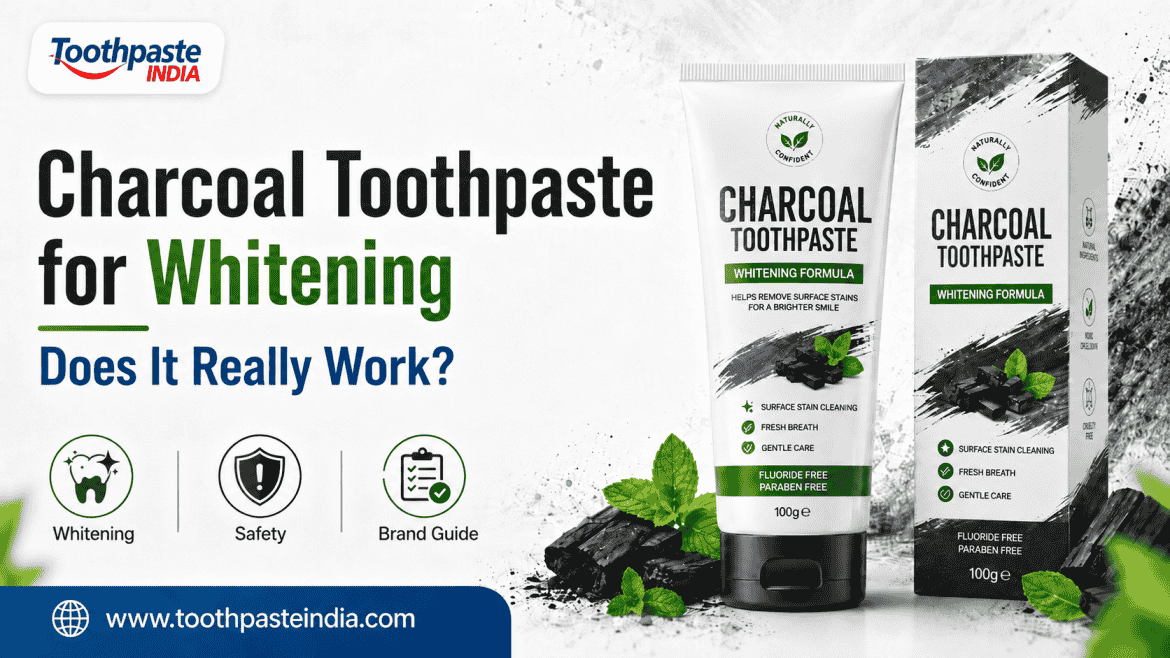

Charcoal toothpaste for whitening can help remove surface stains, but it does not deeply bleach teeth. It may make teeth look cleaner by polishing external stains from tea, coffee, tobacco, wine, spices, and daily food habits.
For oral care brands, this product category has strong demand because black toothpaste looks unique and premium. As a charcoal toothpaste manufacturer, Toothpaste India helps brands develop safe, market-ready charcoal toothpaste formulas with proper texture, claim language, abrasive balance, fluoride choice, and usage guidance.
What Is Charcoal Toothpaste for Whitening Teeth?
Charcoal toothpaste for whitening is a toothpaste made with activated charcoal, carbon toothpaste ingredients, charcoal powder toothpaste, or other charcoal-based ingredients. It is usually black or dark grey, which is why many users call it black toothpaste or black charcoal toothpaste.
The idea behind activated charcoal and teeth whitening is simple. Charcoal is porous and may help bind or polish surface stains during brushing. However, it does not work like peroxide whitening systems that chemically lighten tooth color.
Why Consumers Search for Black Toothpaste
Consumers often search for black toothpaste for whitening teeth because they want a natural-looking product that feels modern, bold, and different from regular toothpaste. The black color gives a strong “deep clean” impression.
This is why D2C oral care brands, herbal brands, cosmetic brands, e-commerce sellers, and exporters are interested in activated charcoal toothpaste as a product concept.
Does Charcoal Toothpaste Whiten Teeth?
Charcoal toothpaste can make teeth look cleaner by removing surface stains, but it does not change the natural internal shade of the tooth. So, when users ask whether charcoal toothpaste whiten teeth, the honest answer is: it may help with surface brightness, not deep whitening.
A better product claim is “helps remove surface stains” or “supports a brighter-looking smile.” Brands should avoid saying that charcoal toothpaste guarantees white teeth unless they have specific testing to support that claim.
Surface Stain Removal vs True Whitening
Surface stains sit on the outside of the teeth. These stains usually come from coffee, tea, tobacco, colored drinks, or food pigments. Charcoal for cleaning teeth may help polish some of these marks.
True whitening works deeper. Ingredients like hydrogen peroxide or carbamide peroxide are used in many whitening systems because they can affect deeper stains. This is why baking soda and hydrogen peroxide for teeth whitening is often compared with charcoal, but they work differently.
Benefits of Charcoal Toothpaste for Whitening
Charcoal toothpaste for whitening teeth has value when it is formulated properly and marketed honestly. It can support surface stain cleaning, fresh breath, and strong product differentiation.
Helps Clean Surface Stains
Activated charcoal whitening toothpaste may help remove visible external stains. This can be useful for consumers who drink tea, coffee, or dark beverages regularly.
Strong Visual Appeal
Black toothpaste looks different from normal white toothpaste. This gives the product strong shelf appeal and helps brands create bold social media visuals, Google Discover images, and e-commerce listing photos.
Natural Oral Care Positioning
Organic charcoal toothpaste, bamboo charcoal toothpaste, coconut charcoal toothpaste, and activated carbon toothpaste can fit well into natural, herbal, vegan, ayurvedic, and clean oral care ranges.
Fresh Breath and Mint Variants
Charcoal mint toothpaste is popular because mint balances the dark paste with a fresh taste. Peppermint, spearmint, herbal mint, and clove-mint blends can make the brushing experience more pleasant.
Risks and Safety Concerns
The biggest concern with charcoal toothpaste is abrasiveness. A gritty or poorly controlled formula may be too harsh for enamel if used too often or brushed aggressively. This is also why many users search Is Charcoal Toothpaste Safe before choosing a black toothpaste.
Enamel Wear
Brushing teeth with coal or raw coal powder for teeth is not recommended because particle size and abrasiveness are not controlled. A professional toothpaste manufacturer should control charcoal grade, texture, abrasive value, and formula balance.
If enamel wears down, teeth can become sensitive and may look more yellow because the dentin underneath becomes more visible.
Tooth Sensitivity
Charcoal sensitive toothpaste or sensitive charcoal toothpaste must be developed carefully. Consumers with gum recession, weak enamel, veneers, crowns, braces, or dental restorations may need a gentler formula and clear usage directions.
Fluoride Choice
Many charcoal toothpastes are fluoride-free. That may suit organic or natural positioning, but some consumers prefer charcoal toothpaste with fluoride for cavity-care support.
For brands, fluoride or fluoride-free positioning should depend on the target market, regulatory needs, and product claims.
Types of Charcoal Toothpaste Products Brands Can Launch
- Activated Charcoal Toothpaste
- Bamboo Charcoal Toothpaste
- Coconut Charcoal Toothpaste
- Charcoal Whitening Tooth Powder
- Charcoal Toothpaste with Fluoride
Charcoal Toothpaste vs Regular Whitening Toothpaste
Regular whitening toothpaste usually uses polishing agents, stain-removal ingredients, and sometimes whitening-support technology. Some whitening products use peroxide-based systems for deeper whitening.
Charcoal toothpaste mainly focuses on surface stain cleaning, visual appeal, and a natural deep-clean feel. It is best positioned as a stain-cleaning toothpaste, not a replacement for professional whitening treatment.
Who Should Launch Charcoal Toothpaste for Whitening?
Charcoal toothpaste can be a strong product category for D2C oral care brands, startups, entrepreneurs, cosmetic and personal care brands, ayurvedic brands, herbal brands, dental clinic brands, exporters, wholesalers, distributors, e-commerce sellers, hotel amenities brands, and MLM brands.
It works best when the brand wants a bold product with clear consumer appeal. The product should have strong packaging, pleasant flavor, safe texture, and responsible whitening communication.
How Toothpaste India Helps Brands Develop Charcoal Toothpaste
Toothpaste India supports brands looking to create charcoal toothpaste for whitening teeth, activated charcoal toothpaste, black charcoal toothpaste, charcoal mint toothpaste, bamboo charcoal teeth whitening toothpaste, and charcoal toothpaste with fluoride.
As an oral care manufacturer and toothpaste manufacturer, Toothpaste India helps with custom formulation, flavor development, private label support, packaging, bulk production, and third party toothpaste manufacturing. Brands can develop market-ready toothpaste concepts for D2C, export, retail, hotel amenities, dental clinics, and e-commerce channels.
Expert Tips and Buyer Checklist
- Choose a manufacturer with real toothpaste formulation experience, not only general cosmetic manufacturing experience.
- Ask about charcoal grade, particle size, texture, abrasive control, and stability.
- Decide whether the product should be fluoride-based or fluoride-free.
- Use safe claim language such as surface stain cleaning, fresh breath, and brighter-looking smile.
- Avoid strong claims like instant whitening, permanent whitening, or enamel repair unless tested and approved.
- Choose flavors such as mint, herbal mint, peppermint, coconut mint, or clove mint.
- Plan packaging carefully because black toothpaste needs strong tube and carton contrast.
- Ask about MOQ, batch size, lead time, documentation, and export support.
- Test the product experience for taste, mouthfeel, foam, stain rinse-off, and after-brushing freshness.
Conclusion
Charcoal toothpaste for whitening can help remove surface stains and support a brighter-looking smile, but it is not a true bleach. It works best as a surface stain cleaning toothpaste with strong visual appeal and careful formulation.
For brands, the opportunity is strong, but the product must be developed responsibly. Toothpaste India helps D2C brands, startups, herbal brands, dental clinics, exporters, wholesalers, and e-commerce sellers launch activated charcoal toothpaste, black toothpaste, charcoal mint toothpaste, and private label charcoal toothpaste products with practical manufacturing support.
Frequently Asked Questions
Charcoal toothpaste can make teeth look whiter by polishing away surface stains, but it does not chemically whiten or bleach the teeth from the inside. Unlike professional dental treatments or peroxide-based whitening kits, charcoal binds to external pigments (like those from tea or coffee) on the enamel rather than changing the natural undertone of your teeth.
Activated charcoal removes stains through a physical process of adsorption and mild surface polishing. Because activated charcoal is highly porous, it functions like a magnet to bind and lift surface discoloration caused by food, coffee, tea, and tobacco as you brush, allowing them to be rinsed away.
Using charcoal toothpaste every day is generally not recommended unless the formula is certified as low-abrasive and enamel-safe. Daily use of highly abrasive charcoal formulas can wear down the protective enamel layer over time, which paradoxically exposes the yellow dentin underneath and increases tooth sensitivity.
The primary difference is their mechanism of action: charcoal toothpaste physically lifts external surface stains, whereas hydrogen peroxide toothpaste chemically bleaches and breaks down deep stains within the tooth enamel. Combining these two approaches or selecting the right one depends on whether you have surface-level staining or deeper internal discoloration.
Baking soda is generally less abrasive than raw charcoal powder and is widely recognized for its gentle stain-cleaning properties, but professionally formulated activated charcoal toothpaste is balanced to offer effective stain adsorption without being overly abrasive. Both can help clean surface stains, but they should always be used in a tested, commercially prepared formula rather than raw form to protect enamel.
Charcoal toothpaste with fluoride is better for individuals who need active cavity prevention and enamel remineralization, while fluoride-free versions are preferred by those seeking all-natural or ayurvedic oral care products. Brands often launch both options to cater to different segment preferences in the oral care market.
Yes, charcoal toothpaste can scratch or damage dental restorations like crowns, veneers, bonding, and can accumulate around orthodontic braces, so it is generally not recommended for these individuals. The abrasive nature of charcoal can dull the polish of veneers and bonding, making them look rougher over time.
Refreshing mint profiles like peppermint, spearmint, clove-mint, and herbal mint are the best flavors to pair with charcoal toothpaste to deliver a pleasant taste and long-lasting fresh breath. The cooling taste of mint balances the earthy texture of the charcoal, providing a clean-feel brushing experience.
Brands can formulate a safe charcoal toothpaste by ensuring the active particle size is kept fine, limiting the Relative Dentin Abrasivity (RDA) value, and adding enamel-supporting minerals. Partnering with an experienced contract manufacturer ensures that the abrasive profile is tested and balanced before mass production.
Startups can launch their own charcoal whitening toothpaste by collaborating with a private label manufacturer like Toothpaste India to customize formulas, flavors, MOQs, and packaging. This enables brands to offer high-demand products like bamboo or coconut charcoal toothpaste under their own brand name without building a manufacturing plant.