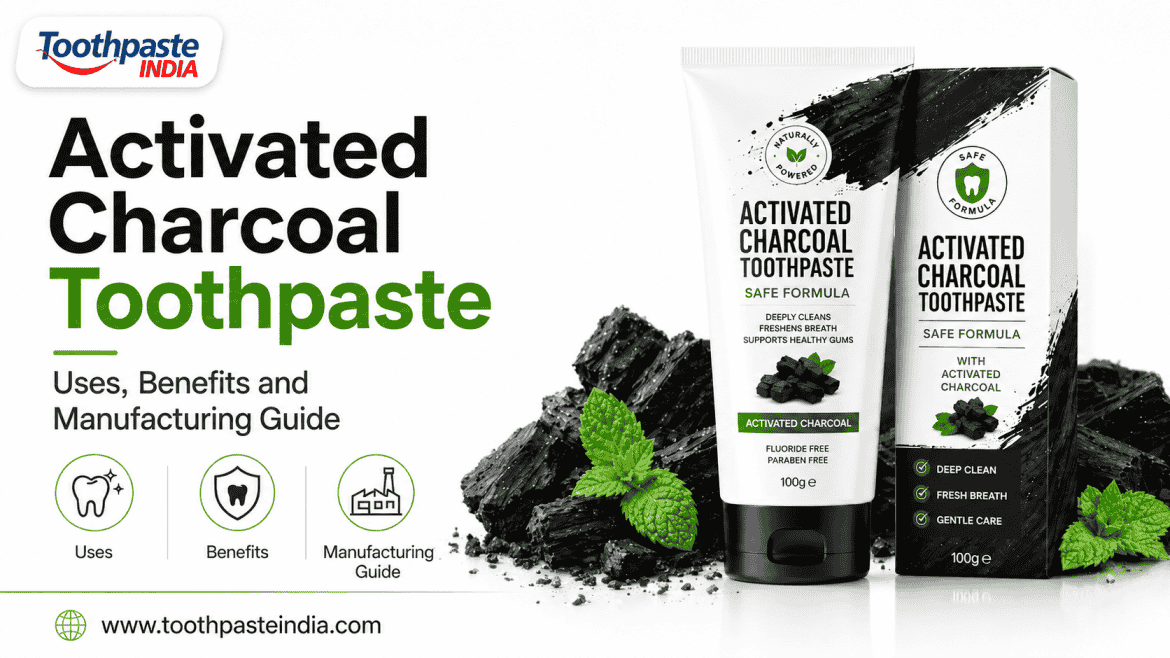

Activated charcoal toothpaste is a black toothpaste made with activated charcoal powder to help clean surface stains, support fresh breath, and create a unique oral care experience. Many consumers search for charcoal teeth whitening toothpaste because they want a natural-looking alternative for stain removal and daily freshness.
For brands, activated charcoal toothpaste is more than a trend. It is a high-appeal oral care product that can be developed as charcoal mint toothpaste, bamboo charcoal toothpaste, fluoride charcoal toothpaste, black charcoal toothpaste, or charcoal whitening tooth powder. The key is to choose the right formulation, safe abrasive level, flavor, packaging, and manufacturing partner.
What Is Activated Charcoal Toothpaste?
Activated charcoal toothpaste is a toothpaste that contains activated charcoal, usually made from carbon-rich sources such as coconut shell, wood, or bamboo. The material is processed to create a porous powder that is commonly used for adsorption and surface cleaning.
In oral care, activated charcoal and teeth whitening are often connected because charcoal may help remove external stains from tea, coffee, tobacco, and food. However, it does not bleach teeth like peroxide-based whitening treatments. Its effect is mainly related to surface stain cleaning, not changing the natural tooth shade from inside.
Why It Is Called Black Toothpaste
Activated charcoal gives toothpaste a dark black or grey color, which is why users often call it black toothpaste or black charcoal toothpaste. This strong visual identity helps products stand out on retail shelves, marketplaces, hotel amenities kits, and D2C oral care websites.
How Activated Charcoal Toothpaste Works
Activated charcoal toothpaste works mainly through physical cleaning and adsorption. During brushing, the toothpaste helps lift surface stains and food residue from the tooth surface.
Surface Stain Cleaning
Charcoal for cleaning teeth is mostly linked to surface stain removal. Users who drink tea, coffee, or dark beverages may feel their teeth look cleaner after using charcoal toothpaste. Still, brands should avoid overclaiming deep whitening results unless the formula and claims are properly supported.
Fresh Breath Support
Many activated charcoal toothpaste formulas include mint flavor, peppermint oil, menthol, or herbal extracts. Charcoal mint toothpaste can give a fresh brushing experience and make the product more acceptable for daily oral care users.
Activated Charcoal Toothpaste Benefits
Activated charcoal toothpaste can offer several benefits when it is responsibly formulated and positioned with realistic claims.
Helps Remove Surface Stains
Charcoal toothpaste whiten teeth claims should be written carefully. It may help reduce surface stains, but it should not be positioned as a replacement for professional whitening. A safer claim is “helps clean surface stains” or “supports a brighter-looking smile.”
Strong Natural Oral Care Appeal
Consumers who prefer natural-looking products often like bamboo charcoal toothpaste, coal powder for teeth concepts, and herbal charcoal toothpaste. This makes it attractive for ayurvedic brands, herbal brands, D2C startups, and e-commerce sellers.
Custom Formulation Options
A private label charcoal toothpaste manufacturer can help brands create different product variants such as fluoride charcoal toothpaste, fluoride-free charcoal toothpaste, SLS-free charcoal toothpaste, charcoal mint toothpaste, private label bamboo charcoal toothpaste manufacturer, and charcoal whitening tooth powder.
Can Activated Charcoal Toothpaste Whiten Teeth?
Activated charcoal toothpaste may help teeth look cleaner by removing surface stains, but it does not deeply whiten teeth like peroxide-based whitening systems. Research and dental guidance remain cautious about strong whitening claims for charcoal-based toothpaste.
This is important for brands because many users search for charcoal toothpaste whiten teeth, charcoal to whiten teeth, teeth whitening using charcoal, and best charcoal toothpaste for teeth whitening. These keywords show demand, but responsible content and label claims should focus on surface stain cleaning, fresh breath, and clean brushing experience.
Charcoal Toothpaste vs Whitening Toothpaste
Charcoal toothpaste mainly works through surface cleaning. Whitening toothpaste may use mild abrasives, polishing agents, or whitening-support ingredients. Professional whitening products often use peroxide-based systems that work differently.
For brand positioning, charcoal toothpaste is best promoted as a natural-looking surface stain cleaning toothpaste, not a guaranteed deep whitening treatment.
Is Activated Charcoal Toothpaste Safe?
Activated charcoal toothpaste can be used safely when the formula is properly developed, tested, and not overly abrasive. The main concern is that some charcoal toothpastes may be too abrasive for daily use if the charcoal grade, particle size, and formula balance are not controlled. Brands should also understand enamel safety, whitening limits, and correct usage before launching a charcoal toothpaste product. For a detailed safety guide, read our blog on Is Charcoal Toothpaste Safe before choosing the right charcoal toothpaste formula.
Why Abrasiveness Matters
Toothpaste must clean teeth, but it should not be too harsh. If charcoal particles are rough or the formula has high abrasiveness, it may contribute to enamel wear over time. Once enamel wears down, teeth can become more sensitive and may look more yellow because dentin shows through. Toothpaste India supports brands looking for an oral care manufacturer, toothpaste manufacturer, private label charcoal toothpaste manufacturer, white label toothpaste manufacturer, and Third party charcoal toothpaste manufacturer India.
Manufacturing Guide for Activated Charcoal Toothpaste
For D2C oral care brands, startups, pharma companies, cosmetic brands, exporters, wholesalers, and dental clinics, the right manufacturing partner is essential.
A good charcoal toothpaste manufacturer should help with formulation, ingredient selection, taste, color, texture, stability, packaging, quality checks, and bulk production.
Ingredient and Formula Planning
Activated charcoal toothpaste can include activated charcoal, hydrated silica or other controlled abrasives, humectants, binders, sweeteners, mint flavor, herbal extracts, fluoride or non-fluoride actives, and preservatives depending on brand goals.
Brands can develop product concepts such as charcoal teeth whitening toothpaste, bamboo charcoal toothpaste, charcoal mint toothpaste, black toothpaste, charcoal whitening tooth powder, and sensitive-care charcoal toothpaste.
Private Label and White Label Options
A private label toothpaste manufacturer helps brands create customized formulas, packaging, claims, and product identity. A white label toothpaste manufacturer supports faster launches with ready base formulas and brand customization.
For startups and e-commerce sellers, white label can be useful for quick market entry. For premium D2C brands, private label formulation offers stronger differentiation.
Third Party Manufacturing Support
A Third party toothpaste manufacturer or Third party charcoal toothpaste manufacturer India can help brands produce toothpaste without investing in their own production facility. This is useful for exporters, wholesalers, distributors, MLM brands, and personal care companies entering oral care.
Common Mistakes Brands Should Avoid
One common mistake is making strong whitening claims without proof. Charcoal can help with surface stains, but deep whitening claims need careful support.
Another mistake is choosing a gritty formula. Consumers may associate gritty texture with strong cleaning, but it can create enamel safety concerns.
Brands should also avoid unclear fluoride positioning. If the product is fluoride-free, the label and marketing should be clear. If it contains fluoride, the product should be positioned for users who want cavity-care support along with charcoal cleaning.
Expert Buyer Checklist
- Choose a manufacturer with oral care formulation experience.
- Ask about charcoal grade, particle size, and abrasive profile.
- Decide whether you want fluoride charcoal toothpaste or fluoride-free charcoal toothpaste.
- Select a flavor profile such as mint, peppermint, herbal, or bamboo charcoal.
- Ask for stability testing, microbial testing, and packaging compatibility.
- Check tube, carton, travel-size, hotel amenities, and bulk packaging options.
- Review MOQ, lead time, documentation, and export support.
- Avoid unsupported claims like guaranteed whitening or enamel repair unless properly validated.
- Choose a partner who supports private label, white label, OEM, and third party manufacturing.
Conclusion
Activated charcoal toothpaste is a popular oral care product used for surface stain cleaning, fresh breath, and natural-style branding. It can be developed as black toothpaste, bamboo charcoal toothpaste, charcoal mint toothpaste, fluoride charcoal toothpaste, or charcoal teeth whitening toothpaste.
For brands, the best approach is to work with an experienced charcoal toothpaste manufacturer that understands formulation safety, abrasiveness, flavor, packaging, and realistic whitening claims. Toothpaste India helps D2C brands, startups, pharma companies, dental brands, exporters, wholesalers, and e-commerce sellers launch private label and third party activated charcoal toothpaste products with professional manufacturing support.
Frequently Asked Questions
Activated charcoal toothpaste is a dark-colored oral care product formulated with activated carbon powder sourced from natural materials like coconut shells, wood, or bamboo. This specialized black toothpaste is primarily designed to adsorb surface impurities, clear external tooth stains, and provide a fresh, clean brushing experience.
Activated charcoal toothpaste works through physical surface polishing and adsorption, where the porous structure of charcoal binds to external debris and lifts stains. During brushing, it helps trap particles from tea, coffee, tobacco, and dark food items, carrying them away when you spit out the paste.
No, activated charcoal toothpaste only removes surface-level stains to restore your teeth’s natural shade, but it does not chemically bleach or whiten teeth from the inside like peroxide-based whitening treatments. Brands should clearly position this product for surface stain cleaning and daily freshness rather than permanent internal shade changes.
Activated charcoal toothpaste is safe for daily brushing provided it is formulated responsibly with a low Relative Dentin Abrasivity (RDA) value and fine charcoal particles. If the formula is too gritty or highly abrasive, daily use can wear down tooth enamel over time, exposing the yellow dentin underneath and causing tooth sensitivity.
The primary difference is the active cleansing agent and visual appearance: black toothpaste uses porous activated charcoal to adsorb surface stains, while regular toothpaste typically relies on hydrated silica or calcium carbonate to scrub teeth. Additionally, the striking black color provides premium shelf appeal and visual differentiation for modern D2C brands.
The choice depends on your dental goals: fluoride-containing charcoal toothpaste protects against cavities and supports enamel health, while fluoride-free versions are ideal for consumers seeking all-natural, herbal, or ayurvedic oral care options. Experienced contract manufacturers can develop both formulations based on target market preferences.
The main risks of using low-quality or poorly formulated charcoal toothpaste include enamel wear due to high abrasiveness, increased tooth sensitivity, and a higher risk of cavities if using a fluoride-free formula exclusively. Clear usage directions and enamel-safe formulation testing are crucial to avoid these consumer risks.
Most formulations feature charcoal mint, peppermint oil, menthol, or herbal extracts like neem and clove to mask the natural charcoal taste and deliver long-lasting fresh breath. Adding these refreshing flavors transforms the dark paste into a pleasant and satisfying daily oral hygiene product.
Brands can launch their own product line by partnering with an OEM toothpaste manufacturer to handle custom formulation, RDA testing, packaging selection, and bulk manufacturing under their brand name. This allows D2C startups, exporters, and dental clinics to quickly bring bamboo charcoal toothpaste or charcoal tooth powders to market without factory overheads.
Partnering with a GMP-certified Indian manufacturer like Toothpaste India ensures strict raw material quality control, advanced formulation R&D, batch consistency, and export-compliant documentation. They provide comprehensive OEM/ODM support, including stability testing and custom packaging, helping brands scale globally.