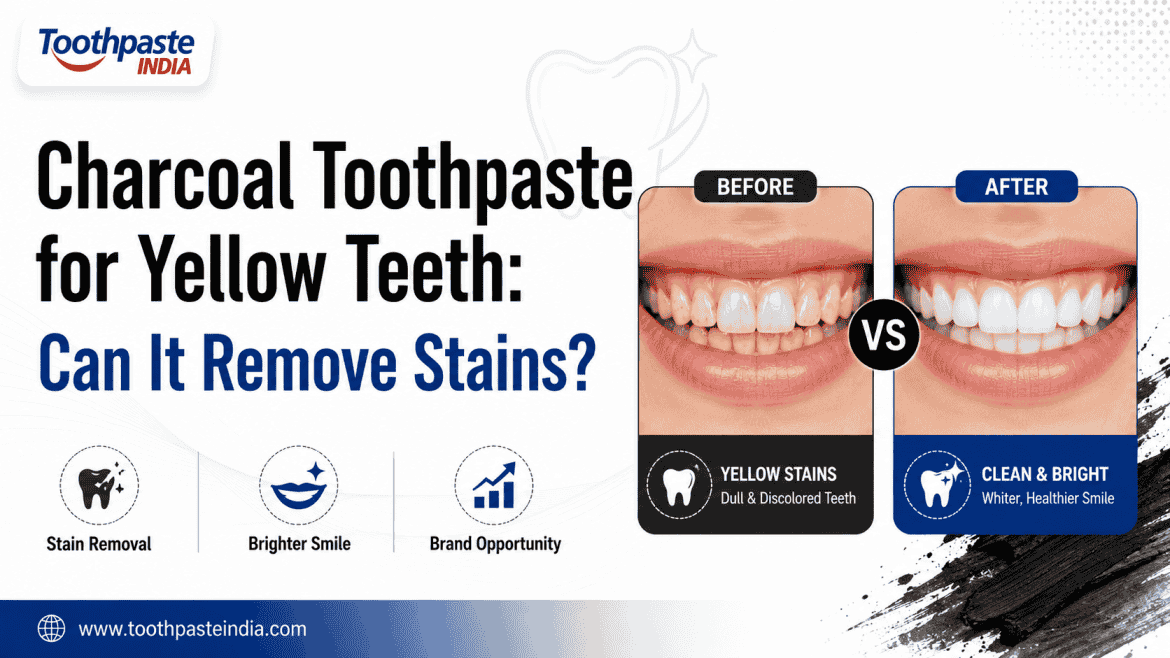

Charcoal toothpaste for yellow teeth is one of the most searched oral care trends but the science tells a more nuanced story. Activated charcoal can help scrub away surface stains from coffee, tea, and smoking, yet it does not bleach teeth or remove deeper discoloration. In fact, overuse may wear down enamel and make teeth appear more yellow over time. If you are a brand owner, startup, or dental clinic looking to develop or source charcoal-based oral care products, understanding these facts is critical for building trust with your audience.
What Is Activated Charcoal Toothpaste?
Activated charcoal is a fine black powder made by heating carbon-rich materials like coconut shells, bamboo, or wood at extremely high temperatures. This process creates millions of tiny pores, giving it high adsorptive capacity.
In toothpaste, manufacturers use it as a mild abrasive and stain-absorbing agent. The product typically appears as black toothpaste or charcoal teeth whitening tooth powder. Some formulations include fluoride; many are marketed as charcoal whitening toothpaste without fluoride.
Charcoal toothpaste removes extrinsic (surface) stains through mild abrasion and limited adsorption. It does not change the natural color of enamel or lighten intrinsic stains below the surface.
Charcoal Toothpaste Benefits for Teeth
The proven benefits are limited to surface stain removal and possible breath freshening. Claims of “detoxification” or deep whitening lack clinical support.
- Surface stain polishing: May help maintain brightness after professional cleaning
- Breath freshening: Adsorptive properties may reduce odor-causing compounds
- Natural appeal: Perceived as a chemical-free alternative
Why Charcoal Can Make Teeth More Yellow
Long-term use can erode enamel, exposing the yellow dentin beneath. This is the “enamel paradox” short-term brightness may lead to long-term yellowing.
- Enamel erosion: Abrasive particles wear down protective enamel layer
- Dentin exposure: Yellow dentin becomes visible as enamel thins
- Increased sensitivity: Receding enamel exposes nerve endings
- Fluoride interference: Charcoal may adsorb fluoride, reducing cavity protection
- Restoration staining: Particles accumulate around crowns, veneers, and fillings
- Gum irritation: Gritty texture can inflame soft tissue
Who Should Use Charcoal Toothpaste?
Charcoal toothpaste is best suited for:
- Adults with healthy enamel seeking occasional surface stain maintenance
- Users wanting a natural-feeling product between professional cleanings
- Brands targeting the “clean beauty” oral care market
Avoid or use with caution if:
- You have sensitive teeth or receding gums
- You have thin enamel or a history of erosion
- You have extensive dental restorations (crowns, veneers, fillings)
- You are a child or teenager (enamel is still developing)
Charcoal Toothpaste for Brands: Manufacturing Opportunities
The global demand for black toothpaste and bamboo activated charcoal toothpaste for whitening teeth continues to grow, driven by social media trends and natural product preferences. Additionally, the rising interest in charcoal toothpaste for bad breath has opened new product positioning opportunities for brands targeting fresh-breath consumers. For B2B buyers, this presents a significant private label opportunity.
Toothpaste India specializes in third-party toothpaste manufacturing for D2C brands, dental clinics, Ayurvedic brands, and exporters. As an experienced oral care manufacturer and toothpaste manufacturer, we offer:
- Custom formulations (charcoal toothpaste with fluoride or fluoride-free)
- Low MOQ private label charcoal toothpaste manufacturing
- Regulatory support for Indian and international markets
- Sustainable packaging options (recyclable tubes, glass jars for tooth powder)
- R&D support for differentiated positioning (e.g., charcoal + herbal extracts, charcoal for sensitive teeth formulations)
Whether you need a black toothpaste supplier for your e-commerce brand or a charcoal toothpaste manufacturer for dental clinic white-labeling, partnering with a certified facility ensures product safety and claim integrity.
Conclusion
Charcoal toothpaste for yellow teeth offers limited, surface-level benefits while carrying real risks for enamel health. It is not a substitute for professional whitening or proper oral hygiene. For brands and entrepreneurs entering this market, success lies in honest positioning, quality manufacturing, and clear consumer education. If you are looking for a reliable charcoal toothpaste manufacturer to develop safe, compliant, and market-ready products, Toothpaste India provides end-to-end private label solutions backed by industry expertise and quality certifications.
Frequently Asked Questions
Charcoal toothpaste can remove some surface stains from coffee, tea, and smoking through mild abrasion and adsorption. However, it does not bleach teeth or remove deeper discoloration. In fact, overuse may wear down enamel and make teeth appear more yellow over time.
Activated charcoal is a fine black powder with millions of tiny pores that give it high adsorptive capacity. In toothpaste, it acts as a mild abrasive and stain-absorbing agent that helps scrub away extrinsic (surface) stains.
Yes. Long-term use of charcoal toothpaste can erode enamel, exposing the yellow dentin beneath. This is the “enamel paradox” short-term brightness may lead to long-term yellowing. Abrasive particles wear down the protective enamel layer, making yellow dentin visible as enamel thins
Charcoal toothpaste is not recommended for daily use by most dental professionals. Overuse can lead to enamel erosion, dentin exposure, increased tooth sensitivity, and gum irritation from its gritty texture
Many charcoal toothpastes are marketed as fluoride-free, but some formulations include fluoride. Charcoal may adsorb fluoride, potentially reducing its cavity protection effectiveness. Brands can choose either formulation depending on their target market.
Charcoal toothpaste is best suited for adults with healthy enamel seeking occasional surface stain maintenance, or users wanting a natural-feeling product between professional cleanings. It is not recommended for children, teenagers, or those with sensitive teeth, thin enamel, receding gums, or extensive dental restorations.
No. Charcoal toothpaste does not change the natural color of enamel or lighten intrinsic stains below the surface. It only removes extrinsic stains through mild abrasion and limited adsorption. It is not a substitute for professional whitening.
Yes, if used excessively or with highly abrasive formulations. The abrasive particles can wear down the protective enamel layer over time, leading to dentin exposure, increased sensitivity, and a more yellow appearance.
Yes. Charcoal particles can accumulate around crowns, veneers, and fillings, potentially causing staining or dark outlines around restorations. Users with extensive dental work should use charcoal toothpaste with caution.
The proven benefits are limited to surface stain removal and possible breath freshening. Claims of “detoxification” or deep whitening lack clinical support. It may help maintain brightness after professional cleaning and reduce odor-causing compounds through adsorption.