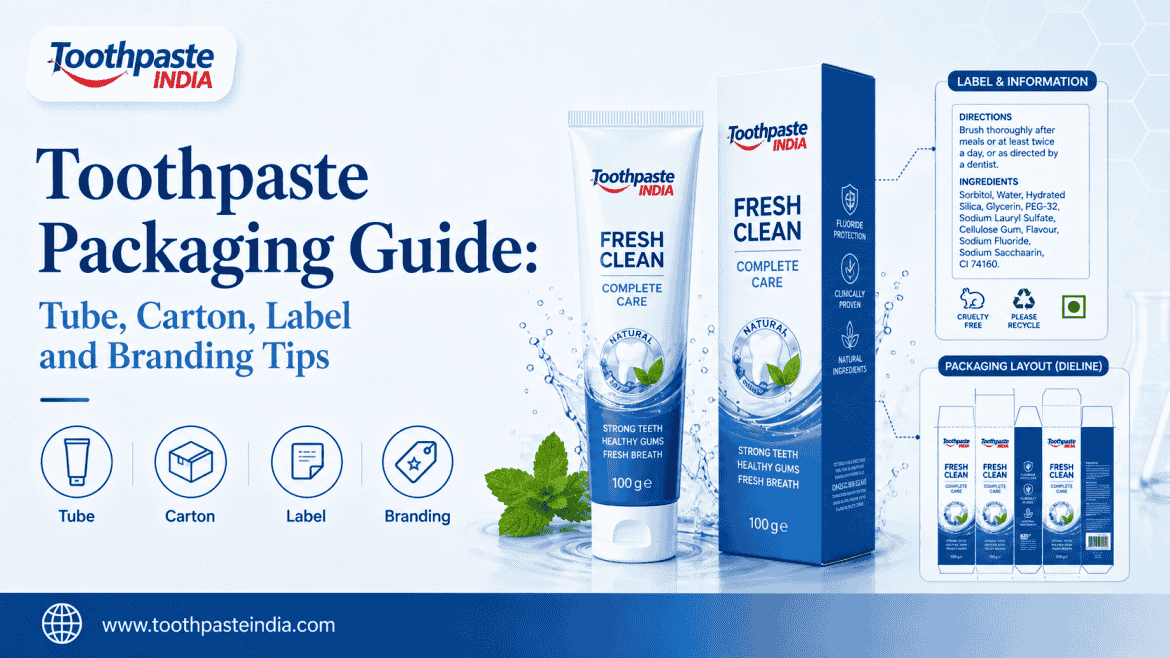

Toothpaste Packaging is more than a tube and carton. It protects the formula, builds customer trust and makes your product ready for retail, ecommerce and distributor supply.
Toothpaste Packaging is not only about tube and carton design. It is also connected with the right formula, filling process, manufacturing support and final brand presentation. That is why startups should work with an experienced toothpaste manufacturer or private label toothpaste manufacturer who understands both product quality and packaging requirements.
For D2C brands, ecommerce sellers and oral care startups, a reliable oral care manufacturer can help with toothpaste tube packaging, carton design, label content, tube filling and custom packaging planning.
What Is Toothpaste Packaging?
Toothpaste packaging means the complete outer and inner presentation of a toothpaste product. It includes the tube, cap, carton box, label content, printing, design, barcode, batch details and brand communication.
Good toothpaste packaging should do three things clearly. It should protect the product, explain the product and make the brand look trustworthy.
For example, a herbal toothpaste may need a clean natural look, while a kids toothpaste may need bright colours and child-friendly graphics. A teeth whitening toothpaste may need a premium cosmetic-style design.
Why Toothpaste Packaging Matters for Startups
For startups, packaging decisions should not be made separately from manufacturing. A professional toothpaste manufacturer can guide you on tube size, filling weight, cap type, sealing quality and carton compatibility. This helps avoid production delays and packaging mismatch during the final batch.
If you are launching under your own brand name, a private label toothpaste manufacturer can also support private label toothpaste packaging, custom toothpaste packaging and label content planning based on your product type.
Strong toothpaste brand packaging helps in:
- Better shelf appeal
- Clear product positioning
- Professional ecommerce listing
- Easy customer understanding
- Better distributor confidence
- Stronger brand recall
Toothpaste packaging for startups should not be over-designed. It should be clean, readable, compliant and aligned with the product promise.
Toothpaste Tube Packaging Options
Toothpaste tube packaging is the most important part because it directly holds the formula. The tube must support filling, sealing, storage, squeezing and product protection.
ABL Toothpaste Tube
ABL means aluminium barrier laminate. It uses an aluminium layer to protect the product from air, light and moisture. ABL tubes are widely used for toothpaste, gels, creams and paste products because they offer strong barrier protection.
ABL toothpaste tube packaging is suitable when you need strong protection and traditional toothpaste-style packaging.
PBL Toothpaste Tube
PBL means plastic barrier laminate. PBL tubes generally use plastic layers and a barrier layer such as EVOH instead of aluminium.
PBL toothpaste tubes are often preferred for better appearance, softer feel and modern oral care packaging. They are useful for premium, cosmetic and D2C toothpaste brands.
PE, Aluminum and PCR Toothpaste Tubes
PE toothpaste tubes are flexible and commonly used in personal care packaging. Aluminum toothpaste tubes may be used for selected paste products but are less common for modern mass-market toothpaste branding.
PCR toothpaste tubes use post-consumer recycled plastic content. They can support sustainability-focused oral care product packaging, depending on supplier availability and product compatibility.
Toothpaste Carton Packaging
Toothpaste carton packaging gives your product a complete retail look. It also provides more space for ingredients, directions, claims, caution, barcode, MRP and manufacturing details.
A toothpaste carton box is useful for retail stores, exports, ecommerce shipments and premium brand presentation. It also protects the tube during handling and transport.
For startups, carton design should include the product name, key benefit, variant name, flavour, net quantity, brand story and important label details without looking crowded.
Toothpaste Label Design and Label Content
Toothpaste label design must be attractive, but it should also be clear and practical. Customers should understand the product within a few seconds.
A good toothpaste tube label should include:
- Brand name
- Product name
- Variant or benefit
- Net quantity
- Ingredients
- Directions for use
- Caution if required
- Batch number
- Manufacturing date
- Expiry or best before
- MRP
- Manufacturer or marketer details
- Customer care details
- Barcode
Label requirements can vary by product type and market, so brands should verify applicable cosmetic, drug, legal metrology and marketplace requirements before printing. Indian cosmetic labeling guidance commonly includes details like batch number, manufacturing information, net content and other mandatory declarations.
Custom Toothpaste Packaging for Private Label Brands
Custom toothpaste packaging helps your brand look different from generic products. It includes tube colour, cap style, carton layout, finish, typography, icons, benefit claims and product photography style.
Private label toothpaste packaging can be customized based on your target audience. For example:
- Neem toothpaste can use green and herbal cues
- Charcoal toothpaste can use black and silver tones
- Kids toothpaste can use soft colours and playful graphics
- Whitening toothpaste can use premium blue, silver or white design
- Sensitive toothpaste can use calm, clinical design
Toothpaste India supports custom toothpaste packaging for brands that need tube design, carton design, toothpaste tube printing, label content support and oral care product packaging guidance.
Toothpaste Packaging for Amazon, Flipkart and D2C Brands
Toothpaste packaging for Amazon and Flipkart should be simple, readable and image-friendly. Online buyers cannot touch the product, so packaging must clearly show product type, size, benefits and trust details.
For D2C brands, the packaging should also match website images, product descriptions, ad creatives and social media style.
Use clear front-panel text. Avoid too many icons and claims. Make the tube and carton look professional in product photos.
Toothpaste Tube Filling and Packaging
Tube filling and packaging is the stage where the toothpaste formula is filled into tubes, sealed, packed and prepared for dispatch.
Before final production, startups should confirm tube size, cap type, filling weight, carton size, printing quality, sealing strength and batch coding. This avoids delays during production.
A good toothpaste packaging manufacturer or toothpaste tube manufacturer should coordinate well with the toothpaste manufacturer so that tube compatibility, filling speed and sealing quality are properly managed.
Common Toothpaste Packaging Mistakes to Avoid
Many new brands spend time on formula but ignore packaging details. This can create problems later.
Avoid these mistakes:
- Using very small text on the tube
- Adding too many claims
- Choosing poor-quality tube material
- Ignoring carton readability
- Not checking marketplace image visibility
- Printing before final label review
- Not confirming barcode and batch space
- Copying competitor packaging too closely
- Choosing design only by looks, not usability
Good packaging should be attractive, practical and production-ready.
Buyer Checklist for Toothpaste Packaging
Before finalizing toothpaste packaging, ask these questions:
- Which tube material is best for my formula?
- Do I need ABL, PBL, PE, aluminum or PCR tube?
- What tube size should I choose?
- Should I use flip top cap or screw cap?
- Is carton packaging needed?
- Is label content legally reviewed?
- Will the design look good on Amazon and Flipkart?
- Is the packaging suitable for bulk production?
- Can the manufacturer support repeat orders?
- Does the packaging match my brand positioning?
Conclusion
Toothpaste Packaging plays a major role in product protection, brand trust and successful market launch. For startups and D2C oral care brands, the right tube, carton, label design and branding can make the product look professional from day one.
Choose packaging based on formula type, target audience, sales channel, budget and long-term brand plan. If you are planning to launch private label toothpaste, white label toothpaste or custom oral care products, Toothpaste India can support toothpaste packaging, tube filling, carton design and complete oral care manufacturing guidance.
Frequently Asked Questions
The best toothpaste packaging depends on the formula, brand positioning and sales channel. ABL and PBL tubes are commonly used for toothpaste, with carton packaging for retail and premium presentation.
Toothpaste packaging should include brand name, product name, ingredients, directions, net quantity, batch number, manufacturing date, expiry, MRP, barcode and manufacturer or marketer details.
Choose toothpaste tube packaging based on formula compatibility, barrier protection, tube size, cap style, printing quality, budget and target customer segment.
ABL tubes use an aluminium barrier layer, while PBL tubes use plastic-based barrier layers. ABL gives strong protection, while PBL is often preferred for modern design and appearance.
Carton packaging is not always mandatory for every brand, but it is useful for retail display, ecommerce shipping, label space, premium presentation and product protection.
Label details may include product name, ingredients, net quantity, batch number, manufacturing details, expiry, MRP, usage directions, caution and customer care information. Requirements should be checked before printing.
Toothpaste packaging is very important because it creates the first impression, explains the product and helps customers trust a new brand.
For startups, simple laminated tube packaging with clean carton design is often a practical choice. It gives a professional look without making the launch too complex.
Yes, toothpaste tube design and carton design can be customized with brand colours, logo, product benefits, icons, label content and packaging style.
Common mistakes include crowded design, weak readability, poor tube quality, unclear claims, missing label details, bad barcode placement and printing before final content approval.