
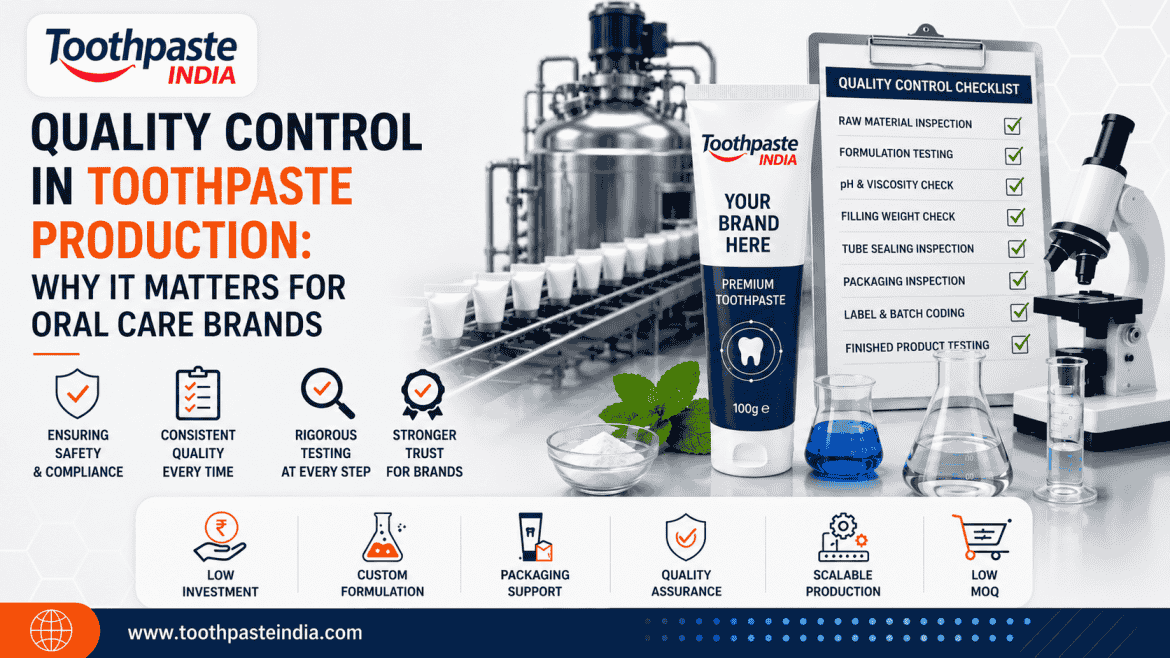

Quality control in toothpaste production helps manufacturers maintain consistency across raw materials, formulation, batch processing, tube filling, sealing, packaging and finished products. For oral care brands, these checks are essential because product quality depends on multiple connected stages of the toothpaste manufacturing process.
A toothpaste may have attractive packaging and strong brand positioning, but inconsistent texture, incorrect filling, weak tube seals or batch-to-batch variation can damage customer trust. This is why startups, D2C companies, distributors, exporters and established oral care businesses should understand the quality systems followed by their manufacturing partner.
Toothpaste India, an Ahmedabad-based toothpaste manufacturer, supports brands with private label, third party, contract and OEM toothpaste manufacturing. From a B2B perspective, quality should be planned throughout production rather than checked only after the final toothpaste tubes are packed.
What Is Quality Control in Toothpaste Production?
Quality control in toothpaste production is the process of checking materials, manufacturing stages and finished products against defined specifications.
The purpose of toothpaste quality control is to identify variations before products reach customers. Depending on the formulation, manufacturing setup and applicable requirements, checks may cover ingredients, batch records, appearance, texture, pH, viscosity, filling weight, tube sealing, coding and packaging.
A practical toothpaste manufacturing quality control process begins before batch production and continues until finished product inspection.
This is an important point for brand owners: quality cannot be added to a toothpaste after manufacturing is complete. It must be controlled at every critical production stage.
Why Is Quality Control Important in Toothpaste Manufacturing?
Quality control in toothpaste manufacturing matters because even small variations can affect product consistency, packaging performance and customer experience.
Toothpaste is a formulated oral care product made using different functional ingredients. These may include abrasives for cleaning, humectants to retain moisture, binders for consistency, surfactants for foaming, flavours and other formulation-specific ingredients.
If raw materials, processing conditions or filling operations vary, the finished product may also vary.
Effective toothpaste production quality control helps brands focus on:
- Consistent appearance and texture
- Batch-to-batch uniformity
- Defined filling quantities
- Proper tube sealing
- Correct packaging components
- Accurate batch coding
- Approved label and carton use
- Finished product quality
For private label brands, these controls are especially important because the customer sees the brand name on the product, not the factory producing it.
How Does Raw Material Testing Support Toothpaste Quality?
Raw material control is the first major stage of toothpaste quality assurance because the finished product depends on the consistency of incoming ingredients.
Toothpaste raw material testing may involve checking materials against approved specifications and supplier documentation, depending on the ingredient and quality system.
A toothpaste ingredient quality check can help verify the identity, appearance or other defined parameters of materials used during production.
For example, a formula may contain:
- Abrasives
- Humectants
- Binders
- Surfactants
- Flavours
- Sweetening agents
- Herbal extracts
- Formulation-specific active ingredients
The manufacturer should follow appropriate procedures for receiving, identifying, storing and issuing raw materials.
From a brand perspective, this is one reason to ask a potential manufacturing partner about their raw material approval and traceability process.
What Quality Checks Are Done During Toothpaste Manufacturing?
Quality checks during the toothpaste production process focus on whether the batch is being manufactured according to the approved formula and process parameters.
The exact toothpaste manufacturing process quality check depends on the formula, equipment, quality system and applicable specifications.
Common in-process considerations can include the following.
Toothpaste Formula Consistency
The batch should match the approved product specifications and reference standards established for production.
Formula consistency is especially important for brands placing repeat orders because customers expect a similar experience each time they purchase the product.
Toothpaste pH Testing
Toothpaste pH testing measures the acidity or alkalinity of the formulation according to the defined testing method and product specification.
Brands should avoid assuming that one universal pH value is suitable for every toothpaste. The appropriate specification depends on the formulation, ingredients and applicable standards.
Toothpaste Viscosity and Texture Testing
Toothpaste viscosity testing helps evaluate the flow and consistency characteristics of the product.
The product should be suitable for processing, tube filling and consumer use. Toothpaste texture testing may also help identify issues such as unexpected variation, lumps or other visible inconsistencies.
Appearance and Sensory Checks
Colour, appearance, odour and flavour characteristics may be checked against approved product specifications.
These checks are particularly relevant for herbal, charcoal, gel, kids and flavoured toothpaste products, where sensory characteristics are part of the customer experience.
Why Is Toothpaste Batch Quality Control Important?
Toothpaste batch quality control helps brands maintain consistency across different production runs.
A manufacturer may produce the same product multiple times over months or years. Without proper production controls and toothpaste manufacturing documentation, repeat batches may show unwanted variations.
Toothpaste batch testing and documentation can help track:
- Raw materials used
- Manufacturing information
- Batch identification
- In-process observations
- Quality checks
- Filling and packing records
- Finished product status
Good documentation also supports traceability if a question arises after manufacturing or dispatch.
For B2B buyers, asking how batch records are maintained can provide useful insight into the manufacturer’s quality system.
How Are Toothpaste Tube Filling and Sealing Checked?
Tube filling quality checks focus on correct filling, seal integrity and the overall condition of the packed toothpaste tube.
After bulk toothpaste manufacturing, toothpaste moves into the filling and packaging stage. At this point, the formula must work correctly with the selected tube and filling process.
Depending on the packaging format, checks may include:
- Toothpaste filling weight check
- Tube appearance inspection
- Seal inspection
- Coding verification
- Cap and closure check
- Leakage-related checks where applicable
Toothpaste tube sealing inspection matters because a formula can be manufactured correctly but still create a poor customer experience if the final packaging is damaged or improperly sealed.
This is why brands should choose a toothpaste manufacturer with quality control across both bulk production and filling operations.
What Happens During Toothpaste Packaging Inspection?
Toothpaste packaging inspection helps verify that the correct packaging components, printed information and finished presentation are used for the product.
Toothpaste packaging quality inspection may include checks related to:
- Correct tube design
- Correct outer carton
- Approved artwork version
- Readable printed information
- Toothpaste batch coding
- Manufacturing and expiry-related information, as applicable
- Barcode placement
- Product quantity declaration
- Final carton condition
Toothpaste label verification is particularly important because artwork mistakes can create delays, reprinting costs or compliance concerns.
Brands should finalize and review packaging content carefully before mass printing. Applicable label requirements and product claims should be verified with current Indian regulations and qualified regulatory professionals.
What Is Finished Product Inspection in Toothpaste Manufacturing?
Toothpaste finished product inspection is the final review stage before a batch is approved for release according to the manufacturer’s quality procedures.
At this stage, the manufacturer reviews relevant production, quality and packaging information based on the established system.
Depending on the product and quality plan, finished product checks may include appearance, defined product specifications, packaging condition, coding and other applicable requirements.
An important practical insight for brands is that final inspection should not replace in-process quality control. Finding a major issue after thousands of tubes have been filled is more difficult than identifying a deviation during an earlier production stage.
How Does Quality Control Differ Across Toothpaste Types?
The quality control approach should consider the characteristics and specifications of each toothpaste formulation.
For example, herbal toothpaste quality control may require attention to the consistency and characteristics of herbal ingredients.
Charcoal toothpaste quality control may involve monitoring appearance and formula uniformity.
Kids toothpaste quality testing may focus on the specific formula, flavour, texture and requirements established for the product.
Sensitive, fluoride, fluoride-free, gel, Ayurvedic, natural and SLS-free toothpaste products can also have different formulation and quality considerations.
The key principle is simple: quality testing should match the actual product specification rather than applying the same checklist blindly to every toothpaste formula.
What Should Brands Know About Toothpaste Manufacturing Standards in India?
Brands selling toothpaste in India should work with manufacturers that understand applicable manufacturing, quality and labeling requirements.
Quality and regulatory requirements can vary based on product classification, formulation, claims and intended market. Brands may also encounter references to GMP practices, ISO quality systems and applicable BIS standards for toothpaste.
However, businesses should not automatically claim GMP, ISO, Halal, Vegan, Cruelty-Free or other certifications without verifying current and valid supporting documents.
Before product launch, brands should:
- Review manufacturer documentation
- Verify relevant certifications
- Discuss applicable product standards
- Review label content
- Check product claims
- Confirm testing requirements
- Consult qualified regulatory professionals when necessary
For exports, the destination country’s requirements should also be reviewed before finalizing formula, claims and packaging.
How Does Quality Control Work in Private Label and Third Party Manufacturing?
Quality control in private label toothpaste manufacturing should protect both the product and the brand whose name appears on the final packaging.
Whether a business chooses private label toothpaste manufacturing, third party toothpaste manufacturing, contract toothpaste manufacturing or OEM toothpaste manufacturing, quality expectations should be discussed before commercial production begins.
Brands should clearly define:
- Approved formula
- Product specifications
- Packaging components
- Artwork versions
- Production quantity
- Quality requirements
- Documentation needs
- Sample approval process
A private label toothpaste manufacturer with quality control should also communicate clearly when changes in formula, packaging or manufacturing requirements need further review.
How Can Brands Evaluate a Manufacturer’s Quality Control Process?
Brands can evaluate toothpaste manufacturing quality by asking specific process-based questions rather than relying only on general quality claims.
Before selecting a manufacturer, ask:
- How are incoming raw materials controlled?
- What checks are performed during batch manufacturing?
- How is toothpaste formula consistency monitored?
- What in-process parameters are checked?
- How are filling quantities monitored?
- How are tubes and seals inspected?
- How is packaging artwork verified?
- What production and quality records are maintained?
- What happens when a deviation is identified?
- Which certificates and documents can the manufacturer provide for verification?
A quality toothpaste manufacturer should be able to explain its process clearly without making unrealistic guarantees.
Why Should Oral Care Brands Choose a Quality-Focused Manufacturing Partner?
A quality-focused manufacturing partner helps brands build consistent products, manage production risks and prepare for scalable growth.
The lowest manufacturing price does not always provide the best long-term value. Product inconsistencies, packaging errors, rejected inventory and repeat production problems can cost a brand more than the initial savings.
When choosing an oral care manufacturer in India, consider the complete manufacturing capability, including formulation support, quality systems, filling, packaging, documentation and scalability.
Toothpaste India, based in Ahmedabad, Gujarat, supports startups, D2C brands, distributors, exporters and established businesses with private label, third party, contract and OEM toothpaste manufacturing solutions.
Conclusion
Quality control in toothpaste production is essential for maintaining formula consistency, monitoring production stages, checking tube filling and packaging, supporting traceability and protecting brand reputation.
For oral care brands, the right approach is to evaluate quality before selecting a manufacturing partner, not after production begins. Ask detailed questions about raw materials, batch controls, product testing, filling, sealing, packaging inspection and documentation.
If you are looking for a toothpaste manufacturing partner in India, Toothpaste India can support your brand with formulation, manufacturing, tube filling, packaging and production solutions from Ahmedabad, Gujarat. Contact the team to discuss your private label or contract toothpaste manufacturing requirements.
Frequently Asked Questions
Quality control in toothpaste production is the process of checking raw materials, manufacturing stages, batch consistency, filling, sealing, packaging and finished products against defined specifications. It helps manufacturers identify variations and maintain consistent production quality.
Quality control in toothpaste production is important because it helps maintain product consistency, filling accuracy, packaging quality and traceability. It also helps manufacturers identify production deviations before finished products are dispatched.
Quality checks may cover raw materials, batch processing, formula consistency, pH, viscosity, texture, appearance, filling quantity, tube sealing, coding, packaging and finished products. The exact checks depend on the formula, applicable standards and manufacturer’s quality system.
Toothpaste quality is checked through approved manufacturing procedures, in-process observations, defined product testing, filling checks, packaging inspection and documentation. Manufacturers should follow quality procedures suitable for the specific formula and production process.
Toothpaste batch testing helps verify whether a production batch meets defined specifications. Along with proper manufacturing documentation, it supports consistency, traceability and quality decisions before finished products are released.
Toothpaste pH testing measures the acidity or alkalinity of a toothpaste formula according to an established testing method. The acceptable specification depends on the formulation, ingredients and applicable requirements rather than one universal value for every toothpaste.
Toothpaste tube filling quality may be checked through filling quantity verification, tube appearance inspection, sealing checks, coding verification and packaging review. The specific inspection process depends on the manufacturer’s equipment and quality procedures.
Quality control helps private label toothpaste brands maintain product consistency, packaging quality and repeat production reliability. Because the brand’s name appears on the final product, selecting a manufacturer with clear quality procedures is important.
Ask about raw material controls, in-process checks, formula consistency, filling inspection, tube sealing, packaging verification, finished product testing, documentation, deviation handling and available certifications or quality documents.
Choose a manufacturer by evaluating its manufacturing experience, quality procedures, product testing capabilities, documentation, packaging inspection, certifications, communication and ability to explain how production deviations are identified and managed.