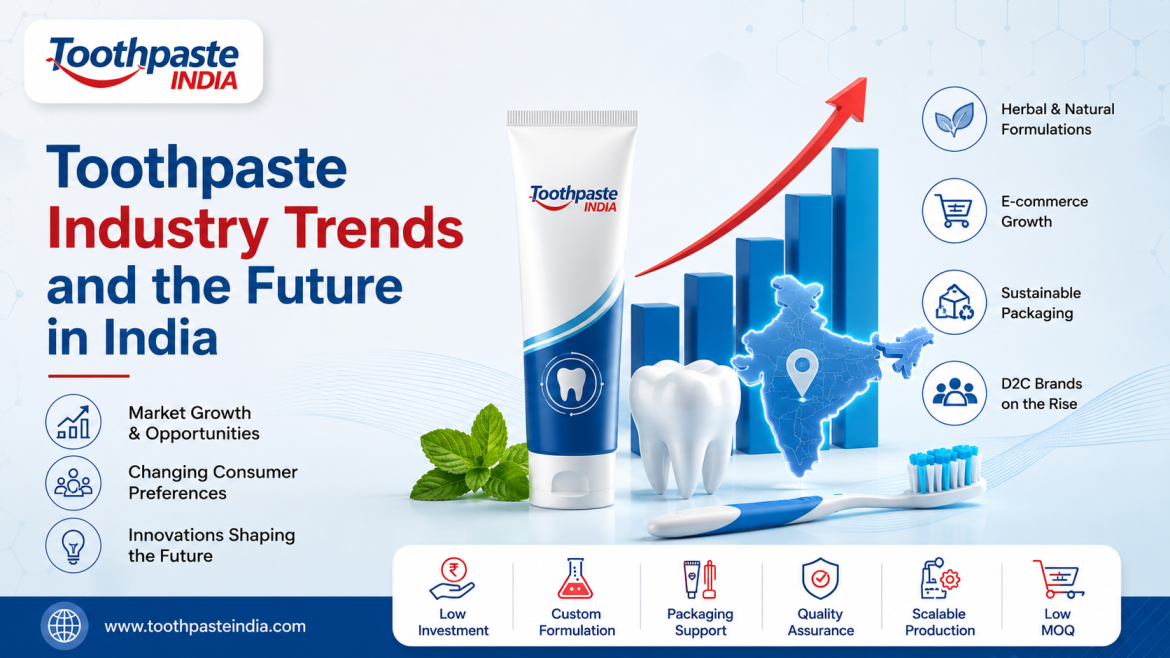

India’s toothpaste industry is no longer just about fluoride and mint flavour. Toothpaste industry trends today are being shaped by herbal formulations, sensitivity-focused products, e-commerce growth, and a new generation of D2C oral care brands entering the market.
For brand owners, distributors, and manufacturers watching this space, understanding where the Indian toothpaste industry is headed matters more than ever because the categories winning in 2026 look quite different from the mass-market toothpaste of a decade ago.
This article breaks down the current toothpaste market size in India, the consumer preferences reshaping demand, key Oral care market trends, and where the biggest opportunities lie for new and existing oral care brands.
How Big Is the Toothpaste Market in India Right Now?
The toothpaste market size in India is estimated to be in the range of roughly USD 700 million to over USD 900 million in current value, depending on the research methodology used, with most market research firms projecting a CAGR of approximately 4% to 7% over the coming decade.
Toothpaste remains the largest category within India’s broader oral care market. Industry estimates place toothpaste at close to 60% of the total Indian oral care segment, well ahead of toothbrushes, mouthwash, and other dental accessories combined.
Key figures worth noting:
- India’s toothpaste market is forecast to grow steadily through 2035, driven largely by rising disposable income and oral hygiene awareness
- Therapeutic and sensitivity-focused toothpaste already account for a meaningful share of overall value, even though they represent a smaller share of volume
- E-commerce is consistently flagged across research reports as the fastest-growing distribution channel for oral care products in India
Note: Market size and CAGR figures vary across research firms due to differing methodologies. Brands making investment decisions should verify current numbers with a licensed market research provider before finalizing business plans.
What Is Driving Growth in the Indian Toothpaste Industry?
Indian toothpaste industry growth is being driven by a combination of health awareness, income growth, and category innovation not just population size.
Rising Oral Hygiene Awareness
Dental health awareness in India has grown significantly, supported by government programmes such as the National Oral Health Programme and CSR-led school hygiene campaigns from major FMCG players. Industry sources report that gum disease affects a very large share of the Indian population, which continues to push preventive oral care into mainstream conversation rather than treating it as an afterthought.
Rising Disposable Income and Urbanization
As urban incomes rise, consumers are trading up from basic fluoride toothpaste to specialized formulations whitening, sensitivity, gum care, and multi-benefit products. This premiumization trend is one of the clearest toothpaste industry trends visible in metro and tier-1 markets today.
Rural Market Penetration
At the same time, rural India continues to drive volume growth. Smaller sachets and economical pack sizes remain the primary entry point for toothpaste brands expanding into rural and semi-urban markets, where affordability still outweighs premium positioning.
How Are Consumer Preferences in Oral Care Changing?
Changing consumer preferences in oral care are arguably the biggest force reshaping the Indian toothpaste industry today. Three shifts stand out clearly.
1. Natural and herbal toothpaste demand is rising. Herbal and Ayurvedic toothpaste already represents one of the largest and fastest-growing segments in India, reflecting consumer preference for natural ingredients over purely synthetic formulations.
2. Functional and therapeutic toothpaste is gaining share. Categories like sensitivity relief, whitening, and gum care are growing faster than basic mass-market toothpaste, as consumers seek specific outcomes rather than generic cleaning claims.
3. Sustainability is entering purchase decisions. Consumers especially younger, urban buyers are increasingly asking about recyclable tube packaging, SLS-free formulations, and fluoride-free options, even if these remain a smaller share of overall volume today.
Consumer awareness is also increasing around each Toothpaste Ingredient, including abrasives, humectants, flavours, active ingredients, sweeteners, and herbal extracts. This is encouraging brands to communicate formulation benefits more clearly on packaging and product pages.
What New Toothpaste Categories Are Emerging in India?
Several emerging toothpaste categories are worth watching closely for brands planning future launches:
- Charcoal toothpaste: positioned around whitening and detox appeal
- Nano-hydroxyapatite toothpaste: a fluoride-alternative formulation gaining early traction among health-conscious consumers
- Toothpaste tablets: a sustainability-driven format still niche in India but growing globally
- Probiotic toothpaste: an early-stage but scientifically interesting category focused on oral microbome balance
- Kids’ toothpaste with clean-label claims: parents increasingly checking for SLS-free, fluoride-appropriate, and naturally flavoured options
Not every emerging category will scale to mass volume in the next few years, but each represents a genuine white space where private label and D2C brands can differentiate from large incumbent players.
How Is E-commerce Changing Toothpaste Distribution in India?
E-commerce and quick-commerce platforms have become one of the fastest-growing distribution channels for oral care products in India. This shift matters for two reasons.
First, it lowers the barrier to entry for new toothpaste brands a D2C brand no longer needs national retail distribution on day one to reach customers. Second, it rewards brands with strong packaging and clear online product storytelling, since customers cannot physically touch the product before buying.
Subscription-based oral care kits and bundled product listings (toothpaste plus mouthwash, or toothpaste plus a toothbrush) are also becoming more common as brands try to increase order value on marketplaces like Amazon and Flipkart.
What Does This Mean for Toothpaste Manufacturing in India?
For manufacturers, these toothpaste industry trends translate directly into production and formulation decisions.
Manufacturing trends currently shaping the industry include:
- Growing demand for small-batch, private label production runs as more D2C brands enter the market with lower initial order quantities
- Increased formulation requests for SLS-free, fluoride-free, and herbal-based toothpaste
- Rising interest in sustainable packaging formats, including recyclable tubes and PCR-based materials
- Greater emphasis on regulatory compliance including FSSAI norms, BIS standards, and Legal Metrology labelling requirements as more first-time brand owners enter a previously FMCG-dominated category
The toothpaste manufacturing process generally includes ingredient weighing, mixing, vacuum homogenization, flavour and active ingredient addition, quality testing, tube filling, sealing, coding, and final inspection. Consistency at every stage is essential for maintaining texture, flavour, stability, and product performance.
At our Ahmedabad-based manufacturing facility, we’ve seen this shift firsthand over recent years: a growing share of new inquiries now come from first-time D2C founders rather than only established distributors, and a large proportion specifically ask about herbal, sensitivity, or SLS-free formulations rather than standard mass-market recipes.
What Opportunities Exist for New Toothpaste Brands in India?
For brand owners and startups evaluating entry into the Indian toothpaste industry, a few opportunities stand out based on current trends:
- Niche formulation positioning: herbal, Ayurvedic, sensitivity, or charcoal-based products still leave room for differentiated new brands
- D2C-first launch strategy: starting on e-commerce and quick-commerce before pursuing broader retail distribution
- Private label manufacturing partnerships: working with an established toothpaste manufacturer reduces the capital and regulatory burden of building an in-house production facility
- Export potential: Indian-manufactured herbal and Ayurvedic toothpaste has visible international demand, particularly in markets with growing interest in natural personal care products
Where Is the Toothpaste Industry in India Headed Next?
Looking ahead, the future of the toothpaste industry in India will likely be shaped by continued premiumization in cities, deeper rural penetration through affordable formats, and steady category innovation around natural ingredients and functional benefits.
Automation and quality-control technology in manufacturing are also expected to play a larger role, helping manufacturers maintain consistency as order volumes from smaller private label brands grow alongside traditional bulk FMCG orders.
For brands planning a launch in the next few years, the practical takeaway is this: the biggest growth is not in competing head-on with mass-market fluoride toothpaste, but in identifying a specific consumer need sensitivity, natural ingredients, sustainability, or a particular demographic and building a focused product around it.
Conclusion
Toothpaste industry trends in India point toward a market that is growing steadily but changing in composition shifting from one dominated by a handful of mass-market brands to a more fragmented landscape with room for herbal, therapeutic, and D2C-first players.
For brand owners exploring this space, the opportunity lies in combining the right formulation trend with a manufacturing partner who understands both compliance and packaging execution. If you’re evaluating a toothpaste or oral care brand launch in India, get in touch with Toothpaste India to discuss formulation, private label manufacturing, and packaging support tailored to current market trends.
Frequently Asked Questions
Current trends include rising demand for herbal and Ayurvedic toothpaste, growth in sensitivity and whitening categories, premiumization in urban markets, sachet-led rural penetration, and fast-growing e-commerce distribution.
Estimates vary by research firm, but most place India’s toothpaste market value between roughly USD 700 million and over USD 900 million currently, with projected CAGR of approximately 4% to 7% over the next decade.
Herbal and Ayurvedic toothpaste is growing due to consumer preference for natural ingredients, a general shift toward clean-label personal care products, and strong cultural familiarity with Ayurvedic oral care traditions in India.
Therapeutic categories like sensitivity relief, whitening, and gum care are growing faster than standard mass-market toothpaste, alongside herbal and natural formulations.
E-commerce and quick-commerce are lowering entry barriers for new brands, enabling D2C-first launches, and encouraging subscription-based oral care bundles without requiring national retail distribution from day one.
Yes, particularly for brands targeting a specific niche herbal, sensitivity, kids, or sustainability-focused rather than competing directly with large mass-market incumbents. Private label manufacturing partnerships make entry more accessible for new founders.
Nano-hydroxyapatite toothpaste is a fluoride-alternative formulation gaining early attention among health-conscious consumers seeking non-fluoride options for enamel care; it remains a smaller but fast-growing category in India.
Toothpaste manufacturing in India must comply with FSSAI regulations, BIS quality standards where applicable, and Legal Metrology labelling requirements. Brands should verify current requirements with their manufacturer or a regulatory consultant before launch.
Yes, rural India continues to contribute significant volume growth, primarily through smaller, affordable sachet and pack formats rather than premium positioning.
New brands typically enter through a private label or third-party toothpaste manufacturer, which reduces the capital investment and regulatory complexity of building an in-house manufacturing facility while still allowing full brand customization.