
Ordering toothpaste in bulk without testing a sample first is like signing a contract without reading it. A single formulation mistake wrong flavour intensity, poor foam, or an unstable gel can ruin an entire production run and a brand’s reputation with it.
That’s why every serious toothpaste manufacturer builds a structured toothpaste sampling process before committing to bulk production. This process protects both the brand owner and the manufacturer from costly errors, ensures regulatory compliance, and confirms the product actually performs the way it’s meant to.
In this guide, we break down exactly how toothpaste sample development works from the first lab trial to final approval so you know what to expect when working with a private label or contract manufacturer.
What Is the Toothpaste Sampling Process?
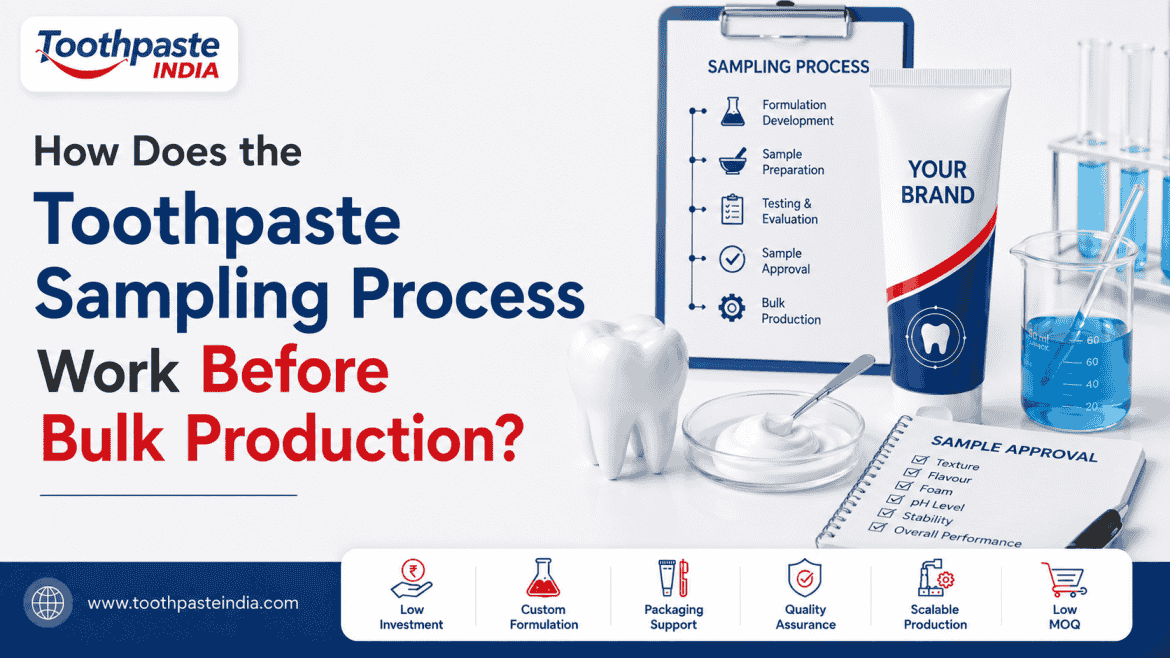
The toothpaste sampling process is a structured sequence of formulation, testing, and approval steps used to validate a toothpaste recipe before it is manufactured at commercial scale. It typically spans lab formulation, quality testing, client review, and a pilot batch trial usually completing within 2–4 weeks depending on formulation complexity.
This process exists for one core reason: bulk production is expensive and difficult to reverse. A 500 kg or 1,000 kg batch that fails on taste, texture, or stability represents wasted raw material, wasted time, and a delayed product launch. Sampling catches these issues while the cost of fixing them is still low.
Why Toothpaste Sample Development Matters for Brand Owners
For toothpaste brand owners, distributors, D2C startups, and exporters, sample approval is the single most important checkpoint before committing budget to a bulk order.
Here’s what proper sample development protects you from:
- Formulation mismatches- the final product tasting or feeling different from what was agreed upon
- Packaging incompatibility- toothpaste reacting with tube laminate or cap material over time
- Regulatory non-compliance- ingredients that don’t meet BIS or FSSAI requirements for the Indian market
- Batch inconsistency- variation between the sample and the eventual bulk run
In our facility, we treat the sample stage as a negotiation between what the brand envisions and what is technically and regulatorily achievable before a single bulk batch is mixed.
How Does Toothpaste Formulation Sampling Begin?
Step 1: Brief Collection and Ingredient Selection
Toothpaste formulation development starts with a detailed brief: the target consumer, positioning (herbal, whitening, sensitive, fluoride-free), price point, and any specific claims the brand wants to make.
Based on this brief, our R&D team performs toothpaste ingredient selection choosing abrasives (like calcium carbonate or hydrated silica), humectants (like sorbitol or glycerin), binders, flavouring agents, and active ingredients (fluoride, herbal extracts, or desensitising agents) that align with the brief and with ingredient compatibility requirements.
Step 2: Lab-Scale Prototype Formulation
A small-batch toothpaste prototype usually 500 g to 2 kg is mixed in a controlled lab environment. This is the toothpaste trial sample stage, where the formulation team fine-tunes texture, colour, and initial flavour profile before anything moves toward client review.
Multiple prototype variants may be created for a single brief, particularly for custom toothpaste formulation projects where flavour intensity or foaming behaviour needs comparison across two or three options.
What Happens During Toothpaste Sample Testing?
Once a lab sample is ready, it goes through a defined toothpaste quality control process before it’s ever shown to the client. This is where technical expertise matters most.
Key toothpaste sample testing parameters include:
- pH testing – oral care products typically need to sit in a mildly acidic to neutral range (commonly cited around pH 5.5–8, though exact targets vary by formulation) to protect enamel and maintain product stability
- Viscosity testing – checking that the paste flows correctly from the tube without being too runny or too stiff
- Texture testing – assessing smoothness, grittiness, and mouthfeel
- Flavour testing – evaluating taste intensity, aftertaste, and cooling sensation (for mint or herbal variants)
- Foam testing – measuring lather generation, especially relevant for SLS-free formulations, which typically foam less than SLS-based ones by design
- Microbial testing – confirming the sample is free from contamination before it’s considered safe for evaluation
- Packaging/tube compatibility testing – checking the paste doesn’t react with or degrade the tube laminate over the intended shelf period
These checks are why toothpaste stability testing and toothpaste compatibility testing are non-negotiable steps, not optional extras. A formulation that tastes right but separates in the tube after three weeks isn’t ready for bulk production it’s back to the lab.
How Does the Toothpaste Sample Approval Process Work?
Toothpaste sample approval typically follows three structured rounds, moving from internal quality checks to client sign-off to a scaled trial batch.
Round 1: Internal QC Review
Before any sample leaves the facility, it passes through internal quality control checking it against the original brief and basic safety parameters.
Round 2: Client Evaluation and Feedback
The approved lab sample is shipped to the brand owner for hands-on evaluation. This is the toothpaste pre-production sample stage, where the client tests taste, texture, foam, and packaging fit, and provides feedback.
It’s common for one or two rounds of formulation adjustment to happen here a brand might ask for less minty intensity, a smoother gel consistency, or a different colour tone. This iterative toothpaste formulation trial process is normal and expected; it’s far cheaper to adjust a 1 kg sample than a 500 kg bulk batch.
Round 3: Pilot Batch Production
Once the client approves the refined sample, most manufacturers run a toothpaste pilot batch a mid-sized trial run (often 20–100 kg) using the actual production line, not just lab equipment. This confirms the formulation performs consistently at a larger scale before full commercial manufacturing begins.
This is the toothpaste scale-up process, and it’s where batch consistency testing becomes critical verifying that what worked in a lab beaker still works when mixed in a production-scale vessel.
From Approved Sample to Toothpaste Bulk Production Process
Once the pilot batch is approved typically confirmed through toothpaste final sample approval documentation signed off by the client the manufacturer proceeds to the next stage of the toothpaste manufacturing process.
Bulk production generally follows these toothpaste manufacturing steps:
- Raw material procurement and quality verification against the approved formulation
- Batch mixing under controlled temperature and vacuum conditions
- In-process quality checks (pH, viscosity, appearance)
- Filling and tube sealing
- Final packaging and batch documentation
- Quality release before dispatch
For private label toothpaste manufacturing, this stage also includes applying the client’s approved toothpaste packaging design, batch coding, and any regulatory labelling required for the target market.
Regulatory and Quality Standards to Check During Sampling
For toothpaste manufacturing in India, regulatory compliance should be confirmed at the sampling stage, not after bulk production. Brand owners should verify:
- FSSAI compliance for ingredients and labelling applicable to oral care products
- BIS standards where applicable to toothpaste formulations
- GMP-certified manufacturing practices at the facility
- Any additional certifications relevant to the brand’s positioning, such as vegan, cruelty-free, or halal certification, where the manufacturer holds them
Regulatory requirements can be updated periodically, so brand owners and manufacturers should verify current FSSAI and BIS guidelines directly with the respective regulatory bodies before finalising a formulation for bulk production.
Toothpaste Sampling Timeline: What to Expect
| Stage | Typical Duration |
|---|---|
| Brief to first lab sample | 5–10 working days |
| Sample testing and internal QC | 3–5 working days |
| Client feedback and revisions | 1–2 weeks (varies by rounds needed) |
| Pilot batch production and approval | 1–2 weeks |
(Timelines vary by formulation complexity, number of revision rounds, and order volume always confirm exact timelines with your manufacturer.)
Final Thoughts
The toothpaste sampling process exists to de-risk bulk production for both the manufacturer and the brand. Skipping or rushing sample testing almost always costs more time and money than doing it properly the first time.
If you’re a brand owner, D2C startup, distributor, or exporter planning a private label or custom toothpaste line, insist on a documented sampling and approval process before any bulk order is confirmed. It’s the single best safeguard for product quality and brand reputation.
Ready to develop your custom toothpaste formulation? Get in touch with our toothpaste manufacturing services team to start your sampling process and move toward bulk production with confidence.
Frequently Asked Questions
Toothpaste sample development typically takes 2–4 weeks from brief to approved pilot batch, depending on formulation complexity and the number of revision rounds requested by the brand.
Most manufacturers charge a nominal sample development fee, which is often adjustable against the bulk order. Exact costs vary by manufacturer and formulation complexity confirm this directly with your supplier.
Most manufacturers include one to two rounds of formulation revision in the standard sampling process. Additional rounds beyond that may involve extra time or cost, depending on the manufacturer’s policy.
A lab sample is a small trial (often under 2 kg) made to test formulation basics. A pilot batch is a larger, production-line trial (often 20–100 kg) used to confirm the formula performs consistently at scale before full bulk manufacturing.
Yes. Most contract manufacturers offer fluoride, fluoride-free, herbal, whitening, and sensitive toothpaste formulations as part of custom sample development, based on your brand’s positioning and target market.
Standard toothpaste sample testing includes pH, viscosity, texture, flavour, foam, microbial safety, and tube/packaging compatibility checks to confirm the formulation is stable and safe before scaling up.
Yes. Toothpaste packaging compatibility testing checks whether the paste reacts with the tube laminate or cap material over time, and is usually done alongside or shortly after formulation approval.
Once the sample and pilot batch are approved, the manufacturer moves into full toothpaste bulk production, applying the finalised formulation, approved packaging, and required regulatory labelling.