
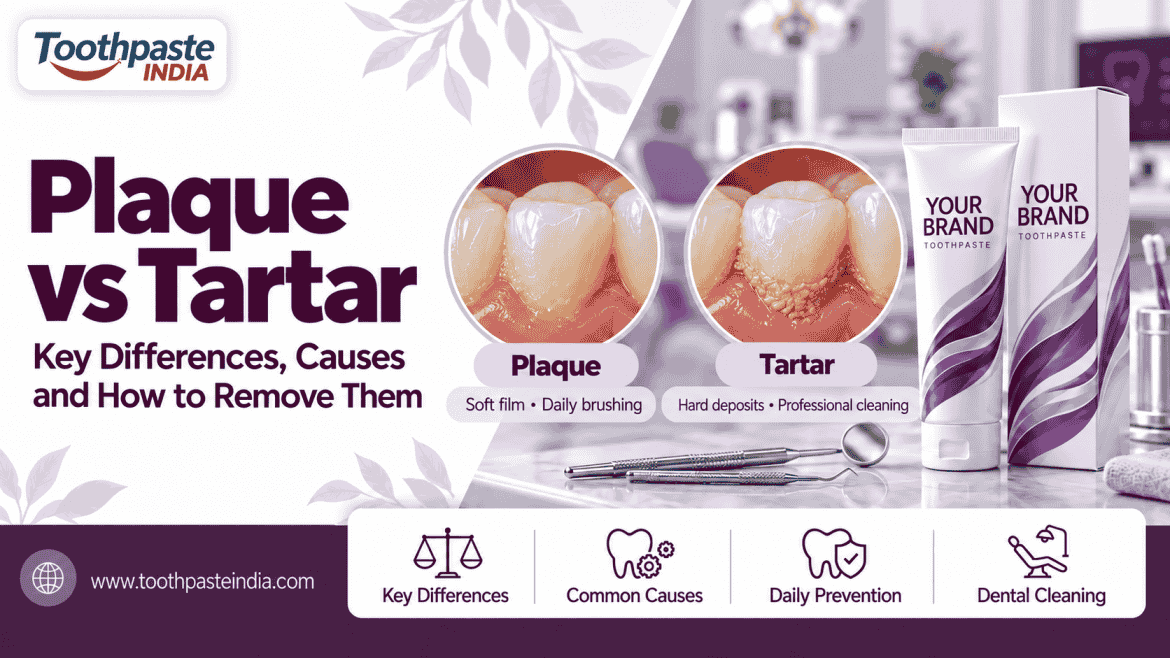

Plaque vs tartar comes down to hardness. Plaque is a soft, sticky film of bacteria that you can remove with brushing and flossing. Tartar, also called dental calculus, is plaque that has hardened, and only a dentist can remove it.
This guide explains the difference between plaque and tartar, how they look, what causes them, and how to deal with each safely.
Plaque vs Tartar: Quick Comparison
| Feature | Plaque | Tartar (calculus) |
|---|---|---|
| Texture | Soft and sticky | Hard and rough |
| Colour | Colourless or pale yellow | Yellow, brown or darker |
| Removal | Brushing and flossing | Professional cleaning |
| Formation | Forms constantly | Plaque hardened by saliva minerals |
| Risk | Cavities, bad breath, gingivitis | Gum disease, recession, stains |
What’s the difference between plaque and tartar? Plaque is the soft, removable stage. Tartar is the hardened stage. Is tartar the same as plaque? No., because tartar is what plaque becomes when it stays on teeth.
Plaque vs Calculus vs Tartar
Tartar and dental calculus are two names for the same thing. So plaque vs tartar vs calculus is really a comparison of two substances. Whether you search plaque vs calculus, calculus vs plaque or dental calculus vs plaque, the answer is the same: plaque is soft, calculus is hardened.
What Is Dental Plaque?
It is a sticky biofilm of bacteria, food particles and saliva that forms on teeth every day. The bacteria produce acids that attack enamel and irritate gums.
What Does Plaque Look Like?
Plaque is usually colourless or pale yellow, so it is hard to see. You can often feel it as a fuzzy or slimy layer when you run your tongue over your teeth. Other signs include persistent bad breath and red, bleeding gums.
What Is Tartar on Teeth?
It is plaque that has calcified. Minerals in saliva harden the plaque into a firm deposit that bonds tightly to enamel. It often forms along the gum line and in hard-to-reach spots.
What Does Tartar Look Like?
Tartar looks like a yellow or brown crust. It feels rough and does not come off with brushing. Over time it can darken, because it absorbs stains from tea, coffee and tobacco.
Plaque vs Tartar Pictures: How to Tell Them Apart
Pictures of plaque vs tartar on teeth help, but you can also check at home. Plaque disclosing tablets stain plaque so you can see missed spots, and the stain brushes away. If a rough, discoloured patch stays after careful brushing and flossing, it is probably tartar.
That is how to tell plaque from tartar: soft and removable versus hard and stuck.
How Does Plaque Turn Into Tartar?
If plaque stays on teeth, minerals from saliva deposit into it and harden it. Plaque and tartar buildup is more likely in areas you miss, such as behind the lower front teeth and between teeth.
How Long Does It Take for Plaque to Turn Into Tartar?
Plaque can begin to harden within about 24 to 72 hours. The speed varies widely from person to person, so some people build tartar much faster.
Plaque and Tartar Causes
Common plaque and tartar causes include:
- Irregular brushing and flossing
- Sugary, sticky and starchy foods
- Smoking, chewing tobacco or betel nut
- Dry mouth
- Braces or crowded teeth
- Skipping regular dental cleanings
Plaque vs Tartar and Gum Disease
Both increase the risk of gum disease. Plaque bacteria inflame the gums, causing gingivitis, with redness, swelling and bleeding. Tartar gives more plaque a rough surface to grip, and can lead to gum recession and periodontitis. In plaque vs tartar and gum disease, tartar is the more serious problem, because home care cannot remove it.
Tartar vs Cavity: Tooth Decay vs Tartar
Difference Between Tartar and Cavity
The difference between tartar and cavity is location and structure. Tartar is a hard deposit that sits on the tooth surface. A cavity is a hole in the tooth caused by acid from plaque bacteria. Tartar vs decay: tartar does not eat into the tooth itself, but it traps plaque that can lead to decay.
So tooth decay vs tartar comes down to this: one is a deposit you can scale off, the other is damage that needs a filling.
Black Tartar vs Cavity
Black tartar vs cavity can look confusing. Tartar takes the colour of what you eat and drink, and can look black if it mixes with blood under the gums. A cavity is a dark spot or hole in the tooth that may feel soft. Only a dentist can tell the difference, often with an X-ray.
Plaque and Tartar Removal
How to Remove Plaque From Teeth
How to remove plaque from teeth: brush twice a day for two minutes with fluoride toothpaste, floss daily, and rinse with an antibacterial mouthwash.
Can Brushing Remove Plaque? Can Brushing Remove Tartar?
Can brushing remove plaque? Yes, if you are thorough, especially along the gum line. Can brushing remove tartar? No. Brushing harder only risks wearing enamel and hurting gums.
Can Flossing Remove Tartar?
No. Flossing clears plaque between teeth, which helps stop tartar forming, but it will not remove hardened calculus.
Does Tartar Control Toothpaste Help?
If you are wondering, “can toothpaste remove tartar?”, it cannot remove deposits once they have hardened. A tartar control toothpaste containing ingredients such as pyrophosphate or zinc can help reduce new tartar formation, but it does not replace professional cleaning.
How to Remove Tartar From Teeth Safely
The safe way to remove tartar is professional teeth cleaning for tartar. A dentist or hygienist uses scalers to remove deposits, then polishes the teeth. If tartar is below the gums, deeper cleaning such as scaling and root planing may be advised. Do not scrape it off at home, because you can damage teeth and gums. Most people need a cleaning about every six months.
How to Prevent Plaque and Tartar Buildup
- Brush twice daily with fluoride toothpaste, focusing on the gum line.
- Floss once a day.
- Use an antibacterial mouthwash.
- Limit sugary and sticky foods, and drink water through the day.
- Avoid tobacco and betel nut.
- Choose a tartar control toothpaste if you build tartar quickly.
- Visit your dentist every six months.
For Brands: Choosing a Toothpaste Manufacturer
Plaque and tartar control is a popular claim for D2C, herbal and pharma brands. The oral care manufacturer you choose decides formula quality, claims and delivery.
Third Party and Private Label Toothpaste Manufacturer
A third party toothpaste manufacturer makes toothpaste on your behalf. A private label toothpaste manufacturer or white label toothpaste manufacturer offers ready or customised formulas under your brand. For an Indian launch, a third party toothpaste manufacturer India partner understands local labelling and ingredient preferences.
GMP Certified Toothpaste Manufacturer in India
Look for a GMP certified toothpaste manufacturer in India, and ask for certificates and test reports. Also check stability testing, customisation and flexible minimum orders.
Toothpaste Supplier: What to Check
A reliable toothpaste supplier shares samples, ingredient details and clear timelines. Toothpaste India supports brands with formulation guidance for anti-tartar and herbal pastes and flexible batch sizes. Word claims realistically, such as “helps prevent tartar”, and verify certifications before launch.
Conclusion
Plaque vs tartar is a difference of stage: plaque is soft and removable, tartar is hardened and needs a dentist. Brush, floss and use a tartar control toothpaste daily, and book regular professional cleanings to stop plaque becoming tartar.
Frequently Asked Questions
Plaque is soft and removable at home. Tartar is hardened plaque that needs professional cleaning.
No. Tartar forms when plaque hardens.
Yes. Dental calculus is another name for tartar.
It can start hardening in about 24 to 72 hours, depending on the person.
No. Brushing removes plaque, not hardened tartar.
No. Floss and tartar control toothpaste help prevent it, but they cannot remove it.
Tartar is a hard deposit on the tooth. A cavity is decay that creates a hole in the tooth.
Only a dentist can say for sure. Cavities are holes or soft dark spots, while tartar is a rough surface deposit.
Through professional cleaning by a dentist or hygienist.
Brush twice daily, floss daily, limit sugar and avoid tobacco. Visit your dentist regularly.