
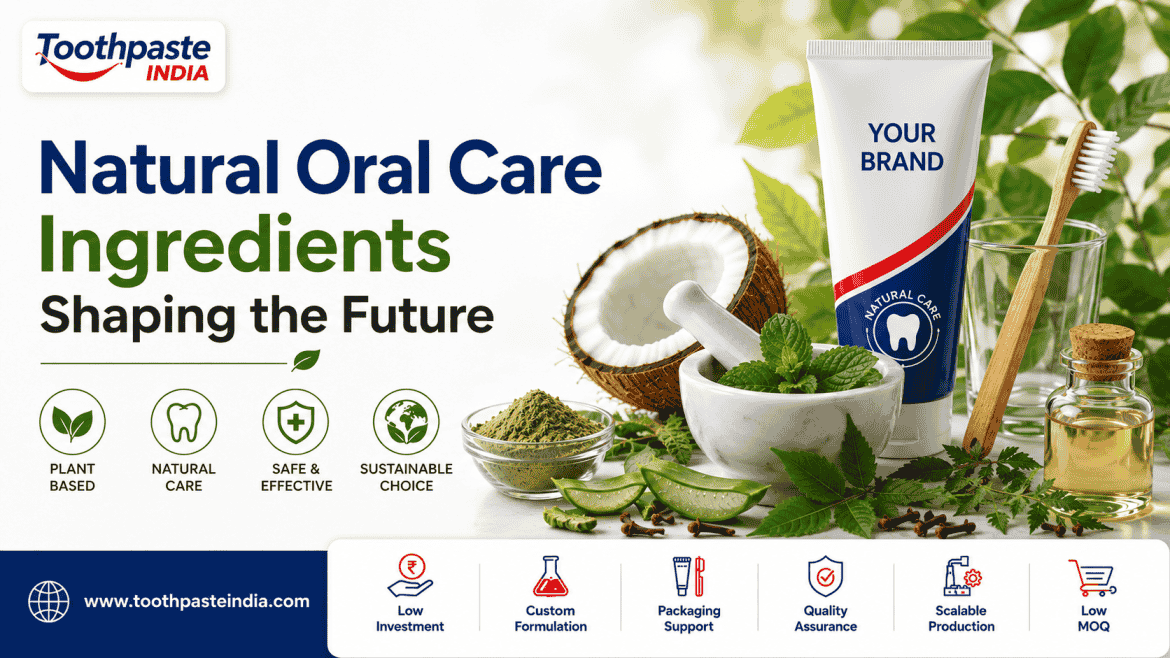

Natural oral care is moving beyond traditional herbal claims. Consumers now want toothpaste products with recognisable ingredients, transparent labels and targeted benefits for gums, sensitivity, freshness and surface stains.
For toothpaste brand owners, natural oral care Ingredients create opportunities to develop herbal, ayurvedic, vegan, SLS-free and clean-label products. Whether a business is launching a private label toothpaste brand or expanding an existing oral care range, ingredient selection should match the target consumer, intended benefits and market positioning.
However, simply adding neem, clove or aloe vera does not make a toothpaste effective. Every ingredient must be selected according to its function, concentration, safety, compatibility and stability in the finished product. A structured toothpaste formulation development process helps brands transform a product idea into a safe, stable and commercially viable formulation.
What Are Natural Oral Care Ingredients?
Natural oral care ingredients are plant-based, mineral-based or naturally derived materials used to clean teeth, support gum hygiene, improve freshness or provide a specific oral-care benefit.
Common natural toothpaste ingredients include:
- Neem extract
- Miswak extract
- Babool
- Clove oil
- Aloe vera
- Peppermint oil
- Tulsi
- Turmeric
- Liquorice extract
- Xylitol
- Calcium carbonate
- Hydrated silica
- Plant-derived glycerine
- Cellulose gum
A complete toothpaste still needs abrasives, humectants, binders, surfactants, flavours, preservatives and approved active ingredients. Natural ingredients must work properly with this complete formulation system.
Why Are Natural Ingredients in Oral Care Products Growing?
Natural ingredients are gaining popularity because consumers increasingly check ingredient labels and look for products aligned with herbal, Ayurvedic, vegan and sustainable lifestyles.
This demand is encouraging brands to explore:
- Herbal oral care ingredients
- Plant-based oral care ingredients
- Organic oral care ingredients
- SLS-free toothpaste ingredients
- Vegan oral care ingredients
- Fluoride-free toothpaste ingredients
- Clean-label oral care products
- Eco-friendly oral care products
However, brands should avoid misleading terms such as “chemical-free toothpaste.” Water, herbs, minerals and natural extracts are also chemical substances. More accurate terms include naturally derived, plant-based, SLS-free, artificial-colour-free or made with selected botanical ingredients.
Which Natural Ingredients Are Good for Teeth and Gums?
The right ingredient depends on the intended benefit of the toothpaste. One natural ingredient cannot provide every oral-care benefit.
Neem and Miswak
Neem and miswak are widely recognised traditional Indian oral care herbs. They are commonly used in Ayurvedic toothpaste ingredients and herbal toothpaste formulations designed for daily cleaning, freshness and gum-care positioning.
Their quality can vary according to the botanical source, extraction method and concentration. Manufacturers should verify their identity, microbial quality and compatibility before using them in commercial production.
Clove Oil
Clove oil is one of the most popular essential oils in toothpaste. It provides a strong traditional flavour and is frequently included in products positioned for gum care and freshness.
The concentration must be carefully controlled. Excessive clove oil may create an overpowering taste or irritation risk. It must also be properly dispersed throughout the toothpaste base.
Aloe Vera
Aloe vera is commonly used in gentle toothpaste concepts for sensitive gums. It can support a product positioned around soothing botanical ingredients and mild daily oral care.
However, aloe vera alone should not be presented as a proven treatment for tooth sensitivity. Products making specific sensitivity claims may require recognised active ingredients and suitable supporting evidence.
Peppermint, Spearmint and Fennel
Peppermint and spearmint oils are common natural ingredients for fresh breath. Fennel, cardamom and clove may also be used as natural mouth freshener ingredients in Indian herbal toothpaste.
These ingredients provide immediate freshness, but lasting fresh breath also depends on plaque removal, tongue cleaning, salivary flow and management of the underlying cause of bad breath.
Tulsi, Turmeric and Liquorice
Tulsi, turmeric and liquorice help brands create differentiated botanical toothpaste products. These ingredients are commonly associated with traditional Indian wellness and Ayurvedic oral care.
Their extraction method, carrier solvent, purity, active-marker consistency and microbial specification should be evaluated before formulation.
Which Natural Ingredients Support Teeth Whitening?
Natural whitening toothpaste usually helps remove surface stains rather than changing the internal colour of teeth.
Common natural whitening toothpaste ingredients include:
- Hydrated silica
- Calcium carbonate
- Sodium bicarbonate
- Papain
- Bromelain
- Selected polishing minerals
The formula must maintain controlled abrasivity. A highly abrasive toothpaste may remove stains quickly but may not be suitable for long-term daily use.
Charcoal is also popular in whitening products, but its particle size, purity and abrasivity require careful evaluation. Whitening claims should be supported by finished-product testing rather than the presence of a trending ingredient.
Can Natural Ingredients Provide Cavity Protection?
Natural ingredients can support daily oral hygiene, but their cavity-protection evidence is not equal.
Fluoride remains one of the most widely recognised ingredients for strengthening enamel and helping prevent dental cavities. A natural toothpaste can contain fluoride because natural positioning does not automatically mean fluoride-free.
Brands developing a natural alternative to fluoride toothpaste may consider ingredients such as xylitol, calcium compounds or hydroxyapatite-based systems. However, they should not claim that these ingredients are equal replacements for fluoride without appropriate evidence.
The decision to formulate fluoride or fluoride-free toothpaste should depend on the intended consumer, product positioning, market requirements and regulatory guidance.
What Does a Natural Toothpaste Formulation Need?
A reliable natural toothpaste formulation requires a balanced technical structure.
Abrasives
Abrasives remove plaque, debris and surface stains. Hydrated silica and calcium carbonate are widely used, but their grade, particle size and concentration influence cleaning performance and abrasivity.
Humectants
Humectants prevent toothpaste from drying out. Glycerine and sorbitol are common choices. Brands seeking vegan or plant-based positioning should verify the source of glycerine and obtain supporting supplier documentation.
Binders
Binders maintain texture and reduce ingredient separation. Cellulose derivatives, xanthan gum and naturally derived gums may be used depending on the water content and abrasive system.
Surfactants
Surfactants help spread toothpaste and loosen debris. Brands developing SLS-free toothpaste can use milder alternatives, but removing SLS may affect foam, flavour release and overall consumer experience.
Sweeteners and Flavours
Xylitol, stevia and approved flavour systems can improve taste without using fermentable sugar. Herbal extracts often have bitter or earthy flavour notes that require careful flavour balancing.
Preservatives
Natural toothpaste is not automatically self-preserving. Botanical extracts and water-based ingredients may introduce microbial risks.
The preservation system should be supported by microbiological testing and, where applicable, preservative efficacy evaluation.
How Is Herbal Toothpaste Formulation Developed?
Herbal toothpaste formulation is developed through controlled laboratory trials and testing before bulk production. A well-planned toothpaste sampling process allows brands to review the product’s texture, colour, taste, fragrance, foam and overall user experience before approving the final formula.
The usual process includes:
- Defining the target consumer and primary benefit
- Selecting suitable herbal and functional ingredients
- Reviewing supplier and regulatory documentation
- Preparing laboratory trial samples
- Adjusting texture, taste, foam and pH
- Testing compatibility with the selected tube
- Conducting stability and microbiological tests
- Approving the final formulation before production
During development, manufacturers must observe whether botanical extracts change the toothpaste’s colour, odour or viscosity over time. An ingredient may perform well independently but interact poorly with minerals, surfactants or flavours in the finished formula.
What Should Brands Look for in a Safe Ingredients List?
Brand owners should also separate scientific information from common toothpaste myths vs facts when selecting natural ingredients. An ingredient should not be considered safe, effective or harmful only because it is natural, synthetic, traditional or currently trending. Its suitability depends on quality, concentration, formulation compatibility and finished-product testing.
A safe natural toothpaste ingredients list should be evaluated through actual safety data, ingredient concentration and approved usage rather than internet-based fear lists.
Brand owners should check:
- Cosmetic-grade ingredient quality
- Microbial specifications
- Heavy-metal limits
- Allergen declarations
- Extraction solvents
- Essential-oil concentration
- Finished-product pH
- Abrasivity
- Stability
- Regulatory suitability
Natural ingredients can also cause irritation, allergies or contamination when used incorrectly. Unverified charcoal, coarse abrasives, concentrated essential oils and unstable homemade extracts may create genuine formulation and safety problems.
Which Natural Ingredients Are Suitable for Kids’ Toothpaste?
Natural ingredients for kids’ toothpaste should be mild, age-appropriate and used at controlled levels.
Suitable options may include mild silica, xylitol, gentle flavours, plant-derived glycerine and selected botanical extracts. Strong mint, cinnamon, clove or concentrated essential oils may be too intense for younger consumers.
The fluoride level and usage directions should be selected according to the intended age group, cavity risk, market requirements and professional guidance. Packaging should clearly explain the recommended amount of toothpaste and adult supervision requirements.
What Are the Future Natural Oral Care Trends?
The future of natural oral care will focus on evidence-based botanical ingredients, cleaner labels and benefit-specific products.
Targeted Herbal Toothpaste
Brands are moving from general “complete herbal protection” claims to products developed for specific needs such as gum care, fresh breath, sensitive gums, whitening or dry-mouth support.
Hybrid Natural Formulations
Modern brands are combining traditional herbs with scientifically recognised ingredients. A toothpaste may contain neem and aloe vera together with fluoride, hydroxyapatite, potassium salts or advanced silica systems.
Standardised Botanical Extracts
Future formulations will require better control over botanical source, extraction ratio, pesticide residue, microbial quality, heavy metals and active-marker consistency.
Sustainable Oral Care Products
Toothpaste tablets, concentrated products, recyclable packaging and reduced-plastic formats may influence future natural oral care trends. However, sustainability claims should evaluate the complete product lifecycle, not only the outer packaging.
Personalised Oral Care
Brands are developing separate formulations for children, smokers, sensitive teeth, gum care and Ayurvedic lifestyles rather than launching one generic herbal toothpaste for every consumer.
What Should Indian Brands Verify Before Launch?
Toothpaste brands in India should review current manufacturing, labelling, licensing and claim requirements applicable to their product.
Depending on the formulation and target market, important quality and credibility signals may include:
- GMP-compliant manufacturing
- ISO quality systems
- Stability testing
- Microbiological testing
- Heavy-metal specifications
- Halal certification
- Vegan documentation
- Cruelty-free declarations
- Export-market compliance
Each certification has a different purpose. GMP does not automatically validate product claims, while vegan or Halal certification does not confirm cleaning performance.
Brands should verify current CDSCO, state licensing, BIS and other applicable regulatory guidelines before commercial launch.
How Does Toothpaste India Support Natural Oral Care Brands?
Toothpaste India is an Ahmedabad-based toothpaste manufacturing partner supporting private-label and contract-manufacturing projects for Indian and international brands.
Our development support can include ingredient selection, natural toothpaste formulation, laboratory samples, flavour development, packaging compatibility and bulk toothpaste manufacturing.
Our toothpaste manufacturing services can include ingredient selection, formulation support, laboratory samples, flavour development, stability coordination, packaging compatibility, bulk manufacturing and production guidance.
Conclusion
Natural Oral Care Ingredients are shaping the future of toothpaste through botanical extracts, plant-based functional materials and transparent product positioning.
Ingredients such as neem, miswak, clove, aloe vera, xylitol and mineral abrasives can support differentiated products, but they must be combined with proper formulation, testing, documentation and responsible claims.
Toothpaste India supports brands from product concept and sample development to packaging and commercial toothpaste manufacturing. Contact our team to discuss your natural, herbal or ayurvedic toothpaste project.
Frequently Asked Questions
Natural toothpaste ingredients are plant-based, mineral-based or naturally derived materials used for cleaning, freshness, gum care or product texture. Common examples include neem, miswak, clove oil, aloe vera, xylitol, hydrated silica and calcium carbonate.
Neem, miswak, xylitol, hydrated silica and calcium compounds are commonly used in natural toothpaste. Their suitability depends on the intended benefit, concentration and complete formulation.
Choose a manufacturer with suitable licences, quality systems, formulation experience, testing support and transparent documentation. The manufacturer should also understand herbal ingredients and packaging compatibility.
Review manufacturing capabilities, minimum order quantity, sample development, testing process, ingredient sourcing, batch documentation and communication standards before finalising a partner.
Brands often fail because of weak positioning, poor taste, unsupported claims, incorrect pricing, packaging issues or inadequate marketing. Product quality and repeat-purchase experience should be prioritised.
Choose one clear consumer benefit, develop samples, test the formulation, finalise compliant claims and calculate complete unit economics before starting bulk production.
Requirements depend on the product and market. GMP, ISO, Halal, Vegan and other certifications may be commercially useful, but current licensing and regulatory requirements should be verified separately.
Approve a representative sample, lock the ingredient specifications and test the formula in the final tube. Changes in flavours, extracts or packaging materials can affect product stability.
Not necessarily. Fluoride-free only means the formulation does not contain fluoride. The complete ingredient list must be reviewed before describing a product as natural or plant-based.
Pricing should include formulation, ingredients, packaging, manufacturing, testing, freight, taxes, distributor margins and marketing expenses. Unit economics should be finalised before confirming the bulk order.