
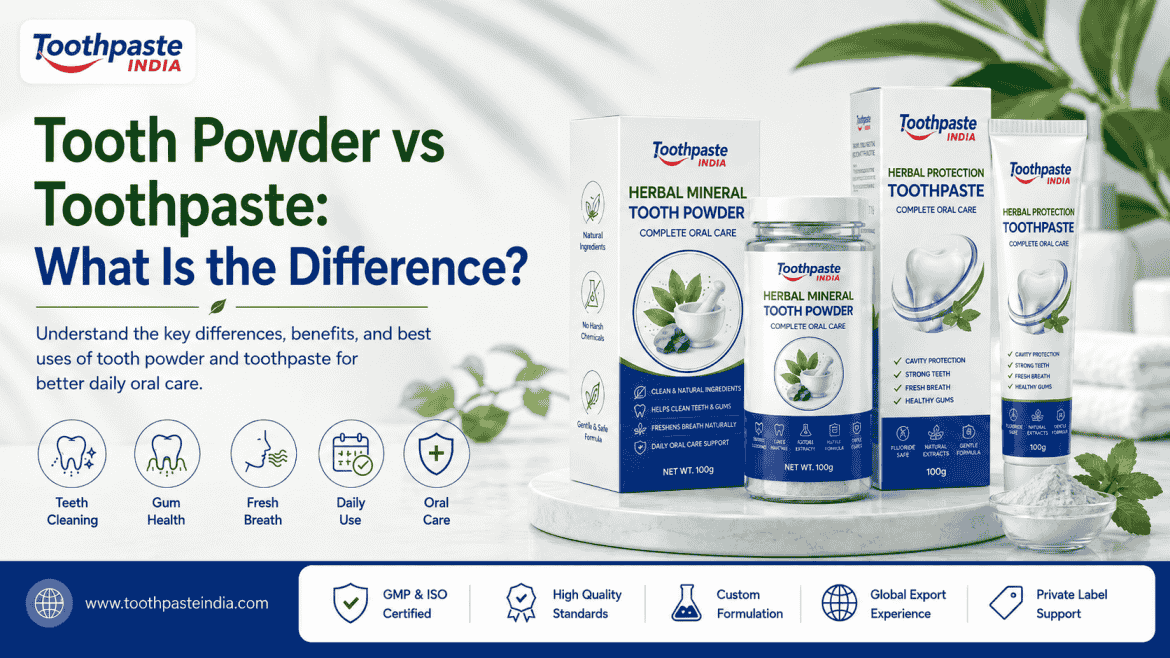

Choosing between tooth powder and toothpaste is a question many Indian consumers and increasingly, brand owners building oral care lines ask before deciding what to manufacture or recommend. Tooth powder vs toothpaste (or, phrased the other way, toothpaste vs tooth powder) isn’t just a matter of format; it comes down to ingredients, cleaning mechanism, and the specific oral health outcomes each one delivers. Some consumers also search this comparison as dental powder vs toothpaste or simply tooth cleaning powder, but the underlying question is the same. This guide breaks down the real differences so you can make an informed choice, whether you’re a consumer or a brand planning your next product launch.
What Is Tooth Powder?
Tooth powder is a dry oral care product made from finely ground abrasives commonly chalk, charcoal, clove, neem, or salt combined with mild cleansing agents. It is applied to a damp toothbrush or fingertip and used to scrub the teeth manually.
Tooth powder has been used in India for centuries, long before commercial toothpaste existed. Traditional formulations often rely on Ayurvedic ingredients like neem, babool, clove, and charcoal, which is why the terms herbal tooth powder and ayurvedic tooth powder are frequently searched together with “natural oral care.”
What Is Toothpaste?
Toothpaste is a paste-based oral care product that combines mild abrasives, humectants (like glycerin or sorbitol to retain moisture), surfactants (foaming agents such as SLS or SLS-free alternatives), flavoring agents, and in most modern formulations fluoride, which strengthens enamel and helps prevent cavities.
Unlike tooth powder, toothpaste is engineered for consistency in dosage, texture, and active-ingredient delivery, which is one reason dental associations more commonly recommend it for daily cavity prevention.
Tooth Powder vs Toothpaste: Key Differences
Understanding where the two diverge helps clarify which suits a particular need:
Form and application: Tooth powder is dry and applied manually; toothpaste is a ready-to-use paste dispensed from a tube.
Fluoride content: Most toothpaste contains fluoride for cavity protection; most tooth powders are fluoride-free, relying instead on natural antibacterial ingredients.
Abrasiveness: Tooth powder can be more abrasive than toothpaste if used with heavy pressure, which may affect enamel over time with daily aggressive use.
Shelf stability: Toothpaste’s sealed-tube format keeps it more hygienic during storage; tooth powder, stored in open jars, is more exposed to moisture and contamination if not sealed properly.
Consumer positioning: Tooth powder is largely marketed as a natural or ayurvedic alternative; toothpaste is positioned around clinical benefits like cavity protection, sensitivity relief, or whitening.
Tooth Powder Benefits: Why Some Consumers Prefer It
Benefits of tooth powder for teeth center largely on its natural ingredient profile and traditional appeal:
- Plaque removal: The gritty texture of tooth powder for plaque removal can mechanically lift surface stains and plaque effectively, and regular use is also associated with tooth powder for plaque and tartar control when paired with proper brushing technique.
- Gum health: Herbal ingredients like clove and neem are traditionally used in tooth powder for gums due to their antibacterial properties.
- Bad breath control: Tooth powder for bad breath often relies on clove, mint, or charcoal to neutralize odor-causing bacteria.
- Teeth whitening: Tooth powder for teeth whitening, especially charcoal-based variants, is popular for surface stain removal, though results vary and enamel-safe formulations matter.
- Fluoride-free positioning: For brands targeting the “natural tooth powder vs toothpaste” audience, this is a key differentiator for fluoride-cautious consumers.
As an oral care powder, tooth powder also fits into the broader category of natural oral care products and herbal oral care products that Indian consumers increasingly search for alongside mainstream toothpaste.
Toothpaste Benefits: Why It Remains the Default Choice
Toothpaste benefits are backed by decades of clinical formulation and dental research:
- Cavity prevention: Fluoride toothpaste remains the most widely recommended product globally for reducing tooth decay.
- Sensitivity relief: Specialized toothpaste formulations with potassium nitrate or hydroxyapatite target tooth powder for sensitive teeth alternatives more precisely for sensitivity relief.
- Consistent dosing: Every squeeze delivers a controlled amount of active ingredients, unlike loose powder.
- Broad clinical validation: Toothpaste formulations undergo more standardized testing across markets, including India’s BIS and FSSAI frameworks.
Is Tooth Powder Better Than Toothpaste?
There is no universal answer to is tooth powder better than toothpaste it depends on the user’s oral health goals. For fluoride-sensitive users seeking herbal formulations, tooth powder can be a suitable tooth powder for oral health option. For consumers prioritizing scientifically validated cavity protection, fluoride toothpaste remains the stronger choice. Many dental professionals suggest toothpaste as the primary daily product, with tooth powder used as a supplementary or occasional option never as a full fluoride replacement without professional guidance.
Can Tooth Powder Replace Toothpaste Daily?
Can tooth powder replace toothpaste for daily use is one of the most common questions we see. Tooth powder for daily use is generally safe when the formulation uses fine, low-abrasion particles, but it lacks the fluoride protection that toothpaste offers in most formulations. Consumers who want to use tooth powder daily should verify enamel-safe abrasiveness levels and, where cavity risk exists, consult a dental professional or use an alternate fluoride source as advised by a professional or regulatory guideline.
This is also where the traditional tooth powder vs modern toothpaste debate plays out most clearly: traditional formulations prioritize natural ingredients and ritual-based cleaning, while modern toothpaste prioritizes standardized, lab-validated protection.
How Does Tooth Powder Work?
Tooth powder works through mechanical abrasion combined with the antibacterial or astringent properties of its natural ingredients. When applied with a damp brush, the fine particles physically dislodge plaque and surface stains, while ingredients like clove oil or neem extract target bacteria responsible for bad breath and gum irritation. This differs from toothpaste, which combines mechanical cleaning with active chemical ingredients like fluoride for a deeper preventive effect.
Advantages and Disadvantages at a Glance
Advantages of tooth powder:
- Often fluoride-free and preservative-light
- Long shelf life in powder form
- Appeals to the ayurvedic and natural oral care segment
Disadvantages of tooth powder:
- No standardized fluoride protection
- Higher risk of enamel abrasion if used incorrectly
- Less hygienic dispensing compared to sealed tubes
Advantages of toothpaste:
- Clinically validated cavity protection
- Controlled dosing and hygienic packaging
- Wide range of specialized formulations (sensitivity, whitening, gum care)
A Manufacturer’s Perspective: Formulating Herbal Tooth Powder and Toothpaste in India
At our Ahmedabad-based facility, we manufacture both herbal tooth powder and toothpaste formulations for private label and contract manufacturing clients across India. In our production process, tooth powder batches are milled to a controlled particle size to balance cleaning efficacy with enamel safety a detail that matters more than most brand owners initially realize when sourcing a tooth powder manufacturer in India.
For toothpaste, we work with both fluoride and fluoride-free bases, adjusting humectant and abrasive ratios (using low-RDA silica rather than harsher abrasives) to meet different brand positioning needs from clinical cavity-protection lines to ayurvedic, SLS-free ranges. All formulations are developed under GMP-compliant manufacturing practices, with FSSAI compliance for cosmetic and oral care categories; brands targeting export markets should also verify country-specific regulatory requirements before launch.
Which Should Your Brand Manufacture Tooth Powder or Toothpaste?
For private label tooth powder manufacturer or toothpaste partnerships, the decision often comes down to target audience:
- Ayurvedic/herbal-focused brands tooth powder aligns naturally with a traditional, fluoride-free brand story; if positioned well, it can market itself as the best tooth powder for oral care within its niche.
- Mass-market or clinical-positioning brands toothpaste offers broader appeal and dental-association credibility, and clinically formulated ranges are better suited to compete as the best toothpaste for oral health.
- Hybrid brands – many of our clients launch both, positioning tooth powder as a natural add-on to a core toothpaste range.
As a third party toothpaste manufacturer, custom tooth powder manufacturer, and private label oral care manufacturer, we support both formats end-to-end – from formulation and regulatory documentation to packaging and private labeling.
Related Searches: Tooth Powder and Toothpaste Terms People Also Look Up
Beyond the core comparison, a few related terms are worth knowing if you’re researching this category further:
- Tooth powder ingredients vs toothpaste ingredients: Tooth powder ingredients typically include chalk, charcoal, clove, neem, and salt, while toothpaste ingredients include humectants, surfactants, abrasive silica, flavoring, and fluoride.
- Tooth powder vs fluoride toothpaste: This comparison specifically highlights the fluoride gap tooth powder rarely contains it, making fluoride toothpaste the default recommendation for cavity-prone individuals.
- Tooth powder vs herbal toothpaste: Herbal toothpaste combines paste-format convenience with natural actives, sitting as a middle ground between traditional tooth powder and conventional fluoride toothpaste.
- Tooth powder and toothpaste difference in daily routine: Many households use toothpaste for daily brushing and tooth powder occasionally, for deeper cleaning or as a natural alternative during travel.
Conclusion
Both tooth powder and toothpaste have a place in modern oral care, and the “better” choice depends entirely on the user’s priorities natural, fluoride-free cleaning versus clinically validated cavity protection. For brand owners, distributors, and D2C startups evaluating which format to launch, working with an experienced manufacturer who understands formulation nuances for both categories makes the difference between a generic product and one that genuinely resonates with its target audience. Looking to manufacture herbal tooth powder or toothpaste under your own brand? Contact our team to discuss private label and contract manufacturing toothpaste options tailored to your market.
Frequently Asked Questions
Tooth powder is a dry, granular product typically free of fluoride, while toothpaste is a paste containing abrasives, humectants, and usually fluoride for cavity protection. The core difference lies in format and active-ingredient consistency.
Tooth powder with herbal ingredients like clove and neem can support gum health through antibacterial action, but toothpaste formulations with clinically tested actives often provide more consistent, measurable gum-care results.
Yes, tooth powder can be used daily if it has a low-abrasion, enamel-safe formulation. However, since most variants lack fluoride, daily users concerned about cavities should consult a dental professional about supplementing protection.
Charcoal-based tooth powder can help remove surface stains effectively, but results depend on formulation and brushing technique. Toothpaste with controlled whitening agents often delivers more consistent, enamel-safe whitening over time.
Herbal tooth powder for sensitive teeth can work if it uses fine, low-abrasion particles, but coarse formulations may worsen sensitivity. Toothpaste with potassium nitrate is generally the more targeted option for sensitivity relief.
Most tooth powders are formulated around traditional, natural ingredients and are marketed as fluoride-free alternatives for consumers cautious about fluoride intake. This is a key positioning difference from mainstream toothpaste.
Tooth powder can serve as a primary cleaning product, but replacing fluoride toothpaste entirely means losing a well-documented layer of cavity protection. It’s best used per professional guidance based on individual cavity risk.
Both can help; tooth powder relies on natural antibacterial ingredients like clove and neem, while toothpaste often combines mint flavoring with antibacterial agents. Persistent bad breath should be evaluated by a dentist regardless of product choice.
Reputable manufacturers should be GMP-compliant and FSSAI-registered for oral care and cosmetic categories; brands should verify current certification requirements with the relevant regulatory body before finalizing a manufacturing partner.
Yes, many brands successfully launch a hybrid range a core toothpaste line paired with an herbal tooth powder as a natural-care add-on which a private label manufacturer can typically formulate and produce together.